
Sleeping on your right side: what it really does to your body (and when to change position)
Side sleeping is the most popular sleep posture among adults, and for most healthy people, sleeping on the right side is completely safe and restorative. Yet subtle anatomical differences between the left and right sides of your body mean that lying on your right side affects digestion, breathing, spinal alignment, and circulation in distinct ways compared to sleeping on your left side or on your back.
Understanding what actually happens inside your body when you sleep on your right side helps you decide whether it is your ideal position—or when switching sides makes sense.
What Sleeping on Your Right Side Actually Does to Your Body
1. Keeps Your Airways More Open Than Back Sleeping When you lie flat on your back, gravity pulls the tongue and soft tissues at the back of the throat downward, which can narrow the airway and trigger snoring or mild breathing pauses. Sleeping on your right side keeps soft tissues shifted laterally, helping keep the upper airway clearer and reducing snoring for many people.
2. Supports Spine Alignment When Properly Supported Lying on your right side allows your spine to rest in a neutral, natural curve—provided your pillow fills the space between your ear and the outside of your shoulder, and your mattress cushions your hip and shoulder without letting your waist sag. Placing a firm pillow between your knees prevents your top leg from pulling your lower back and pelvis out of alignment.
3. Reduces Pressure on the Heart for Some People Because the heart sits slightly to the left of center inside the chest cavity, lying on the left side causes the heart to shift slightly toward the chest wall due to gravity, which can occasionally create a noticeable heartbeat sensation or mild positional discomfort—especially in people with certain heart failure conditions or heightened awareness of palpitations. Lying on the right side lets the heart rest comfortably supported by the mediastinum (the central compartment of the chest), which some individuals find calmer and easier to fall asleep in.
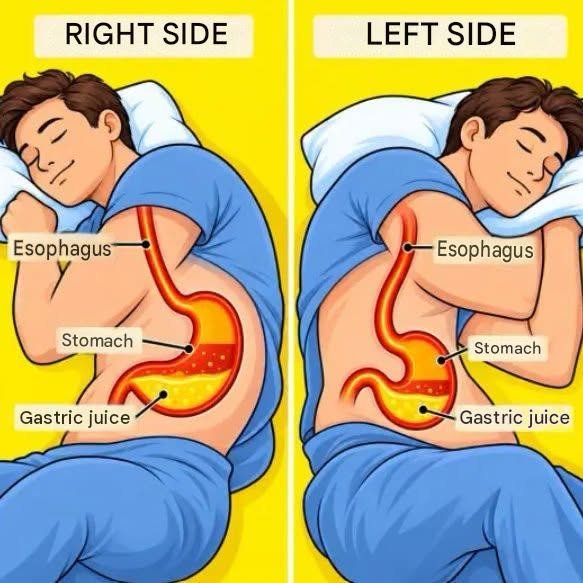
4. Alters Stomach Positioning and Acid Reflux Risk Your stomach curves naturally toward the left side of your upper abdomen, while the esophagus enters the stomach from the right/center. When you lie on your right side, the junction between the esophagus and the stomach (the lower esophageal sphincter) sits lower relative to pooled stomach acid and food. As a result, right-side sleeping can make it easier for stomach acid to wash backward into the esophagus, prolonging nighttime heartburn or acid reflux compared to left-side sleeping.
5. Places More Weight on Your Right Shoulder, Hip, and Facial Side Spending seven to eight hours nightly on your right side concentrates body weight on the right shoulder joint, right hip bursa, and the right side of your face. Over time, inadequate mattress cushioning or an overly flat pillow can contribute to morning shoulder stiffness, outer hip tenderness, or temporary sleep creases on the right cheek.
Common Myths About Right-Side Sleeping
-
Myth: Sleeping on your right side “crushes” your liver or gallbladder.Reality: Your liver sits on the upper right side of your abdomen beneath the protective rib cage, anchored securely by tough ligaments. Lying on your right side does not harm or compress a healthy liver.
-
Myth: Right-side sleeping blocks blood flow to the heart in healthy adults.Reality: While the large vein returning blood from the lower body to the heart (the inferior vena cava) runs slightly to the right of the spine, healthy adults have plenty of circulatory pressure and natural nighttime movement so right-side sleeping does not dangerously restrict blood flow. The primary exception is late pregnancy, where the enlarged uterus can press on major vessels.
When You Should Consider Changing Your Sleep Position
Right-side sleeping is perfectly fine if you wake up rested and pain-free, but switching positions—most often to your left side—is worth trying in several situations:
1. You Experience Nighttime Acid Reflux, Heartburn, or GERD If you wake up with burning in your chest, a sour taste in your mouth, or nighttime coughing after eating dinner, switch to your left side and consider elevating your upper body slightly with a wedge pillow. Left-side sleeping positions the stomach below the esophagus, helping gravity keep acid down.
2. You Are in the Second or Third Trimester of Pregnancy During pregnancy—especially after 20 weeks—healthcare providers generally recommend sleeping on the left side with knees bent and a pillow between the legs. Left-side positioning improves blood flow through the inferior vena cava to the heart, kidneys, and placenta, while reducing pressure on the liver and lower back.
3. You Wake Up with Right Shoulder, Neck, or Hip Pain If your right shoulder feels pinched or your outer right hip aches in the morning, alternate sides during the night, check whether your pillow height keeps your neck straight, and place a supportive pillow between your knees and ankles to relieve hip strain.
4. You Have Sinus Congestion on One Side Because gravity encourages fluid to pool in whichever nostril is lower, lying on your right side often causes the right nasal passage to feel more blocked. Switching sides—or propping your head slightly higher—can help rebalance airflow.
How to Make Right-Side Sleeping Healthier and More Comfortable
If your body naturally prefers the right side and you have no reflux or pregnancy restrictions, a few simple adjustments optimize comfort:
-
Match your pillow loft to your shoulder width: Your head should stay level with your spine rather than tilting downward toward the mattress or upward toward the ceiling.
-
Use a knee pillow: Tucking a medium-firm pillow between your knees keeps your hips stacked evenly and takes twisting stress off your lower spine.
-
Hugging a body pillow: Resting your top arm over a pillow prevents your upper shoulder from rounding forward and compressing your chest or neck overnight.
-
Leave a buffer after late meals: Finish heavy, spicy, or acidic meals at least two to three hours before lying down on your right side to minimize reflux discomfort.