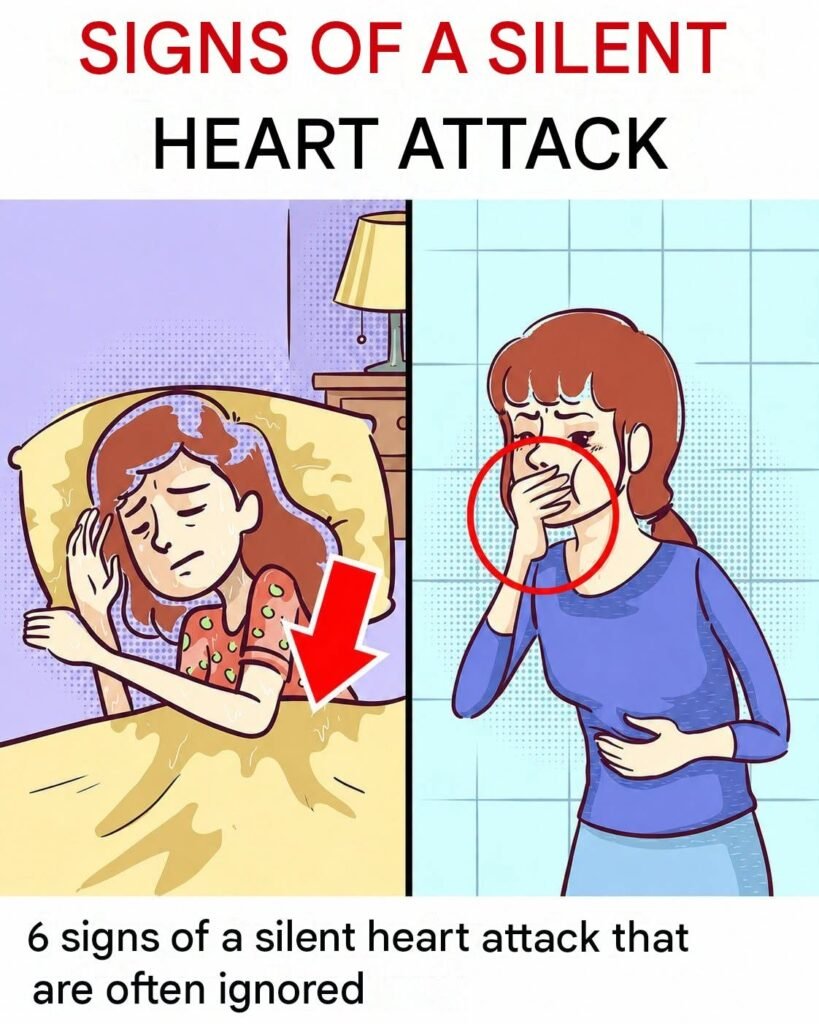

6 still overlooked signs of a silent heart attack
When most people picture a heart attack, they imagine a dramatic moment where someone clutches their chest in severe, crushing pain and collapses. In reality, many heart attacks do not happen that way. A silent heart attack—medically known as a silent myocardial infarction (SMI)—occurs when blood flow to a section of the heart muscle is blocked, causing actual heart tissue damage, yet the symptoms are so mild, brief, or unusual that the person never realizes their heart is in trouble.
Studies suggest that silent heart attacks account for a substantial share of all heart attacks, and they are just as dangerous as traditional ones because they leave behind scarred heart muscle and raise the risk of future heart failure, dangerous heart rhythms, or a second, fatal cardiac event. Because the classic chest-clutching warning is absent or minimal, recognizing subtle, easily dismissed signs is critical.
1. Unexplained, Crushing Fatigue That Comes Out of Nowhere
Why it is overlooked: Almost everyone feels tired from busy schedules, poor sleep, or stress, so exhaustion is rarely the first thing people connect to their heart.
What to watch for:
-
Sudden drop in stamina: Everyday tasks that normally feel effortless—such as walking up a short flight of stairs, carrying light groceries, or making the bed—suddenly leave you feeling completely drained or heavy.
-
Persistent weakness: Unlike normal tiredness that improves after a good night’s sleep, heart-related fatigue lingers for days or appears abruptly without a clear reason.
-
Higher prevalence in women and older adults: Women, older adults, and people with diabetes frequently experience profound fatigue as a primary warning sign of reduced blood flow to the heart.
2. Mild Chest Pressure, Fullness, or “Heartburn”
Why it is overlooked: Instead of sharp, stabbing pain, a silent heart attack often causes a dull ache, tightness, squeezing, or burning sensation in the center of the chest—making many people reach for antacids thinking they simply ate something that disagreed with them.
What to watch for:
-
Discomfort rather than pain: People often describe it as feeling like a tight band around the chest, heavy indigestion, trapped gas, or uncomfortable fullness.
-
Comes and goes: The sensation may last for several minutes, fade away, and return later, fooling you into thinking the problem passed.
-
Triggered by mild exertion or emotion: If “indigestion” shows up when walking briskly, climbing stairs, or feeling stressed rather than only after a heavy meal, treat it as a potential heart symptom.
3. Pain or Aching in the Jaw, Neck, Upper Back, or One or Both Arms
Why it is overlooked: Because the nerves supplying the heart share pathways with nerves in the upper body, the brain can misinterpret distress signals from the heart as pain in completely different areas—a phenomenon called referred pain.
What to watch for:
-
Dull ache without injury: A heavy ache in your left shoulder or arm, soreness between your shoulder blades, tightness in your neck, or an unexplained ache along your lower jaw or teeth with no dental issue or muscle strain.
-
Worsens with activity: Unlike a pulled muscle or stiff neck, cardiac-related upper-body pain does not change when you press on the area or stretch, and it often worsens during physical effort.
4. Shortness of Breath During Normal Everyday Activities
Why it is overlooked: People often blame breathlessness on being out of shape, aging, seasonal allergies, or humid weather.
What to watch for:
-
Winded without heavy exertion: Feeling noticeably short of breath while walking on flat ground, talking while walking, or resting quietly in a chair.
-
Breathing harder when lying flat: Waking up feeling air-hungry or needing extra pillows to breathe comfortably at night can signal that the heart is struggling to pump blood efficiently.
-
Occurs with or without chest discomfort: Shortness of breath can be the sole noticeable symptom of reduced blood supply to the heart muscle.
5. Sudden Cold Sweats, Lightheadedness, or Nausea
Why it is overlooked: Breaking into a sweat, feeling dizzy, or getting wave-like nausea looks almost identical to a stomach bug, food poisoning, low blood sugar, or a hot flash.
What to watch for:
-
Clammy, unexplained sweating: Breaking out in a cold sweat while sitting in a cool room or doing minimal movement—triggered by the nervous system’s stress response to heart strain.
-
Queasiness paired with dizziness: Feeling lightheaded, unsteady, or nauseous alongside subtle chest tightness, fatigue, or breathlessness.
6. Subtle Swelling in the Feet, Ankles, or Lower Legs
Why it is overlooked: Mild fluid retention is frequently blamed on standing too long, salty meals, warm weather, or tight shoes.
What to watch for:
-
New or worsening puffiness: When part of the heart muscle weakens after silent oxygen deprivation, blood flow slows down, allowing fluid to back up into the lower extremities.
-
Sock marks or tight shoes: Notice if your ankles look swollen by evening or leave deep indentations when you press a finger gently into the skin.
Who Faces the Highest Risk of a Silent Heart Attack?
Anyone can experience a silent heart attack, but the risk is significantly higher in:
-
People with diabetes: High blood sugar over time can damage sensory nerves (diabetic neuropathy), blunting the pain signals that would normally alert you to heart distress.
-
Older adults: Nerve sensitivity and symptom patterns shift with age, making subtle fatigue, confusion, or breathlessness more common than classic chest pain.
-
Women: Research consistently shows that women are more likely than men to experience non-classic heart attack symptoms such as back or jaw pain, nausea, shortness of breath, and extreme fatigue.
-
Individuals with high blood pressure, high cholesterol, a smoking history, or a family history of heart disease.
When to Seek Immediate Help and How Doctors Detect a Past Silent Heart Attack
If you experience any combination of unexplained chest pressure, shortness of breath, cold sweats, dizziness, nausea, or radiating upper-body pain—even if the symptoms feel mild—do not drive yourself or wait to see if they disappear. Call emergency medical services right away, as early treatment protects heart muscle and saves lives.
If you suspect you may have had a silent heart attack in the past, a doctor can check for signs of previous heart muscle injury using simple diagnostic tools, including an electrocardiogram (ECG/EKG), an echocardiogram (heart ultrasound), blood tests, or cardiac imaging, and help you start protective treatment to prevent future events.