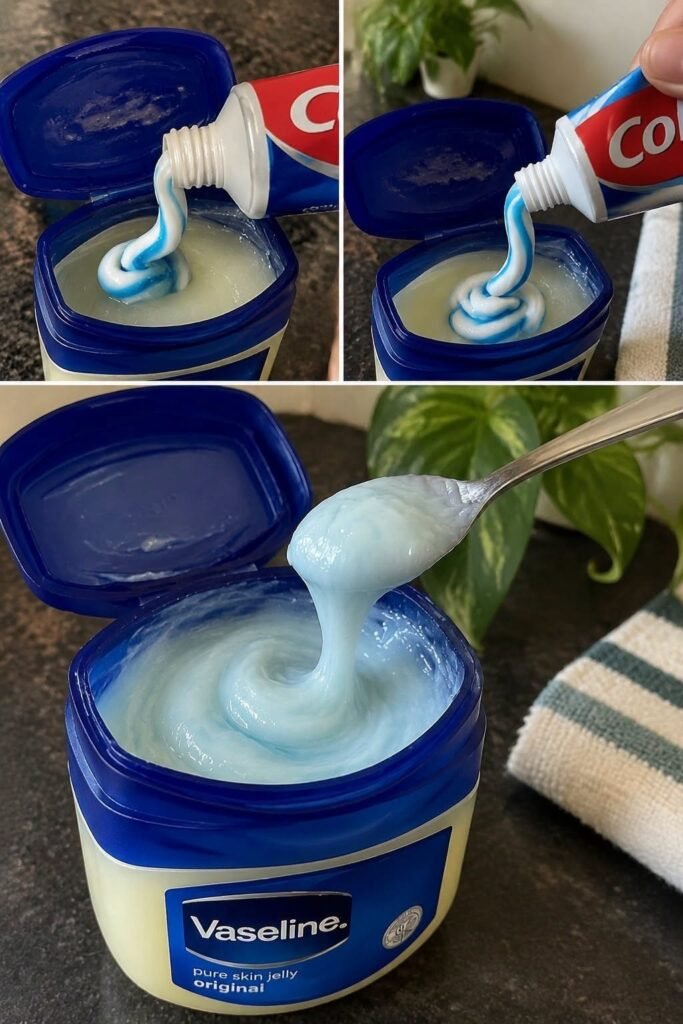

Mixing toothpaste and Vaseline (petroleum jelly) is a popular social media “life hack” often promoted for skincare—such as clearing acne, fading dark spots, tightening pores, or plumping lips—as well as minor household repairs.
However, dermatologists strongly advise against applying this mixture to your skin. While it may temporarily feel soothing or leave skin looking shiny, the combination works against your skin’s health.
Why It Is Not Effective (and Can Harm Skin)
-
Toothpaste irritates and burns the skin: Toothpaste is formulated for hard tooth enamel, not delicate facial skin. Ingredients like sodium lauryl sulfate (SLS), menthol, baking soda, hydrogen peroxide, and alcohol strip away natural oils, disrupt your skin’s pH balance, and can cause redness, peeling, chemical burns, or contact dermatitis.
-
Vaseline traps the irritants: Vaseline is an occlusive barrier designed to lock moisture in. When mixed with toothpaste, it seals harsh, irritating chemicals directly against your pores, intensifying irritation and increasing the risk of clogged pores and breakouts.
-
Temporary illusion vs. actual results: Any immediate “plumping” or “tightening” effect is simply mild swelling caused by menthol or cinnamon irritation, combined with the surface shine of petroleum jelly.
Safe, Effective Alternatives
| Intended Goal | Better Alternative | Why It Works |
| Dry, chapped lips | Plain Vaseline or Aquaphor | Seals in existing moisture without irritating lip skin |
| Acne or pimples | Benzoyl peroxide or hydrocolloid patches | Targets acne bacteria and absorbs fluid safely without burning surrounding skin |
| Dark spots or uneven tone | Vitamin C serum, niacinamide, or azelaic acid | Gently fades hyperpigmentation without damaging the skin barrier |
| Minor glass or plastic scuffs | Plain non-gel toothpaste (buffed gently, then wiped clean) | Mild abrasives in toothpaste can polish shallow surface scratches on hard materials |