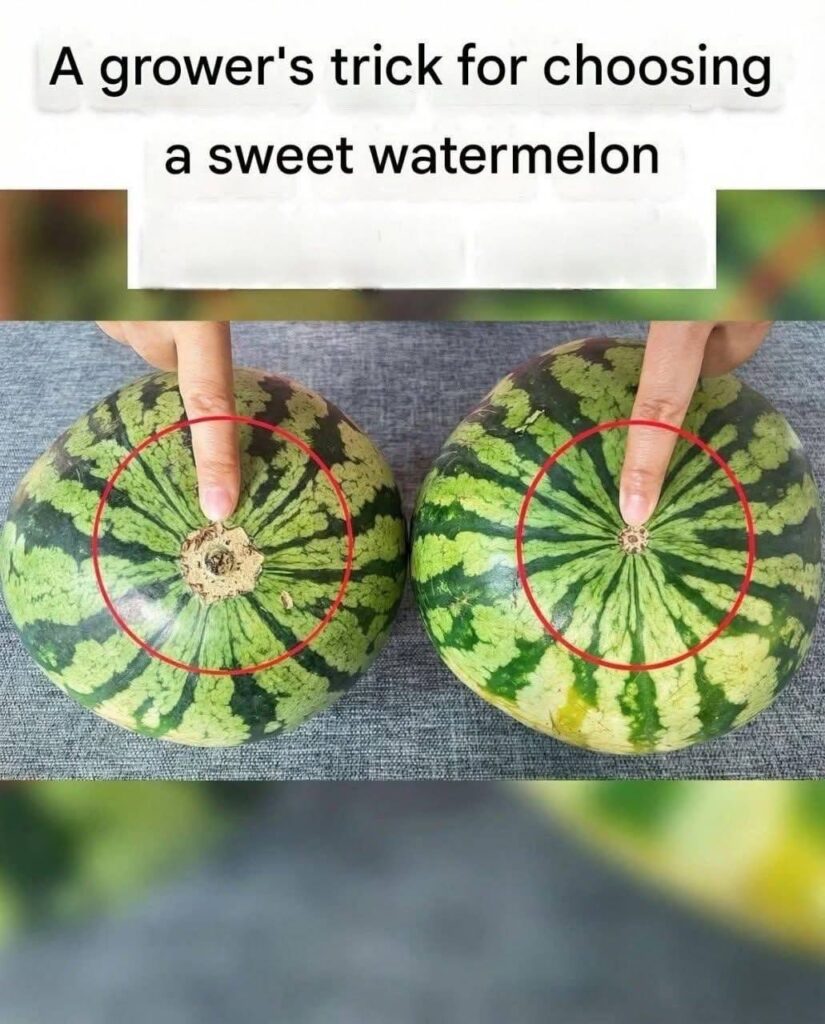

No More Bland Watermelons: How to Pick the Sweetest One
Detail
You can’t know a watermelon’s exact sweetness from the outside, but several visual clues can improve your chances of choosing a ripe, flavorful melon.
1. Look for a Large Creamy-Yellow Field Spot 🍉
The field spot is where the watermelon rested on the ground. A large, creamy yellow or orange-yellow patch generally indicates that the melon had time to ripen on the vine.
A very white or pale-green spot may indicate less maturity.
2. Check for Brown “Webbing”
Brown, web-like markings on the rind are sometimes associated with areas where the flower was pollinated and the fruit developed. They aren’t a guarantee of sweetness, but many shoppers use them as one additional clue.
3. Choose a Heavy Watermelon
Pick up two melons that are about the same size. The heavier one for its size is often a good choice because it contains plenty of water.
4. Look for a Dull, Not Shiny, Rind
A ripe watermelon often has a more dull, matte appearance. An unusually shiny rind isn’t a reliable sign of sweetness.
5. Check the Shape
Look for a watermelon that is symmetrical and evenly developed, without major dents, soft spots, bruises, or cuts.
6. Don’t Rely Too Much on the “Hollow Sound”
Tapping a watermelon and listening for a deep sound is a popular trick, but it’s not a dependable scientific test of sweetness. Treat it as a secondary clue rather than the deciding factor.
7. Avoid Soft or Damaged Areas
Skip melons with:
-
Large soft spots
-
Cracks or punctures
-
Mold
-
Leaking areas
-
Significant bruising
The Best Quick Checklist
Large yellow field spot + heavy for its size + symmetrical shape + intact rind = a good watermelon candidate.
And remember: variety, growing conditions, harvest timing, and storage also affect sweetness, so even a watermelon with all the right visual clues isn’t guaranteed to be perfectly sweet.