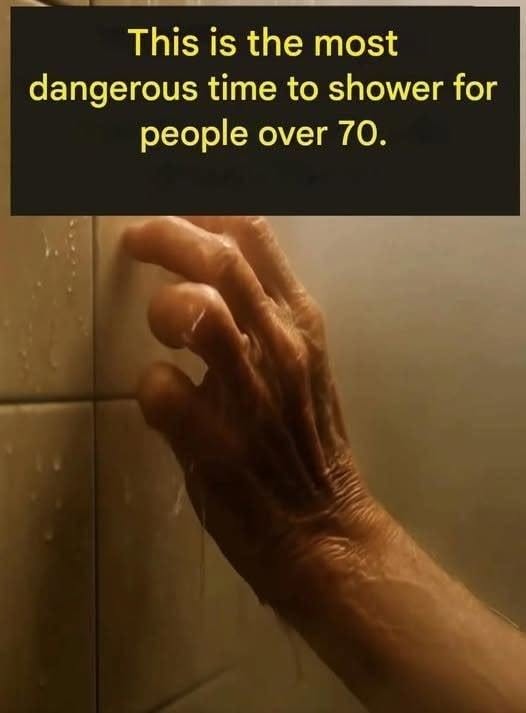

What Is the Riskiest Time to Take a Shower After Age 70?
Detail
There isn’t one universally dangerous clock time for showering after age 70. The bigger concern is showering when you’re dizzy, dehydrated, weak, or likely to have a sudden blood-pressure drop.
1. Right After Getting Out of Bed
The morning can be risky for some older adults because blood pressure may fall when moving quickly from lying down to standing. This can cause lightheadedness or fainting, particularly in people taking blood-pressure or heart medications.
Safer approach: Sit on the edge of the bed for a moment, stand slowly, and make sure you feel steady before walking to the bathroom.
2. After a Very Hot Shower
Hot water causes blood vessels to widen. In some people, this can lower blood pressure and produce dizziness, weakness, or fainting.
Use warm rather than very hot water, especially if you have low blood pressure or take medications that lower blood pressure.
3. When You Are Dehydrated
Showering while dehydrated can make dizziness more likely. This can be particularly relevant after exercise, illness, diarrhea, vomiting, or prolonged exposure to heat.
4. Immediately After a Heavy Meal
A large meal can temporarily redirect blood flow toward digestion. Some older adults experience a drop in blood pressure after eating, so combining that with a very hot shower may increase lightheadedness.
5. When You’re Sick or Weak
If you have a fever, infection, significant weakness, or are feeling faint, consider postponing the shower or having someone nearby.
How to Make Showering Safer After 70
-
Use warm, not very hot, water.
-
Install grab bars rather than relying on towel racks for support.
-
Use a non-slip bath mat.
-
Consider a shower chair if standing is difficult.
-
Keep the bathroom well lit.
-
Stand up slowly after sitting or lying down.
-
Keep medications and health conditions in mind when discussing recurrent dizziness with your doctor.
🚨 Get Medical Help
If you repeatedly feel faint, actually lose consciousness, develop chest pain, severe shortness of breath, or experience a new irregular heartbeat, don’t simply blame the shower—seek medical evaluation.
Bottom line: After 70, the riskiest shower isn’t necessarily at a particular hour. A very hot shower when you’re dehydrated, dizzy, or experiencing a blood-pressure drop is the situation to avoid.