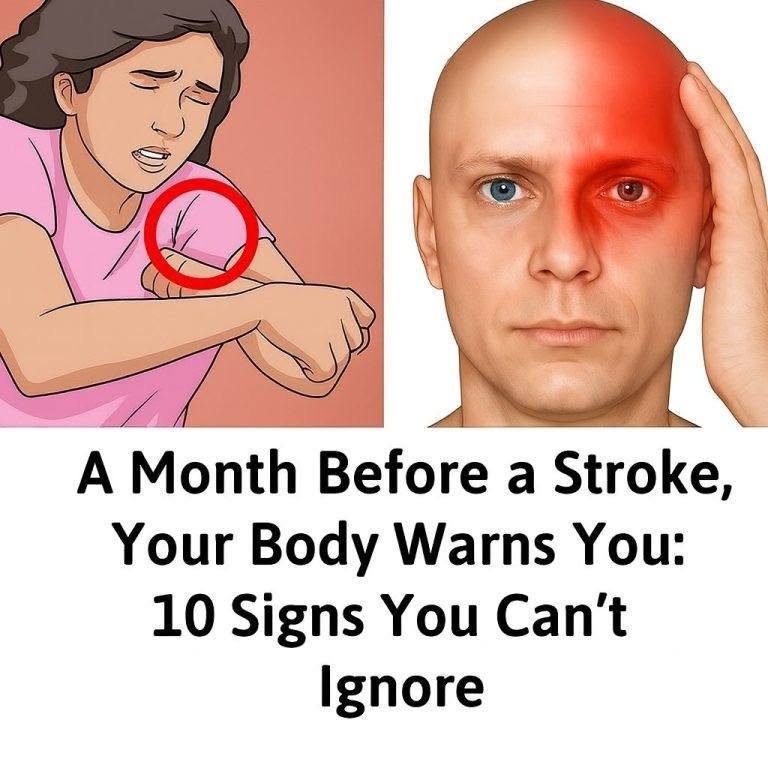

A month before a stroke, your body warns you: 10 signs not to ignore…
1. Sudden Numbness or Tingling on One Side of the Body
-
One-sided pattern: Stroke-related sensory changes typically favor one side rather than both sides equally.
-
Accompanying subtle signs: Notice if numbness comes alongside mild weakness, clumsiness, or a drooping sensation on that same side.
-
Do not wait it out: Even if sensation returns within a short time, brief one-sided numbness deserves prompt medical evaluation.
2. Sudden Weakness or Heaviness in the Face, Arm, or Leg
-
Arm or leg drift: Difficulty lifting one arm as high as the other, dropping objects unexpectedly, or dragging a foot while walking.
-
Facial asymmetry: One side of the mouth or eye looking slightly uneven or drooping when smiling or speaking.
-
Temporary episodes: Brief episodes of weakness that clear up on their own can still signal a high risk of a larger stroke.
3. Trouble Speaking or Understanding Speech
-
Slurred or garbled speech: Words coming out thick, slow, or jumbled, as if fatigued or intoxicated.
-
Word-finding or comprehension trouble: Struggling to recall common words, speaking sentences that do not make sense, or finding it hard to follow simple questions.
-
Feedback from others: Sometimes family members or coworkers notice speech changes before you realize something is off.
4. Sudden Vision Changes in One or Both Eyes
-
Temporary vision loss or dimming: Vision in one eye briefly going blurry, gray, or dark (sometimes described as a curtain pulling down over the eye).
-
Double vision or lost field of view: Seeing double, losing side (peripheral) vision, or having trouble focusing on objects on one side.
-
Sudden onset: Vision changes that appear abruptly rather than gradually over years of needing new glasses.
5. Unexplained Dizziness, Loss of Balance, or Trouble Walking
-
Spinning or unsteadiness: Feeling lightheaded, off-balance, or as if the room is spinning without an obvious inner-ear cause.
-
Stumbling or loss of coordination: Veering to one side while walking, feeling clumsy with one hand, or suddenly losing coordination.
-
Combined symptoms: Dizziness becomes especially concerning when paired with double vision, slurred speech, or numbness.
6. Sudden, Severe, or Unusual Headaches
-
“Thunderclap” or rapid peak: Pain that reaches peak intensity very quickly or feels unlike any headache you have had before.
-
Warning companions: Head pain accompanied by stiff neck, nausea or vomiting, confusion, vision changes, or weakness.
-
New pattern in older adults: New headaches starting later in life warrant careful medical assessment.
7. Sudden Confusion, Memory Lapses, or Disorientation
-
Out-of-character confusion: Suddenly forgetting familiar routines, losing track of where you are, or having trouble making simple decisions.
-
Sudden behavioral or alertness shifts: Becoming abruptly disoriented, unusually drowsy, or agitated without a clear reason.
-
Distinguishing normal tiredness: Everyday fatigue builds gradually, whereas neurological confusion often appears more abruptly.
8. Unexplained Fatigue or Sudden Drops in Stamina
-
Marked change from baseline: Feeling drained after minor tasks that previously felt effortless.
-
Underlying drivers: Unchecked hypertension, sleep apnea, anemia, or heart conditions can contribute to both fatigue and stroke risk.
-
Context matters: Fatigue alone is common and non-specific, so look at the bigger picture of your health and risk factors.
9. Neck Pain or Stiffness Paired with Neurological Symptoms
-
One-sided neck or jaw pain: Aching or tightness along one side of the neck or head, especially after sudden neck movement, chiropractic manipulation, or minor trauma.
-
Neurological clues: Neck pain occurring alongside dizziness, visual changes, drooping eyelid, or weakness requires urgent evaluation.
10. Brief “Mini-Stroke” (TIA) Episodes That Disappear Quickly
-
A critical window of risk: The risk of a full stroke is highest right after a TIA, often within the first few days to weeks.
-
Treat temporary signs seriously: A symptom going away does not mean the danger is gone; it means the brain had a brief scare that needs immediate investigation.
Remember F.A.S.T. and When to Seek Emergency Care
-
F – Face: Ask the person to smile. Does one side of the face droop or feel numb?
-
A – Arms: Ask the person to raise both arms. Does one arm drift downward or feel weak?
-
S – Speech: Ask the person to repeat a simple sentence. Is speech slurred, strange, or hard to understand?
-
T – Time: Every minute counts. Call emergency medical services immediately if any of these signs appear, even if they start to fade.