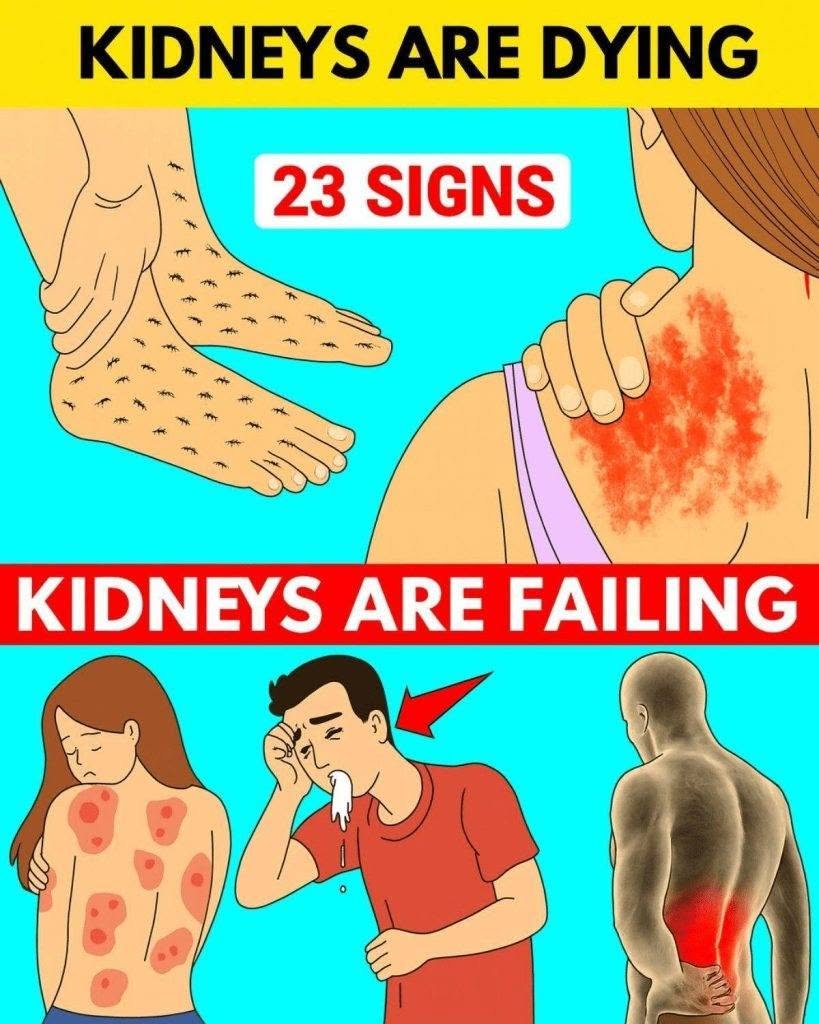

23 Strange Signs Your Kidneys Might Be in Trouble
Kidney disease can develop quietly, and early kidney problems may cause few or no noticeable symptoms. Some symptoms become more likely as kidney function declines, but none of these signs by itself proves that your kidneys are failing.
23 Possible Warning Signs
-
Changes in urination — going much more or less often than usual.
-
Waking frequently at night to urinate.
-
Foamy or unusually bubbly urine — especially when it happens persistently, which can indicate protein in the urine.
-
Blood in the urine — pink, red, or cola-colored urine should be evaluated.
-
Dark or unusually concentrated urine, particularly if it doesn’t improve with adequate hydration.
-
Swelling around the ankles or feet from fluid retention.
-
Puffiness around the eyes, especially in the morning.
-
Unexplained fatigue or weakness.
-
Difficulty concentrating or feeling mentally foggy.
-
Loss of appetite.
-
Nausea or vomiting.
-
Persistent itching without an obvious skin cause.
-
Dry or unusually itchy skin.
-
Muscle cramps, particularly when kidney disease has caused mineral or electrolyte disturbances.
-
Muscle weakness.
-
Shortness of breath, which can occur with significant fluid accumulation or anemia.
-
Sleep problems.
-
Bad or metallic taste in the mouth.
-
Unpleasant breath, sometimes described as ammonia-like.
-
Unexplained weight changes, particularly rapid weight gain from fluid retention.
-
Headaches or dizziness, which can occur with high blood pressure or anemia.
-
High blood pressure that’s difficult to control.
-
Flank or lower-back discomfort — this isn’t typical of chronic kidney disease but can occur with certain kidney problems, such as stones or infections.
Important: Many of These Symptoms Have Other Causes
Fatigue, swelling, changes in urination, itching, cramps, and nausea can result from numerous conditions unrelated to the kidneys.
That’s why symptoms alone aren’t a reliable way to diagnose kidney disease.
Simple testing can provide much better information. A healthcare professional may check:
-
Blood creatinine and estimated glomerular filtration rate (eGFR)
-
Urine albumin-to-creatinine ratio (UACR)
-
Blood pressure
-
Electrolytes and other blood tests when appropriate
Who Should Be Particularly Careful?
The risk of chronic kidney disease is higher in people with conditions such as diabetes, high blood pressure, cardiovascular disease, or a family history of kidney disease.
When to Seek Urgent Care
Seek prompt medical attention for blood in the urine, severe flank pain with fever, inability to urinate, severe swelling, significant shortness of breath, or sudden major changes in urine output.
Bottom Line
Kidney disease can be silent, so you don’t need to wait for symptoms before getting checked—particularly if you have diabetes, high blood pressure, or other risk factors.
Persistent changes in urination, swelling, unexplained fatigue, or other concerning symptoms deserve medical evaluation rather than being attributed automatically to kidney problems.