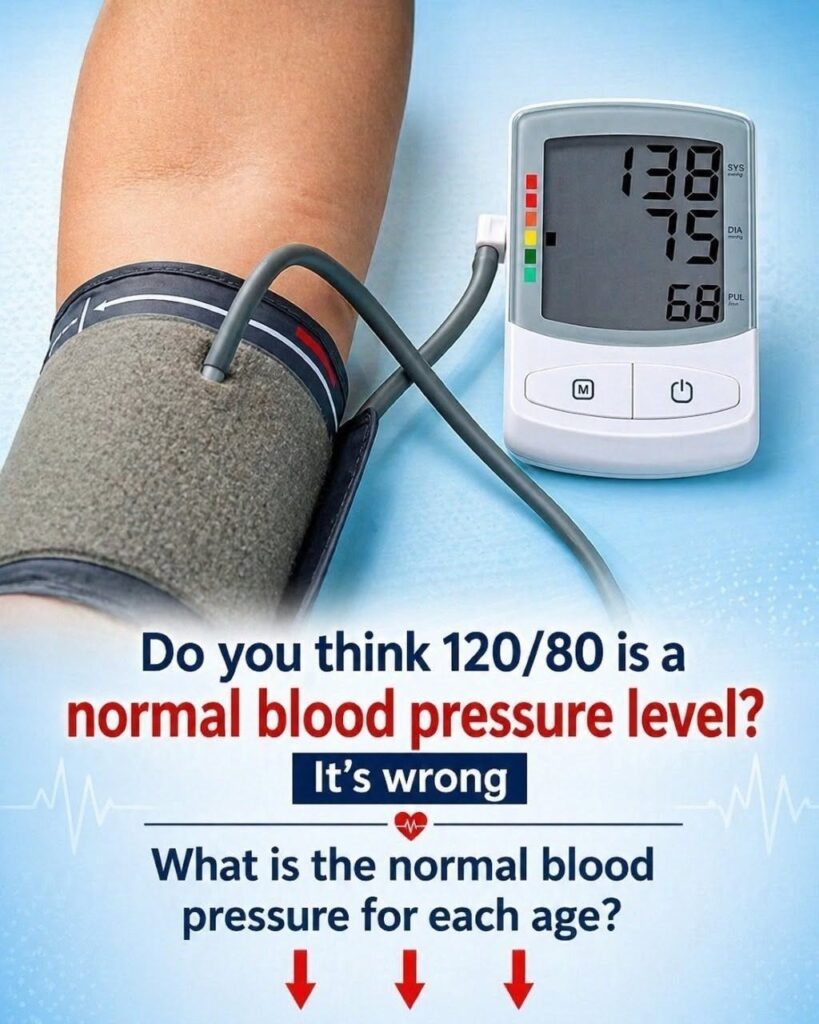

What Is “Normal” Blood Pressure at Each Age?
There isn’t a separate “normal” blood-pressure number for every age. For most adults, the same general categories are used, although blood pressure tends to rise with age in many people.
Blood pressure is written as systolic/diastolic (the top and bottom numbers), measured in mmHg.
| Age group | General guide |
|---|---|
| Children | Normal values depend on age, sex, and height; adult cutoffs shouldn’t be used |
| Teenagers | Generally similar to adult thresholds once they reach the appropriate age/size, but pediatric criteria may apply |
| Adults | Below 120/80 is generally considered normal |
| Adults with 120–129 systolic | Elevated if diastolic is below 80 |
| Adults ≥130/80 | May meet criteria for high blood pressure, depending on the guideline used and repeated measurements |
What About Older Adults?
A reading such as 140/90 isn’t automatically “normal because you’re over 60 or 70.” Older adults still benefit from controlling high blood pressure, although the appropriate treatment target can vary according to overall health, frailty, medications, and other medical conditions.
One High Reading Doesn’t Diagnose Hypertension
Blood pressure changes throughout the day and can temporarily rise because of:
-
Stress or anxiety
-
Exercise
-
Caffeine
-
Pain
-
Smoking
-
Certain medications
For a more reliable measurement, sit quietly for about 5 minutes, keep your back supported and feet on the floor, place the cuff on a bare upper arm, and avoid talking during the measurement. Taking multiple readings on different occasions gives a much better picture.
When Is It an Emergency?
If your blood pressure is 180/120 mmHg or higher, repeat the measurement after several minutes of rest.
If it remains that high and you have chest pain, shortness of breath, severe headache, confusion, weakness/numbness, vision changes, or difficulty speaking, seek emergency medical care immediately.
If it remains ≥180/120 without symptoms, contact a healthcare professional promptly for advice.
Bottom line: Don’t use age alone to decide whether a blood-pressure reading is healthy. For most adults, under 120/80 mmHg is the usual reference for normal blood pressure, while repeated readings of 130/80 or higher warrant discussion with a healthcare professional.