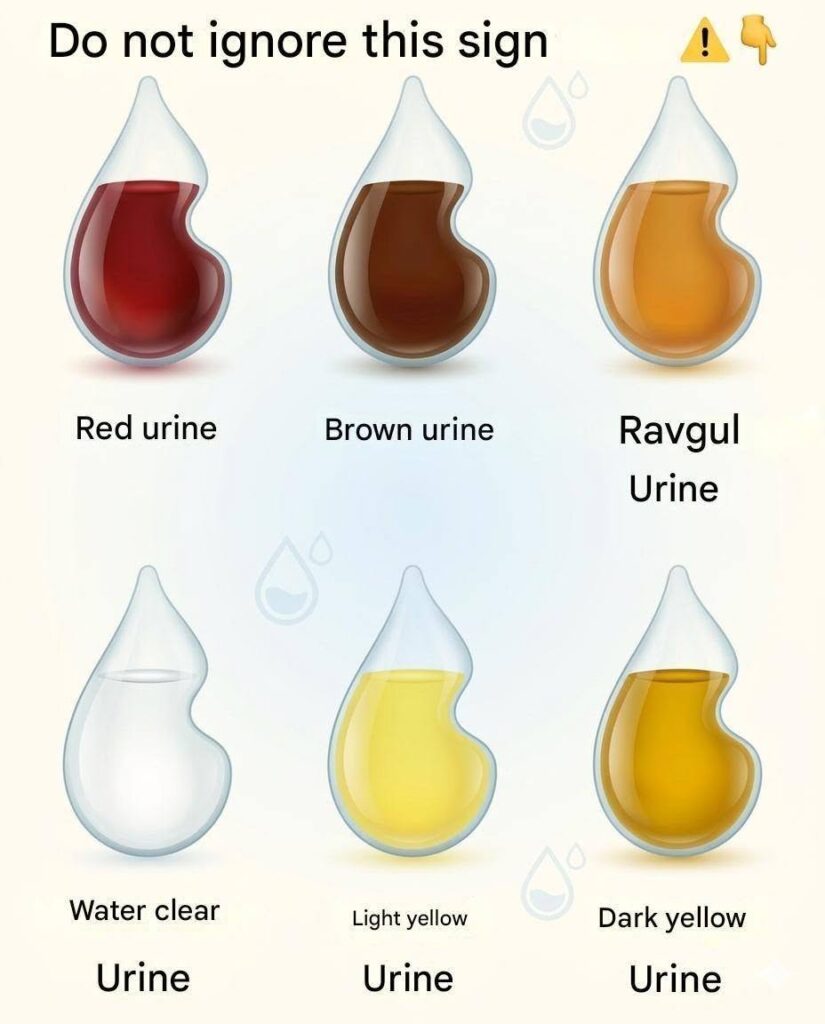

What Does the Color of Your Urine Say About Your Health?
Urine color can provide clues about hydration and sometimes other health conditions. Color alone cannot diagnose a problem, but noticeable or persistent changes are worth paying attention to.
1. Pale Yellow — Usually Normal
Light yellow or straw-colored urine is commonly associated with adequate hydration.
2. Dark Yellow — You May Need More Fluids
Darker yellow urine often occurs when urine is more concentrated, such as after sweating, exercising, or going several hours without drinking.
3. Completely Clear — Possibly Too Much Fluid
Very clear urine can occur after drinking a large amount of water. Constantly clear urine isn’t necessarily better than pale yellow urine.
4. Orange — Check the Cause
Orange urine can occur with dehydration or certain medications and supplements. If it persists without an obvious explanation, medical advice is appropriate.
5. Pink or Red — Don’t Ignore It
Beets and some other foods can temporarily change urine color, but pink, red, or cola-colored urine can also indicate blood or another medical issue. If you notice unexplained red or pink urine, contact a healthcare professional.
6. Brown or Cola-Colored — Needs Attention
Very dark brown urine can occur with severe dehydration, certain medications, liver or muscle-related problems, or other conditions. Persistent brown urine should be medically evaluated.
7. Blue or Green — Often Medication or Food Related
Certain medicines, dyes, or medical conditions can occasionally produce blue or green urine. An unexplained persistent change should be checked.
8. Cloudy or Milky — Look for Other Symptoms
Cloudy urine can sometimes occur because of crystals or dehydration, but it may also accompany a urinary tract infection, particularly when there is burning, urgency, frequent urination, fever, or pelvic discomfort.
When to Seek Medical Advice
Get prompt medical attention for urine that is persistently red or brown, especially when accompanied by pain, fever, vomiting, difficulty urinating, or feeling very unwell.
Bottom line: Pale yellow urine is generally a reassuring color, while persistent unusual colors or changes accompanied by symptoms deserve attention.