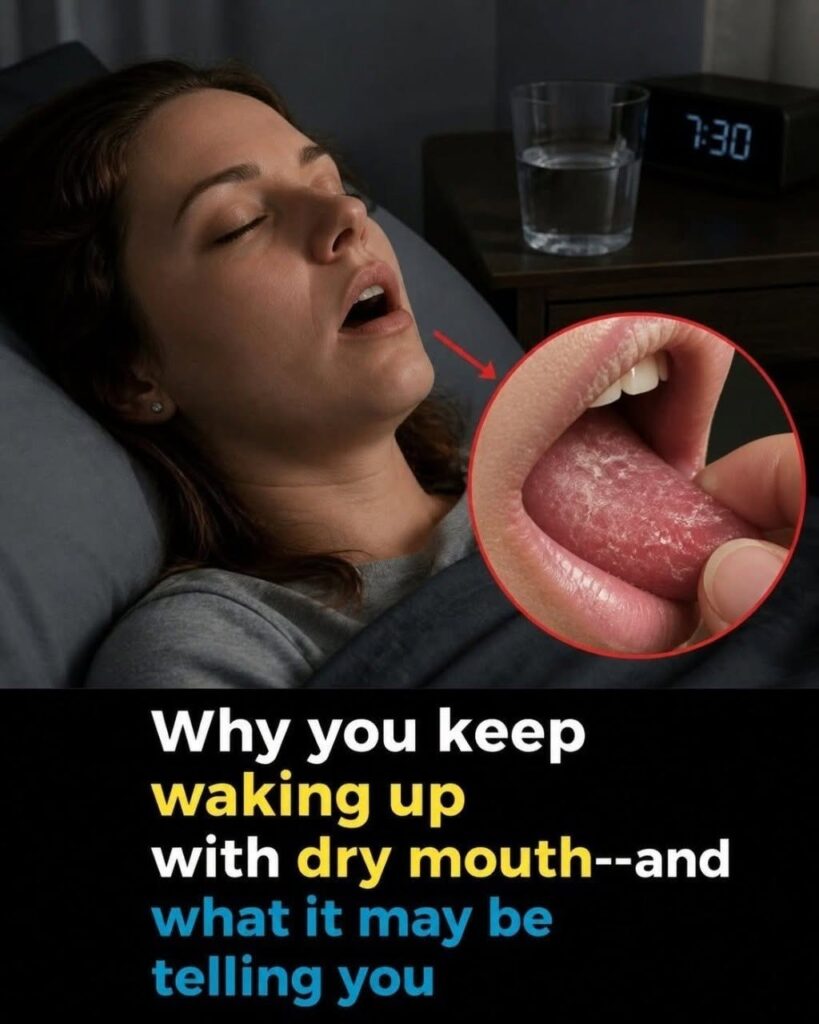

Waking Up With Dry Mouth? Here’s What Your Body Might Be Telling You
Waking up with a dry mouth is common and doesn’t necessarily mean something is wrong. But if it happens regularly, it can sometimes point to an underlying issue worth addressing.
1. You May Be Breathing Through Your Mouth
A blocked nose, allergies, congestion, or sleeping with your mouth open can dry out the mouth overnight.
2. You May Not Be Getting Enough Fluids
Dehydration can contribute to dry mouth, particularly after sweating, vomiting, diarrhea, or simply not drinking enough during the day.
3. Your Medication Could Be Contributing
Dry mouth is a common side effect of numerous medicines, including some:
-
Antihistamines
-
Antidepressants
-
Blood-pressure medications
-
Decongestants
-
Diuretics
-
Pain medications
Don’t stop a prescribed medicine because of dry mouth. A pharmacist or doctor can review your medications and suggest alternatives when appropriate.
4. Snoring or Sleep Apnea May Be Involved
People who snore heavily or have obstructive sleep apnea may breathe through their mouths during sleep.
If dry mouth occurs alongside loud snoring, gasping or choking during sleep, morning headaches, or significant daytime sleepiness, discuss it with a healthcare professional.
5. High Blood Sugar Can Cause Thirst and Dryness
Persistent thirst, frequent urination, unexplained weight loss, and dry mouth can occur with high blood glucose. If these symptoms are new or persistent, a blood-glucose check may be appropriate.
6. Your Mouth May Need More Dental Care
Reduced saliva increases the risk of tooth decay, gum problems, mouth irritation, and bad breath. If dry mouth is frequent, maintain good oral to mouth breathing, medications, dehydration, sleep apnea, diabetes, or other conditions. Finding the cause is more useful than simply treating hygiene and consider discussing it with a dentist.
What Can You Try?
-
Drink water regularly during the day.
-
Address nasal congestion if present.
-
Avoid excessive alcohol and tobacco.
-
Limit very sugary drinks and foods.
-
Consider sugar-free gum or lozenges to stimulate saliva.
-
Keep up with regular dental checkups.
When to Get Checked
See a doctor or dentist if dry mouth persists for several weeks, is severe, makes swallowing difficult, causes significant dental problems, or occurs with excessive thirst and frequent urination.
Bottom line: Occasional morning dryness is usually harmless, but persistent dry mouth can be related to mouth breathing, medications, dehydration, sleep apnea, diabetes, or other conditions. Finding the cause is more useful than simply treating the symptom.