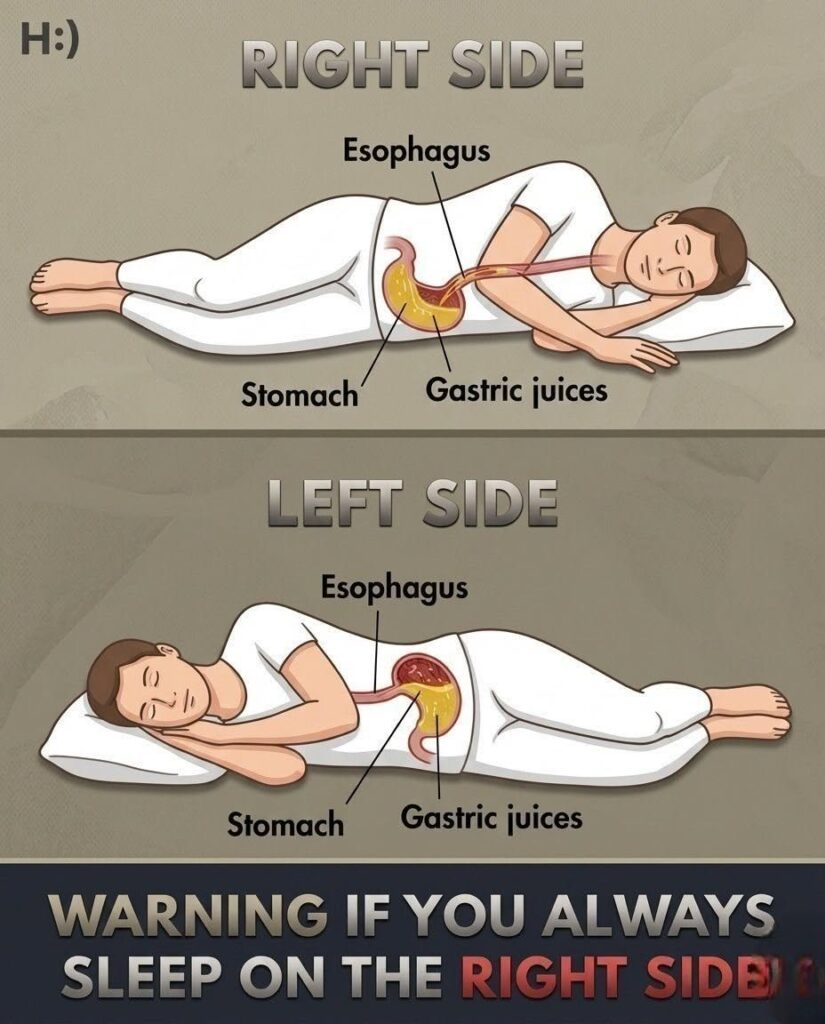

If You Always Sleep on Your Right Side, Here’s What to Know
Sleeping on your right side is not inherently unhealthy. For most people, the best sleeping position is the one that allows them to sleep comfortably and wake without significant pain. However, side sleeping can affect reflux, breathing, and joint comfort in different ways.
1. You May Notice More Acid Reflux
For people who experience nighttime heartburn or acid reflux, sleeping on the right side may sometimes make symptoms worse. Left-side sleeping is often better tolerated because of the position of the stomach and esophagus.
2. Your Shoulder May Become Uncomfortable
Keeping the same position for many hours can place pressure on the shoulder underneath you. A supportive pillow can help keep your head and neck in a neutral position.
3. Your Spine Benefits From Proper Support
Side sleeping can be comfortable for the back when the spine remains aligned. A pillow between the knees can reduce twisting of the hips and lower back.
4. Your Neck Position Matters
A pillow that is too high or too low can bend your neck throughout the night and contribute to morning stiffness or discomfort. Your pillow should support your head without forcing your neck sharply upward or downward.
5. Pregnancy Is Different
During pregnancy, sleep-position recommendations can change as pregnancy progresses. Pregnant people should follow their healthcare professional’s advice about the safest and most comfortable sleeping position.
6. There Is No Need to Force Yourself to Change
If you sleep well on your right side and don’t experience reflux, pain, numbness, or breathing problems, there is generally no reason to worry simply because you favor that side.
Bottom line: Sleeping on your right side is usually fine. If you regularly experience nighttime heartburn, shoulder pain, numbness, or poor-quality sleep, adjusting your position and discussing persistent symptoms with a healthcare professional may help.