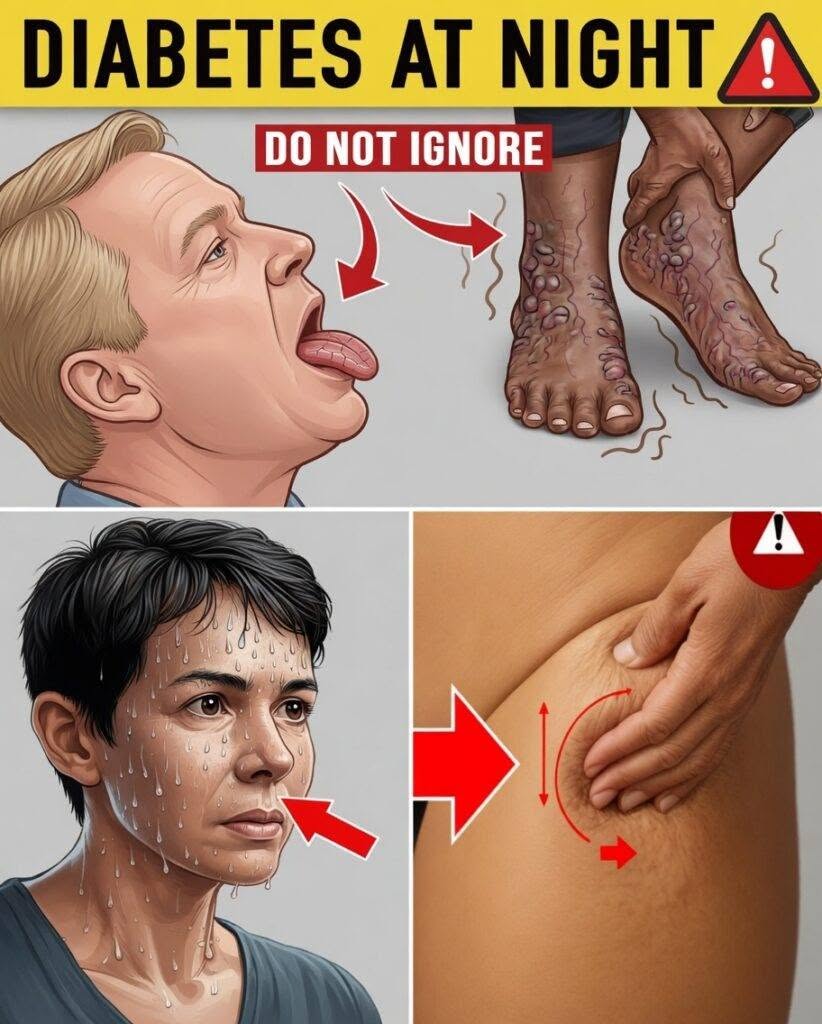

7 Common Nighttime Symptoms That May Be Associated With Diabetes Concerns
Diabetes can sometimes cause symptoms that become more noticeable at night. This can happen because elevated blood sugar affects fluid balance, nerves, circulation, and the way the body uses energy. However, these symptoms are also common with many other conditions, so experiencing one does not automatically mean you have diabetes.
Here are seven nighttime symptoms worth paying attention to, especially when several occur together or keep happening regularly.
1. Frequent Urination During the Night
Needing to get up repeatedly to urinate, known as nocturia, can sometimes occur when blood sugar is consistently elevated. When glucose levels become too high, the kidneys may remove more glucose through the urine. Water follows the glucose, increasing urine production.
Nighttime urination can also be caused by drinking fluids late in the evening, certain medications, urinary problems, or other health conditions. Persistent changes should be discussed with a healthcare professional.
2. Excessive Thirst
Waking up unusually thirsty or having a very dry mouth can accompany frequent urination and elevated blood sugar. Losing more fluid through urination can leave the body needing additional water.
If intense thirst keeps returning despite drinking normally, it is worth having your blood glucose checked rather than assuming it is simply dehydration.
3. Night Sweats or Feeling Shaky
Some people taking insulin or certain diabetes medications can experience low blood sugar during the night. Symptoms may include sweating, shakiness, hunger, a racing heartbeat, confusion, or waking suddenly feeling uncomfortable.
Night sweats have many other possible causes, however. Repeated episodes—particularly in someone taking medication that can lower blood sugar—deserve medical attention.
4. Tingling, Burning, or Numbness in the Feet
High blood sugar over time can damage nerves, a complication known as diabetic peripheral neuropathy. Symptoms may include tingling, burning, pins-and-needles sensations, numbness, or unusual sensitivity in the feet and legs.
These sensations can become more noticeable when you are lying still at night. They should not automatically be attributed to diabetes, because nerve compression, vitamin deficiencies, and other conditions can cause similar symptoms.
5. Leg Cramps or Unusual Muscle Discomfort
Nighttime leg cramps are common and have many possible causes. In people with diabetes, however, nerve problems, circulation issues, dehydration, or changes in minerals may sometimes contribute to discomfort.
Frequent or severe cramps should be evaluated rather than treated as proof of a blood-sugar problem.
6. Increased Hunger Despite Eating Normally
Persistent hunger can sometimes occur when glucose is not being used effectively by the body’s cells. When this happens, the body may continue sending hunger signals even after a person has eaten.
Increased appetite can have many explanations, including normal changes in eating patterns, growth, physical activity, medications, and other medical conditions. When it occurs alongside excessive thirst, frequent urination, or unexplained weight changes, discussing it with a healthcare professional is sensible.
7. Difficulty Sleeping or Unexplained Restlessness
Blood sugar fluctuations can sometimes interfere with sleep. High blood sugar may contribute to thirst and frequent urination, while low blood sugar can cause sweating, shakiness, hunger, or a sudden awakening.
Poor sleep itself can also affect blood sugar regulation, creating a cycle in which sleep problems and metabolic health influence one another.
When Should You Get Checked?
A single symptom usually cannot tell you whether you have diabetes. What matters more is a persistent pattern, particularly when symptoms such as frequent urination, unusual thirst, increased hunger, unexplained weight changes, fatigue, blurred vision, or recurrent infections occur together.
A healthcare professional can check blood glucose with appropriate testing, such as an A1C or fasting blood glucose test, and determine whether further evaluation is needed.
If someone has severe thirst and urination accompanied by vomiting, abdominal pain, deep or rapid breathing, significant weakness, confusion, or unusual sleepiness, urgent medical evaluation is important.
The Bottom Line
Nighttime symptoms can sometimes provide a reason to look more closely at blood sugar, but they are not a diagnosis by themselves. Many of these symptoms have several possible causes. If they are persistent, worsening, or occurring together, getting appropriate medical testing is much more useful than trying to identify diabetes based on symptoms alone.