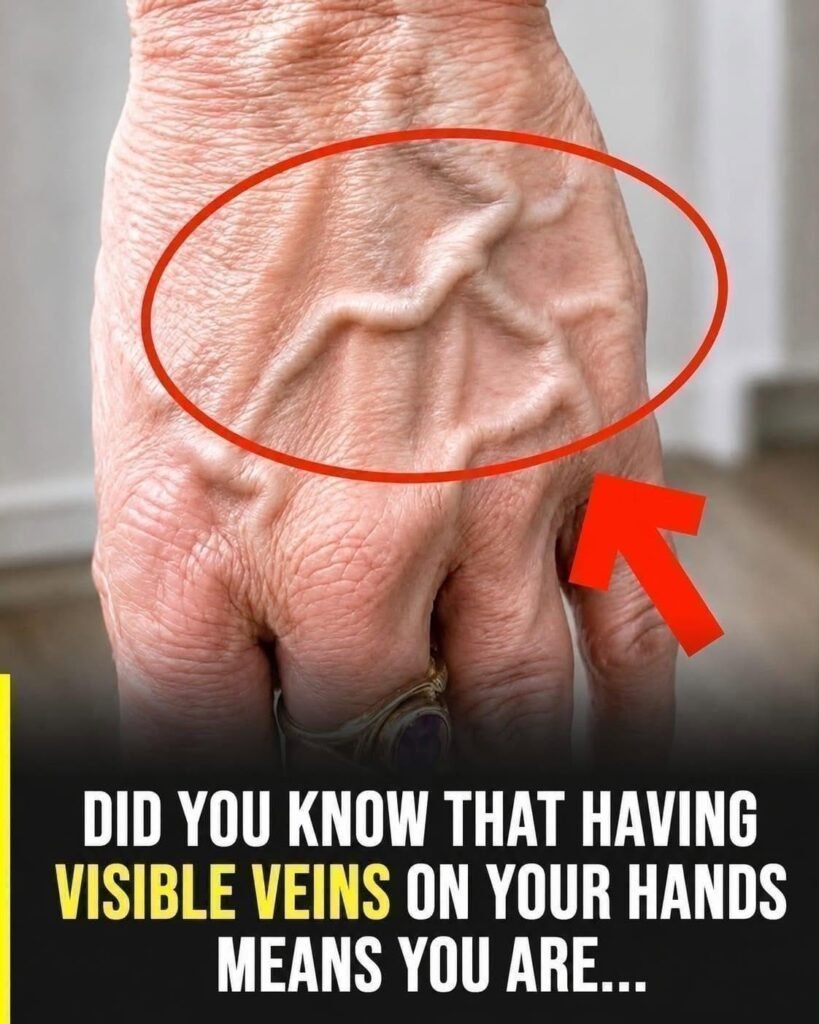

Did You Know That Having Visible Veins Means You Are…
What Prominent or Visible Veins Actually Indicate About Your Body
Noticing blue, green, or slightly raised veins beneath the skin of your hands, arms, legs, or chest is very common and usually reflects normal anatomy, hydration, body composition, and circulation rather than a single condition. Depending on where they appear and whether they are flat or bulging, visible veins point to several distinct physiological traits.
1. Low Subcutaneous Body Fat & Lean Muscle Tone
One of the most frequent reasons veins stand out clearly—especially on the forearms, biceps, calves, and hands—is simply having less fat padding between the skin and superficial blood vessels:
-
Closer to the Surface: Veins run just beneath the dermis. When the layer of subcutaneous fat is thin, veins become naturally visible without anything being wrong with circulation.
-
Active Muscle Pump: Regular resistance training, manual labor, or cardiovascular exercise increases blood flow to working muscles, pushing superficial veins slightly outward against the skin so they appear fuller and more defined.
2. Fair, Thin, or Naturally Aging Skin
Skin thickness, melanin levels, and collagen density strongly influence how easy it is to see blood vessels underneath:
-
Lighter or Translucent Skin Tones: Pale or fair skin scatters less light, allowing the darker red blood inside veins to show through as bluish or greenish lines (an optical effect of light passing through skin layers).
-
Natural Collagen Thinning Over Time: As skin gradually loses collagen and elasticity with age, the outer layers become thinner and more translucent, making veins on the backs of the hands, wrists, and lower legs much easier to see.
3. Warm Temperature, Hydration & Normal Blood Volume Shifts
Veins expand and contract constantly throughout the day to help regulate body temperature and fluid balance:
-
Heat & Vasodilation: Warm weather, hot showers, saunas, or a warm room cause superficial veins to widen (vasodilate) so excess body heat can escape through the skin, temporarily making veins look larger and more prominent.
-
Healthy Circulation & Fluid Volume: Well-hydrated blood volume keeps superficial veins plump and visible, whereas dehydration often makes veins flatten out.
-
Hormonal & Pregnancy Changes: During pregnancy or natural hormonal shifts, overall blood volume rises and blood vessel walls relax, commonly making veins across the chest, abdomen, and legs more noticeable.
4. Genetics & Natural Vascular Anatomy
Just like height or eye color, vein depth and vessel size are heavily inherited:
-
Naturally Superficial Veins: Some people are simply born with veins positioned closer to the skin surface or slightly wider vessel walls, even at an average body weight.
5. When Visible Veins Point to Venous Pressure or Valve Weakness
While flat, painless visible veins are almost always harmless, certain patterns indicate increased pressure inside the veins—most commonly in the lower legs:
-
Spider Veins (Telangiectasias): Tiny, flat web-like red, blue, or purple lines just under the skin surface, often triggered by prolonged standing, sun exposure, genetics, or hormonal changes.
-
Varicose Veins: Enlarged, twisted, rope-like veins that bulge above the skin surface, usually on the calves or inner thighs. These occur when tiny one-way valves inside leg veins weaken, allowing blood to pool downward against gravity.
-
Signs of Venous Strain to Watch For: Heavy, aching, or throbbing legs after standing, mild ankle swelling by evening, itching or skin darkening around the ankles, or nighttime leg cramps.
Everyday Habits That Support Healthy Circulation & Vein Tone
-
Move Your Calf Muscles Regularly: Walking, cycling, swimming, or doing simple ankle pumps and heel raises every hour activates the calf muscle pump, which squeezes blood smoothly back upward toward the heart.
-
Elevate Your Legs After Long Days: Resting with your legs propped up on pillows slightly above heart level for 15 to 20 minutes in the evening relieves downward venous pressure and eases leg heaviness.
-
Stay Well-Hydrated & Eat Fiber-Rich Foods: Adequate water intake keeps blood viscosity smooth, while high-fiber foods (vegetables, oats, legumes, berries) prevent straining that raises abdominal and pelvic vein pressure.
-
Include Flavonoid-Rich Foods: Citrus fruits (especially the white pith), berries, buckwheat, dark leafy greens, and red onions supply rutin, diosmin, and anthocyanins, plant compounds that help support blood vessel wall strength and elasticity.
-
Avoid Prolonged Still Standing or Sitting: Shift your weight frequently, avoid crossing your legs tightly for long stretches, and consider light graduated compression socks during long flights, desk shifts, or jobs requiring hours on your feet.
-
Protect Skin from Excessive Sun: Daily broad-spectrum sunscreen helps preserve skin collagen and prevents UV-triggered spider veins on the face, chest, and legs.