
If You Have These 9 Symptoms in Your Feet, It’s a Sign That…
What 9 Common Foot Symptoms Indicate About Circulation, Nerves, Metabolism, and Joint Health
Your feet sit at the farthest point from your heart and carry the longest nerve pathways in the body, making them one of the earliest places where changes in blood circulation, nerve signaling, blood sugar balance, kidney or heart fluid regulation, and nutrient levels show up. Recognizing these nine specific foot signs helps pinpoint which underlying system needs attention.
1. Persistent Tingling, “Pins and Needles,” or Numbness
-
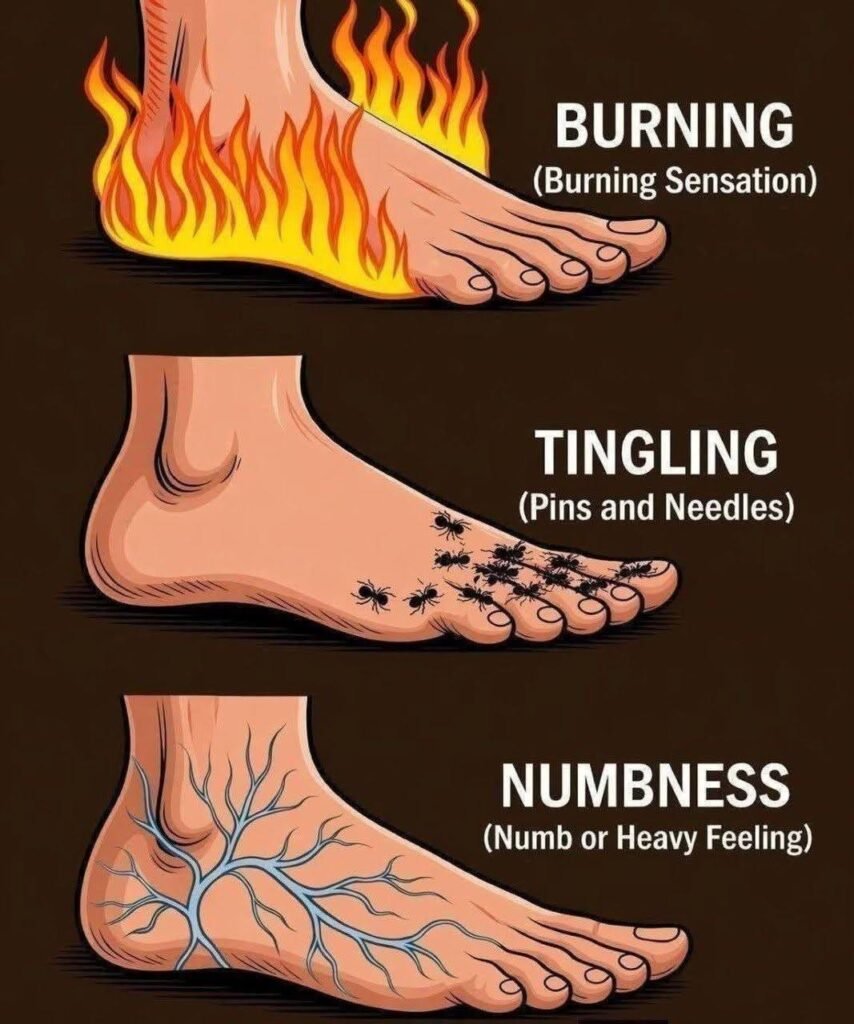
What It Looks Like: A crawling, prickling, or “asleep” sensation in the toes or soles that does not fade after changing position, or reduced ability to feel light touch, hot water, or sharp pebbles.
-
What It Often Points To: Peripheral neuropathy (irritation or damage to the long sensory nerves in the feet), most commonly linked to elevated blood sugar / insulin resistance, vitamin B12 deficiency, chronic alcohol use, or nerve compression in the lower spine.
2. Burning, Shooting, or Electric-Shock Foot Pain (Especially at Night)
-
What It Looks Like: Soles that feel hot, burning, raw, or tender even when cool to the touch, often worsening when lying in bed under sheets.
-
What It Often Points To: Small-fiber nerve irritation from diabetic or prediabetic neuropathy, B-vitamin deficiencies (B1, B6, B12), thyroid imbalance, or tarsal tunnel syndrome (compression of the tibial nerve near the inner ankle).
3. Chronically Cold Feet and Pale or Bluish Toes
-
What It Looks Like: Feet that stay icy cold even in warm rooms, turning pale, bluish, or purplish when elevated or chilled.
-
What It Often Points To: Reduced arterial blood flow (peripheral artery disease / narrowed blood vessels), hypothyroidism (slowed metabolic heat production), iron-deficiency anemia, or Raynaud’s phenomenon (temporary spasm of small blood vessels in the toes).
4. Swollen Feet and Ankles (Pitting Edema)
-
What It Looks Like: Puffiness around the ankles and tops of the feet where socks leave deep indentations, or pressing a thumb into the skin leaves a temporary dimple.
-
What It Often Points To: Fluid pooling from venous insufficiency (weakened leg vein valves), prolonged sitting or standing, high dietary sodium, or—when persistent and symmetric—reduced heart, kidney, or liver fluid-filtering efficiency, as well as side effects from certain blood pressure medications (such as calcium channel blockers).
5. Slow-Healing Sores, Blisters, or Foot Ulcers
-
What It Looks Like: Minor cuts, shoe rubs, cracked heels, or blisters that stay open, ooze, or fail to close after 1 to 2 weeks.
-
What It Often Points To: Impaired tissue repair caused by elevated blood glucose (which slows white blood cell defense and collagen rebuilding) combined with poor arterial circulation delivering insufficient oxygen and nutrients to the skin.
6. Shiny, Tight, Hairless Skin on the Feet and Lower Shins
-
What It Looks Like: Hair disappearing from the tops of the toes and lower legs, accompanied by smooth, thin, glossy skin and thickened or slow-growing toenails.
-
What It Often Points To: Long-term reduced arterial blood supply (peripheral artery disease)—hair follicles and nail beds need steady oxygen-rich blood flow to grow normally.
7. Sudden Severe Pain, Redness, and Heat in the Big Toe Joint
-
What It Looks Like: Intense throbbing pain, swelling, warmth, and glossy red skin around the base of the big toe (or midfoot/ankle) that often strikes suddenly overnight, making even the weight of a bedsheet painful.
-
What It Often Points To: Gout (crystallization of excess uric acid inside the joint), pseudogout, or localized joint inflammation/infection.
8. Frequent Foot Arch or Toe Cramps and Muscle Spasms
-
What It Looks Like: Sudden, painful tightening or curling of the arch or toes during walking, stretching, or sleep, alongside foot muscle fatigue.
-
What It Often Points To: Electrolyte and mineral imbalances (low magnesium, potassium, or calcium), dehydration, tight calf muscles, or reduced blood flow during exertion (intermittent claudication).
9. Deeply Cracked Heels, Peeling Skin, or Thickened Yellow Nails
-
What It Looks Like: Deep fissures around the heel rim, persistent scaling between the toes, or brittle, thickened, discolored toenails.
-
What It Often Points To: Severe skin dryness from thyroid underactivity, autonomic nerve dryness (reduced sweat gland moisture in the feet due to early neuropathy), fungal infections (athlete’s foot or onychomycosis), or repetitive friction from unsupportive footwear.
Daily Foot-Care & Circulation Support Routine
-
Inspect Your Feet Daily: Check the tops, soles, heels, and spaces between toes each evening for small cuts, redness, blisters, or color changes—using a small hand mirror if bending is difficult.
-
Wash and Moisturize Properly: Wash feet daily in lukewarm (never scalding hot) water with mild soap, pat dry thoroughly—especially between the toes—and apply a rich urea- or ceramide-based moisturizer to dry heels and soles (avoiding lotion between toes where excess moisture encourages fungus).
-
Stimulate Daily Blood Flow: Practice ankle circles, toe curls, and calf raises for 5 minutes twice a day, walk regularly in cushioned, wide-toe-box shoes, and elevate swollen feet slightly above heart level for 15–20 minutes in the evening.
-
Support Nerve and Vascular Nutrition: Emphasize whole foods rich in vitamin B12 (eggs, fish, dairy, fortified foods), magnesium and potassium (leafy greens, pumpkin seeds, beans, bananas), omega-3 fats (sardines, salmon, walnuts), and steady hydration while moderating refined sugars and excess sodium.
-
Trim Nails Straight Across: Cut toenails straight across and file sharp corners gently rather than digging down the sides to prevent ingrown nails and secondary infections.