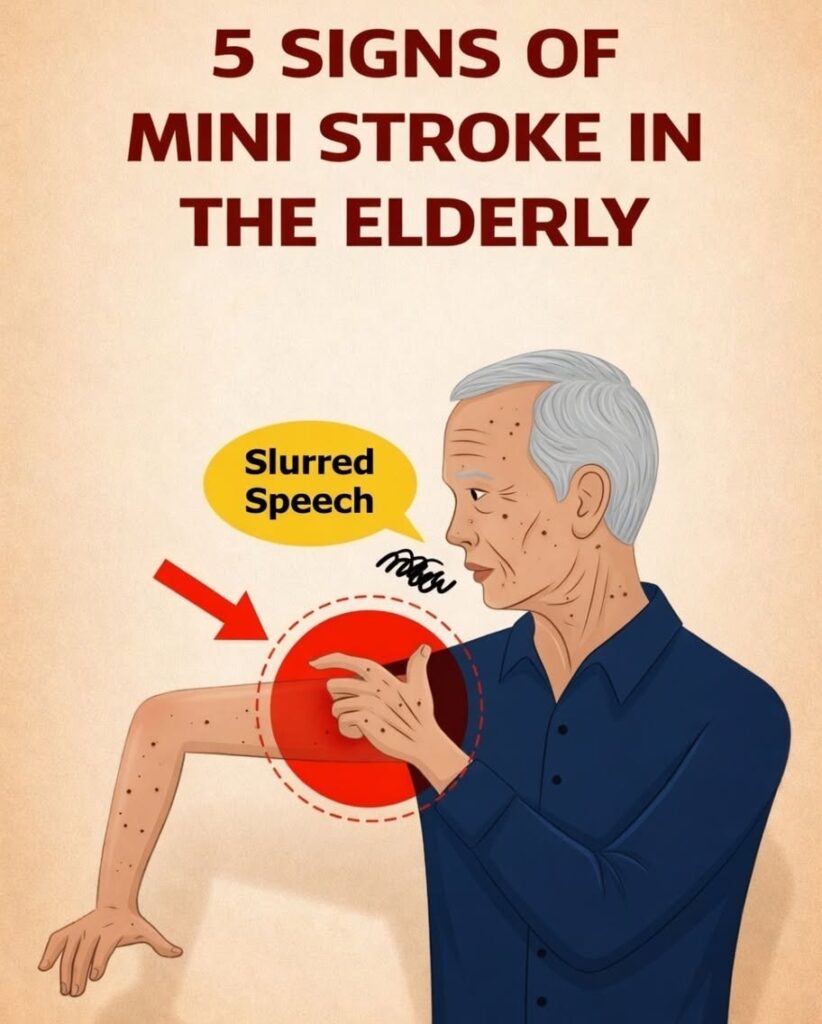

5 Warning Signs of a Transient Ischemic Attack (TIA) in Older Adults You Should Never Ignore
A transient ischemic attack (TIA) happens when blood flow to part of the brain is temporarily disrupted. The symptoms can resemble a stroke and may disappear within minutes or hours. Even if the person feels completely normal afterward, a TIA is a medical emergency and can be a warning that a stroke may occur.
1. Sudden Weakness or Numbness
A person may suddenly develop weakness or numbness, particularly on one side of the face, arm, or leg. The change can be brief and may disappear, but it should never be dismissed simply because it improves.
2. Sudden Trouble Speaking or Understanding
Slurred speech, difficulty finding words, inability to speak normally, or trouble understanding what others are saying can occur during a TIA.
3. Sudden Vision Changes
Temporary loss of vision, blurred or double vision, or difficulty seeing from one or both eyes can be a warning sign. Sudden vision changes should receive immediate medical attention.
4. Sudden Trouble Walking or Loss of Balance
A TIA can cause sudden dizziness, difficulty walking, loss of coordination, or problems maintaining balance. These symptoms can be particularly dangerous in older adults because of the risk of falling.
5. Sudden Severe Confusion or Difficulty Understanding
A person may suddenly seem confused or have difficulty understanding or responding appropriately. A sudden change in mental function should be treated as an emergency, especially when accompanied by other neurological symptoms.
Remember: Symptoms Can Disappear
One of the most dangerous misconceptions about a TIA is that it is safe to wait because the symptoms went away. A TIA still requires urgent medical evaluation because it can indicate an underlying blood-vessel or heart problem that needs treatment.
What to Do
If someone suddenly develops facial weakness, arm weakness, speech difficulty, vision changes, severe balance problems, or another possible stroke symptom, call your local emergency medical service immediately. Note when the symptoms began and do not wait to see whether they return.
Bottom line: A TIA can be temporary, but the warning it provides is serious. Sudden neurological symptoms should be treated as a possible stroke or TIA until medical professionals determine the cause.