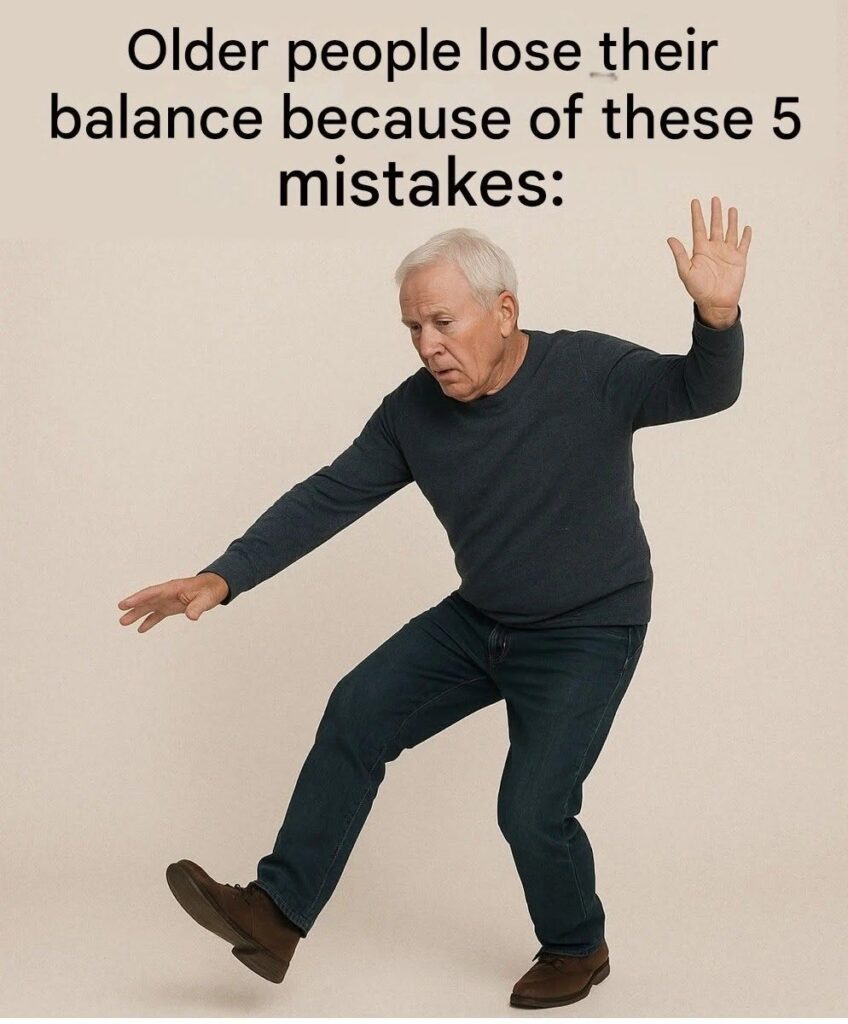

5 Common Mistakes That Can Cause Older People to Lose Their Balance
Balance often changes with age, but falls are not an unavoidable part of getting older. Certain everyday habits can increase the risk of stumbling or falling, and many can be addressed with simple changes.
1. Wearing Unsafe Footwear
Loose slippers, worn-out soles, high heels, or shoes with poor support can make walking less stable. Shoes that fit properly and have a secure fastening and good traction are generally safer.
2. Getting Up Too Quickly
Standing suddenly after sitting or lying down can cause lightheadedness, particularly in people who experience a drop in blood pressure when changing position.
Better habit: Sit at the edge of the bed or chair for a moment, move the ankles and feet, then stand slowly while holding a stable surface if needed.
3. Ignoring Vision or Hearing Problems
Poor vision can make it harder to notice obstacles, uneven surfaces, or changes in floor height. Hearing problems can also affect awareness of what is happening around a person.
Regular vision and hearing checks can help identify problems that may contribute to falls.
4. Leaving Clutter or Poor Lighting Around the Home
Loose rugs, electrical cords, cluttered walkways, and dim hallways can create unnecessary hazards.
Keep frequently used pathways clear and make sure stairs, bathrooms, bedrooms, and entrances have adequate lighting.
5. Not Reviewing Medications
Some medications can cause dizziness, drowsiness, low blood pressure, or impaired coordination. Taking several medications can increase the likelihood of side effects or interactions.
Older adults should periodically review all prescription medicines, over-the-counter products, and supplements with a healthcare professional or pharmacist.
A Few Extra Steps Can Help
Regular, age-appropriate physical activity that works on strength, flexibility, and balance can help maintain mobility. A healthcare professional or physical therapist can recommend exercises appropriate for a person’s abilities and health conditions.
If someone has repeated falls, new dizziness, significant weakness, or a sudden change in walking ability, they should be medically evaluated rather than simply assuming it is normal aging.