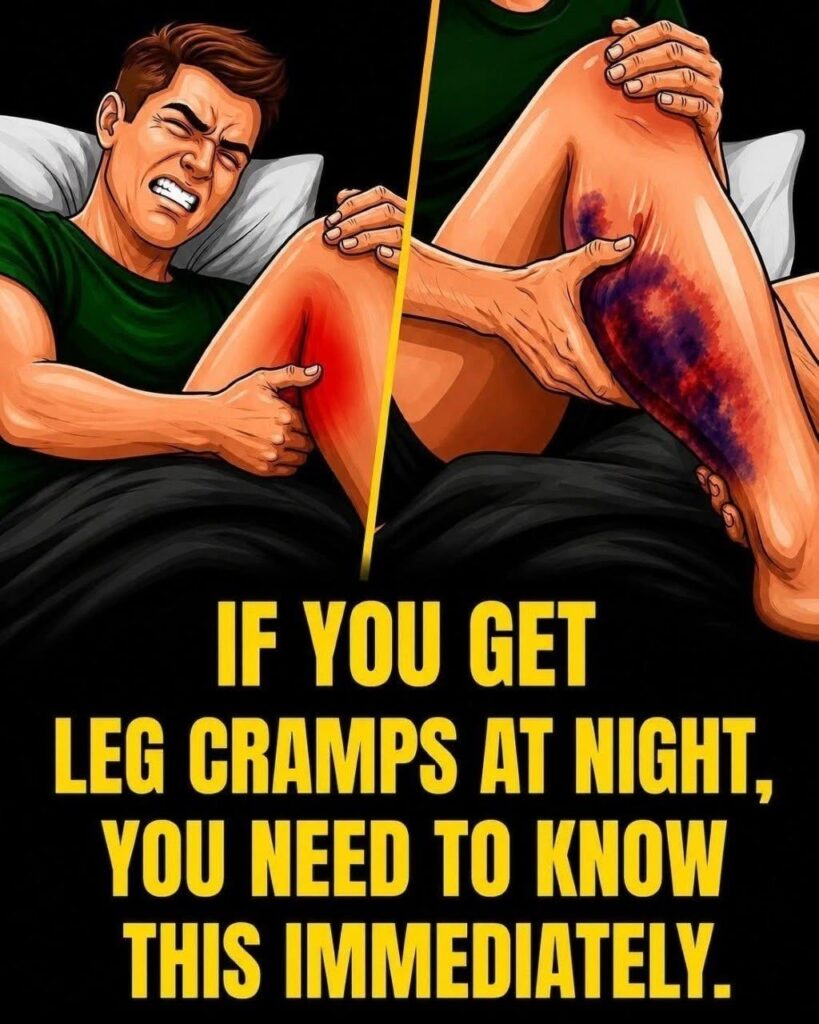

Don’t Ignore Leg Cramps at Night: Here’s What You Should Know
Nighttime leg cramps are sudden, painful muscle contractions that commonly affect the calf or foot while resting or sleeping. They are often harmless, but frequent, severe, or new cramps can sometimes point to an underlying problem.
1. Dehydration Can Contribute
Not drinking enough fluids may contribute to muscle cramping, particularly after sweating, exercise, vomiting, or diarrhea. Staying adequately hydrated throughout the day can help.
2. Muscle Overuse May Trigger Cramps
More physical activity than usual, prolonged standing, or strenuous exercise can leave muscles fatigued and more prone to cramping at night.
3. Certain Medications Can Play a Role
Some medicines can be associated with muscle cramps or changes in fluid and electrolyte balance. If cramps began after starting or changing a medication, discuss the timing with a healthcare professional rather than stopping the medicine yourself.
4. Mineral Problems Are Possible
Low levels of certain minerals, including potassium, calcium, or magnesium, can sometimes contribute to muscle spasms. However, cramps don’t automatically mean you have a mineral deficiency, and taking supplements without knowing the cause isn’t always helpful.
5. Circulation and Nerve Problems May Matter
Certain blood-vessel or nerve conditions can cause leg discomfort or cramping. Cramps accompanied by weakness, numbness, persistent pain, or changes in skin color deserve medical attention.
What You Can Try During a Cramp
When a cramp occurs, gently stretch the affected muscle. For a calf cramp, straighten the leg and gently pull the toes toward you. Lightly massaging the muscle or walking carefully for a short time may also help it relax.
When to Talk to a Doctor
Seek medical advice if cramps are frequent, worsening, disturbing your sleep regularly, or accompanied by swelling, weakness, numbness, or persistent pain. A clinician can review medications, medical conditions, hydration, and other possible causes.
For sudden leg swelling with significant pain, especially if one leg is affected, seek prompt medical attention because a blood clot can sometimes cause these symptoms.