
Your fingernails and toenails can sometimes reveal important clues about your overall health. Changes in nail colour, thickness, shape, texture, and growth patterns may be associated with ageing, nutritional deficiencies, infections, circulation problems, or certain underlying medical conditions.
After the age of 40, nail changes may become more noticeable. Nails can grow more slowly, become drier, and lose some of their natural flexibility. However, unusual changes should not automatically be blamed on ageing.
1. Brittle Nails: A Possible Sign of Nutritional Deficiencies
Brittle nails are among the most common nail complaints, particularly in middle-aged and older adults.
You may notice that your nails:
-
Break easily.
-
Split into thin layers.
-
Peel at the edges.
-
Develop rough surfaces.
-
Become difficult to grow long.
Possible causes include frequent handwashing, exposure to detergents, ageing, iron deficiency, and thyroid disorders.
If brittle nails occur alongside persistent tiredness, weakness, or dizziness, a doctor may recommend blood tests to investigate possible deficiencies.
2. Yellow Nails: A Possible Sign of Fungal Infection
Yellow or discoloured nails can develop for several reasons.
One common cause is a fungal nail infection, which may cause:
-
Yellow, white, or brown discolouration.
-
Thickened nails.
-
Crumbling edges.
-
Unpleasant nail appearance.
-
Separation of the nail from the underlying skin.
Fungal infections are particularly common in toenails and may become more noticeable with age.
Other causes include nail polish staining, psoriasis, and repeated nail injuries.
3. Dark Lines Under Your Nails: A Warning Sign Worth Checking
A dark brown or black line running lengthwise along a nail is called longitudinal melanonychia.
Possible causes include:
-
Increased pigment production.
-
Normal pigmentation.
-
Certain medications.
-
Previous nail injuries.
-
Some underlying medical conditions.
However, a new dark stripe on one nail, particularly if it becomes wider, changes colour, or spreads onto the surrounding skin, should be examined by a dermatologist.
Rarely, it may indicate nail melanoma, a type of skin cancer.
4. Spoon-Shaped Nails: A Possible Sign of Iron Deficiency
Spoon-shaped nails develop when the centre of the nail becomes depressed and the edges curve upward.
This condition is medically known as koilonychia.
Possible causes include:
-
Iron-deficiency anaemia.
-
Certain inherited conditions.
-
Repeated chemical exposure.
-
Less commonly, thyroid or other medical disorders.
Other symptoms of iron deficiency may include tiredness, weakness, headaches, dizziness, and pale skin.
A blood test can help determine whether iron deficiency is present.
5. Clubbed Fingernails: Changes That May Indicate an Underlying Disease
Nail clubbing occurs when the fingertips become enlarged and the nails curve more than usual.
It can sometimes be associated with:
-
Chronic lung diseases.
-
Certain heart conditions.
-
Liver disorders.
-
Inflammatory bowel diseases.
-
Other underlying medical conditions.
Newly developing nail clubbing should be medically evaluated, particularly when accompanied by breathing difficulties or persistent coughing.
6. White Spots on Your Nails: What Do They Mean?
Small white spots on fingernails are usually harmless.
They are commonly caused by minor injuries to the nail growth area.
Other possible causes include:
-
Nail trauma.
-
Nail cosmetic treatments.
-
Certain infections.
-
Less commonly, systemic medical conditions.
White spots are not usually a sign of calcium deficiency, despite a common belief.
7. Horizontal Lines Across Your Nails
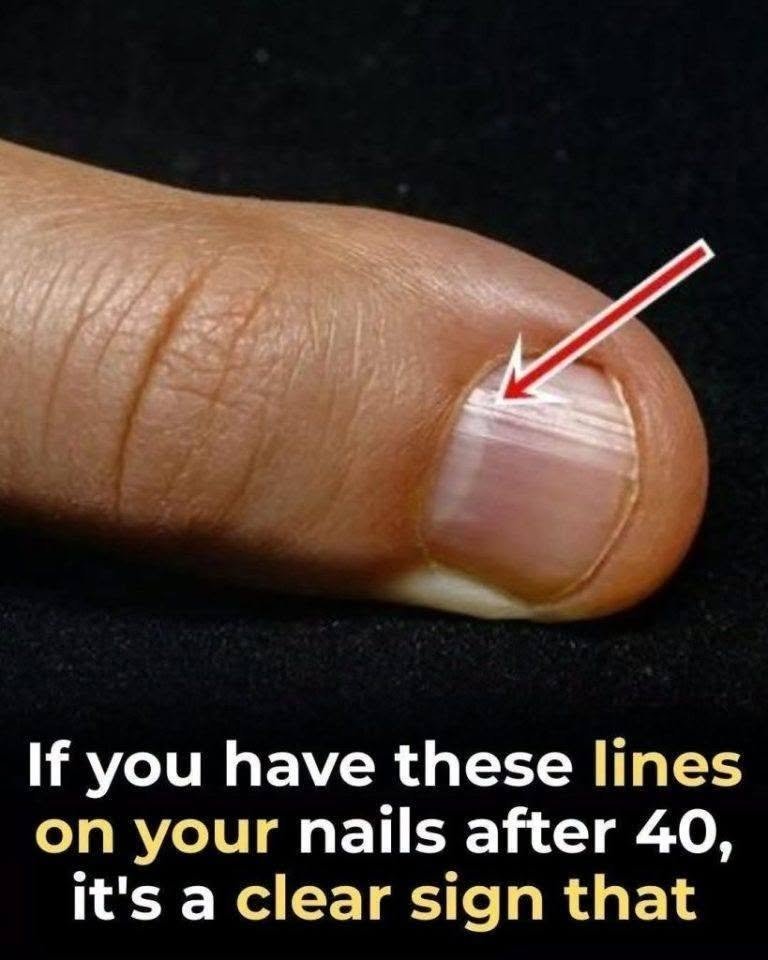
Deep horizontal grooves across the nails are called Beau’s lines.
They develop when nail growth temporarily slows or stops.
Possible causes include:
-
Severe illness.
-
High fever.
-
Significant physical stress.
-
Certain medications.
-
Nutritional problems.
-
Injury to the nail growth area.
These lines may become visible weeks after the event that affected nail growth.
8. Thick Toenails: A Common Problem After 40
Thickened toenails can develop gradually with ageing, but they may also indicate an underlying condition.
Common causes include:
-
Fungal infections.
-
Repeated pressure from tight footwear.
-
Nail injuries.
-
Psoriasis.
-
Circulation problems.
Thick toenails may become difficult to trim and can cause discomfort when wearing shoes.
Persistent thickening, discolouration, or pain should be evaluated by a healthcare professional.
9. Nail Pitting: Small Dents on the Nail Surface
Nail pitting refers to tiny depressions or dents appearing across the nail surface.
It can be associated with:
-
Psoriasis.
-
Eczema.
-
Alopecia areata.
-
Other inflammatory skin conditions.
If nail pitting occurs alongside scaly skin patches, scalp problems, or joint pain, a dermatologist may investigate for psoriasis.
10. Pale or Blue Nails: Possible Circulation or Oxygen Problems
Changes in nail colour can sometimes provide clues about circulation and oxygen levels.
Pale nails: May occur with anaemia or other medical conditions.
Blue or grey nails: May indicate reduced oxygen levels or circulation problems.
Persistent colour changes: May sometimes be associated with heart, lung, or blood vessel conditions.
Sudden blue discolouration accompanied by breathing difficulties, chest pain, or confusion requires emergency medical attention.
Why Do Nail Changes Become More Noticeable After 40?
Several factors can influence nail health as people get older.
-
Nail growth may gradually slow.
-
Nails may become drier and more fragile.
-
Repeated exposure to cleaning products can damage the nail surface.
-
Fungal infections may become more common.
-
Chronic medical conditions may affect nail growth.
-
Nutritional deficiencies may become more noticeable.
-
Previous injuries may leave lasting changes.
Ageing is a natural process, but it should not be used to explain every unusual nail change.
How to Keep Your Nails Healthy After 40
Maintaining healthy nails does not require complicated treatments. Consistent daily care can make a difference.
-
Keep your fingernails and toenails clean and dry.
-
Moisturise your hands and cuticles regularly.
-
Wear protective gloves when handling detergents and cleaning chemicals.
-
Avoid biting, picking, or excessively filing your nails.
-
Trim nails carefully and regularly.
-
Wear comfortable shoes to prevent toenail injuries.
-
Eat a balanced diet containing adequate protein, iron, zinc, and vitamins.
-
Avoid unnecessary supplements without medical advice.
-
Seek treatment for persistent fungal infections.
-
Pay attention to new changes in nail colour, shape, and thickness.
When Should You See a Doctor?
Do not ignore nail changes that:
-
Develop suddenly without an obvious explanation.
-
Continue getting worse.
-
Cause pain, bleeding, or swelling.
-
Include a new or changing dark stripe.
-
Cause the nail to separate from the nail bed.
-
Occur alongside unexplained fatigue or weakness.
-
Include newly developing clubbing.
A healthcare professional may recommend blood tests, fungal testing, or a dermatological examination.
Final Thoughts
Your nails can sometimes provide valuable clues about your health, particularly as you get older. Brittle nails, yellow discolouration, dark lines, spoon-shaped nails, clubbing, and unusual grooves may all have different explanations.
Not every nail change indicates a serious disease, but persistent or unexplained changes deserve attention.
Remember: Your nails are not a medical diagnosis, but paying attention to changes in their appearance may help you recognise health problems earlier.