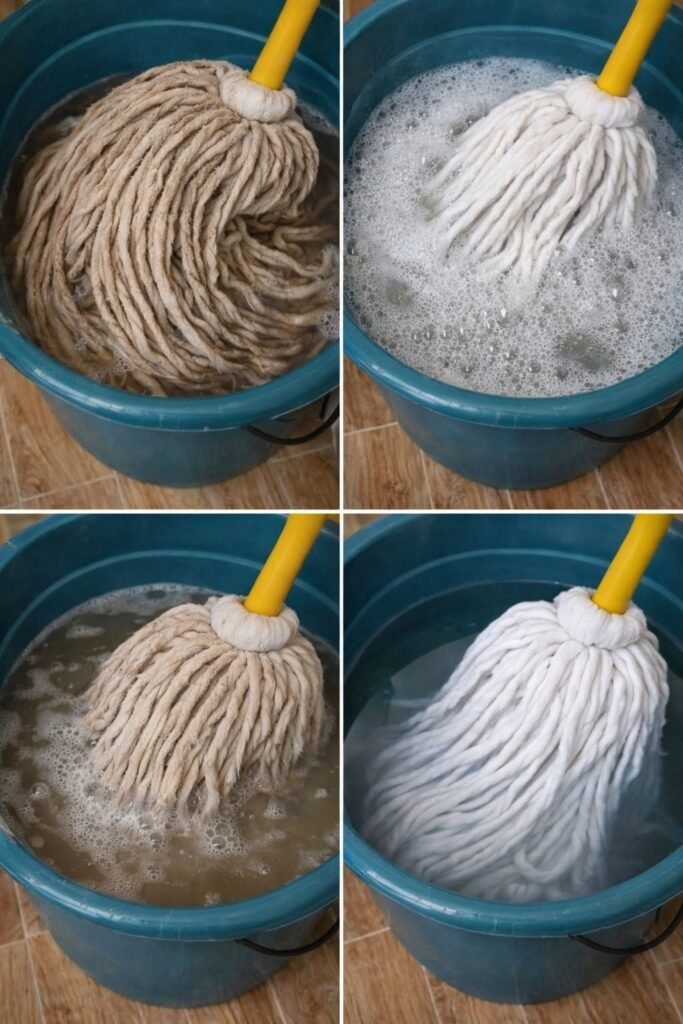

Very dirty mop, do not buy it again: a drop of this ingredient and it will be as good as new again
A single “magic drop” won’t instantly restore a heavily soiled mop, but targeted household ingredients can lift trapped grease, grime, and sour odors—often saving you from throwing out a usable mop head or spin-mop refill. The right ingredient depends on what kind of dirt is built up and what material your mop fibers are made of.
Ingredients That Actually Revive a Dirty Mop
-
Dish Soap (Grease-Cutting Surfactant): A few drops of liquid dish soap in warm water are ideal for cutting kitchen grease, cooking oils, and sticky floor residue trapped in microfiber or cotton strands. Rinse thoroughly afterward so soap suds don’t leave floors slick or attract fresh dirt.
-
Laundry Detergent (For Deep Grime & Microfiber): A small amount of liquid laundry detergent works better than floor cleaner alone when a mop head is dingy from heavy foot traffic, mud, or repeated use. For machine-washable mop heads, wash on a warm cycle (without fabric softener, which coats microfiber and reduces absorbency).
-
White Vinegar (For Odors & Mineral Buildup): A splash of distilled white vinegar in water helps neutralize sour, musty mop smells and dissolve light hard-water or soap buildup. Never mix vinegar with chlorine bleach, as that creates dangerous chlorine gas.
-
Hydrogen Peroxide or Oxygen Bleach (For Stains & Sanitizing): Oxygen-based bleach (or diluted hydrogen peroxide) helps brighten dingy fibers and tackle odor-causing microbes without the harsh fumes or fiber-weakening effects of heavy chlorine bleach—especially useful on light-colored or microfiber mops.
-
Baking Soda (Mild Deodorizer & Gentle Scrubber): Sprinkled or mixed into a soak, baking soda helps absorb lingering odors and loosen stubborn residue when paired with warm water and soap.
Quick Soak-and-Reset Routine
-
Shake or rinse loose debris first: Knock out dry hair, dust, or grit over a trash bin or drain before soaking so mud doesn’t turn into thick sludge.
-
Soak in warm water with your chosen cleaner: Let the mop head soak for 20–30 minutes in warm (not scalding) water mixed with a few drops of dish soap or a splash of laundry detergent—or use a mild oxygen-bleach/vinegar soak for stubborn dinginess and odor.
-
Agitate, wring, and rinse clear: Swish, rub gently, wring out dirty water, and rinse in clean water until the water runs clear and suds are gone.
-
Dry completely in open air or sunlight: Damp fibers breed mildew and sour smells fast. Let the mop head air-dry fully (sunlight also helps naturally deodorize and dry) before storing or using it again.
When It Is Time to Replace the Mop Head
Cleaning works well for grime, grease, and odor, but no ingredient can fix frayed or torn yarn, flattened/melted microfiber loops, a cracked plastic hub, or persistent mildew deep inside a sponge/foam head. Once fibers lose their shape or shed heavily onto the floor, swapping the refill head is more hygienic and effective than trying to force another wash out of it.