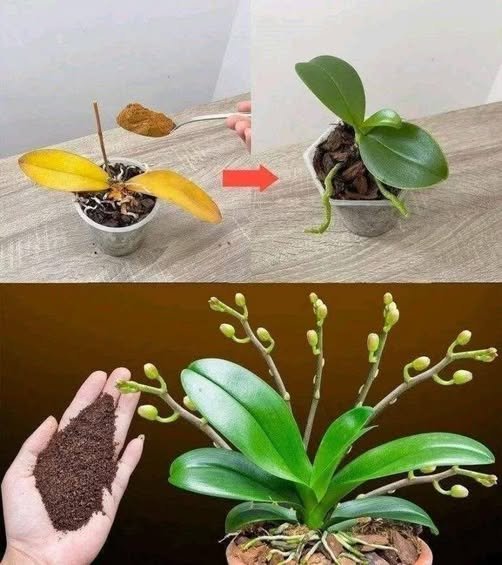

Reality Check on “Miracle Teaspoon” Orchid Hacks
-
No Single Teaspoon Triggers Instant Blooms: Viral posts often claim a teaspoon of kitchen ingredients (like cinnamon, rice water, garlic, baking soda, or sugar) will suddenly force an orchid to burst with flowers. In reality, orchids bloom in response to healthy roots, proper light, consistent watering, and a gentle temperature drop, not overnight kitchen shortcuts.
-
Why “Miracle” Hacks Often Backfire: Many household substances do not feed orchids usable nutrients and can harm epiphytic (tree-dwelling) orchid roots or bark potting mix—leading to root rot, salt buildup, or fungal/bacterial issues.
What Viral “Teaspoon” Ingredients Actually Do
-
Sugar, Honey, or Milk: Do not nourish the plant directly; instead, they feed bacteria, mold, and fungus in the potting mix and attract pests or cause foul odors.
-
Baking Soda or Salt: Raise alkalinity or add sodium salts that burn delicate orchid roots and dehydrate root tissue.
-
Rice Water: Contains starches that can encourage mold or sour potting bark if poured straight into the pot without thorough drainage.
-
Cinnamon Powder: Has mild drying/antifungal surface effects when dabbed sparingly on a cut stem or small spot, not as a soil fertilizer or bloom booster—and getting it on healthy roots can dry them out.
What Actually Triggers a Healthy Orchid to Bloom
-
Bright, Indirect Light: Place Phalaenopsis (moth) orchids near an east- or bright north/south-facing window with filtered light; medium-green leaves indicate healthy light levels, while dark green usually means too little light and scorched/yellowish patches mean too much direct sun.
-
Nighttime Temperature Drop: A cooler night temperature—around 13°C to 18°C (55°F to 65°F) for a few weeks—helps trigger a new flower spike once the plant has mature leaves and healthy roots.
-
Proper Watering & Chunky Bark Mix: Water thoroughly when roots turn silvery-gray (rather than plump green), letting excess water drain completely so roots never sit in standing water; use an airy bark-based orchid mix rather than dense garden soil.
-
Balanced Orchid Fertilizer (Diluted): Feed lightly during active growth or spike development using a balanced or urea-free orchid fertilizer diluted to a quarter- or half-strength dose, flushing the pot occasionally with plain water to prevent mineral buildup.
When a Spike Forms and How to Care for Blooms
-
Spike vs. Root Tip: A new flower spike is typically mitten-shaped or flattened/segmented with a distinct node, whereas a root usually has a smoother, rounded tip (often greenish or silvery).
-
Support and Placement: Loosely clip the growing spike to a support stake as it lengthens, and keep blooming plants away from cold drafts, direct air-conditioner/heater vents, and ripening fruit (ethylene gas can drop buds early).