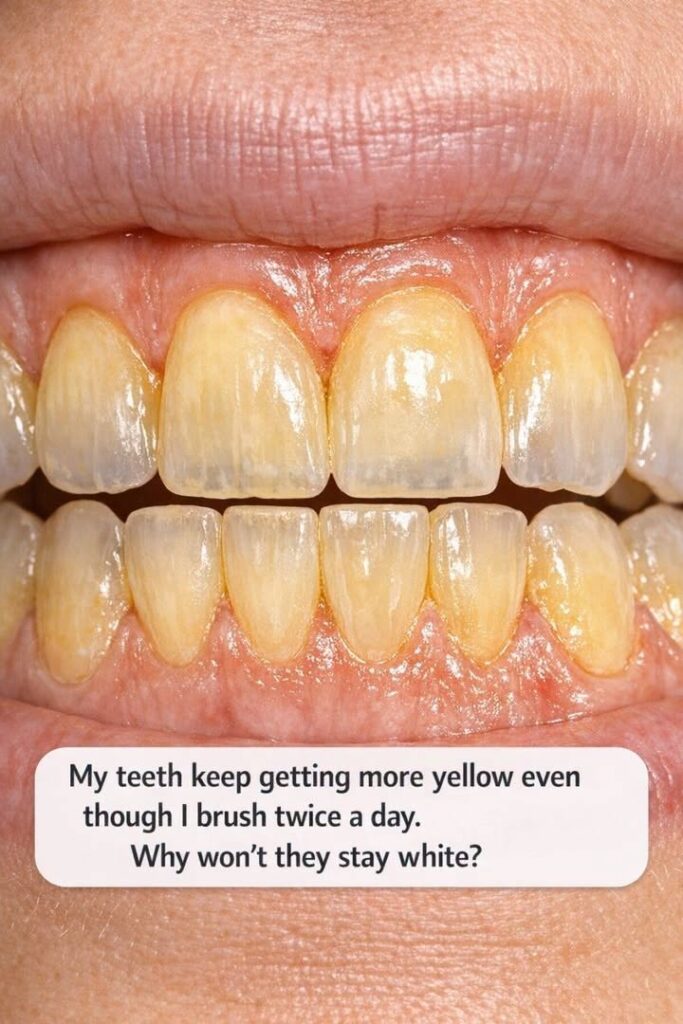

Brushing twice a day is excellent for oral health, but it doesn’t guarantee naturally white teeth. Tooth color can change for several normal reasons.
Why your teeth may look more yellow
1. Natural tooth color varies
Teeth aren’t naturally pure white. The hard outer enamel is somewhat translucent, so the naturally yellowish dentin underneath can show through. As enamel becomes thinner with age, more dentin may become visible.
2. Surface stains can build up
Tea, coffee, cola, certain foods, and tobacco can stain the outer surface of teeth. Brushing helps remove plaque but may not completely remove established discoloration.
3. Plaque and tartar
Plaque can make teeth look dull or yellow. If it hardens into tartar, ordinary brushing won’t remove it effectively. A professional dental cleaning may be needed.
4. Brushing harder isn’t the solution
Scrubbing aggressively can wear down enamel and irritate your gums. Use a soft-bristled toothbrush and gentle pressure instead.
5. Some medicines or dental conditions can affect color
Certain medications and conditions can cause tooth discoloration, particularly if the change occurs within individual teeth rather than evenly across the mouth.
What you can do
- Brush twice daily for about two minutes with fluoride toothpaste.
- Clean between your teeth daily with floss or another appropriate interdental cleaner.
- Have professional dental cleanings when recommended.
- After strongly staining foods or drinks, rinse your mouth with water.
- Avoid using lemon juice, vinegar, or harsh DIY whitening mixtures because acids can damage enamel.
- If you want whitening, ask a dentist which method is appropriate for your teeth.
If one tooth suddenly becomes noticeably darker, you have tooth pain or sensitivity, or the discoloration continues despite good oral hygiene, a dental examination is worthwhile.
Most importantly, yellowish teeth don’t necessarily mean unhealthy teeth. Healthy teeth naturally come in a range of shades.