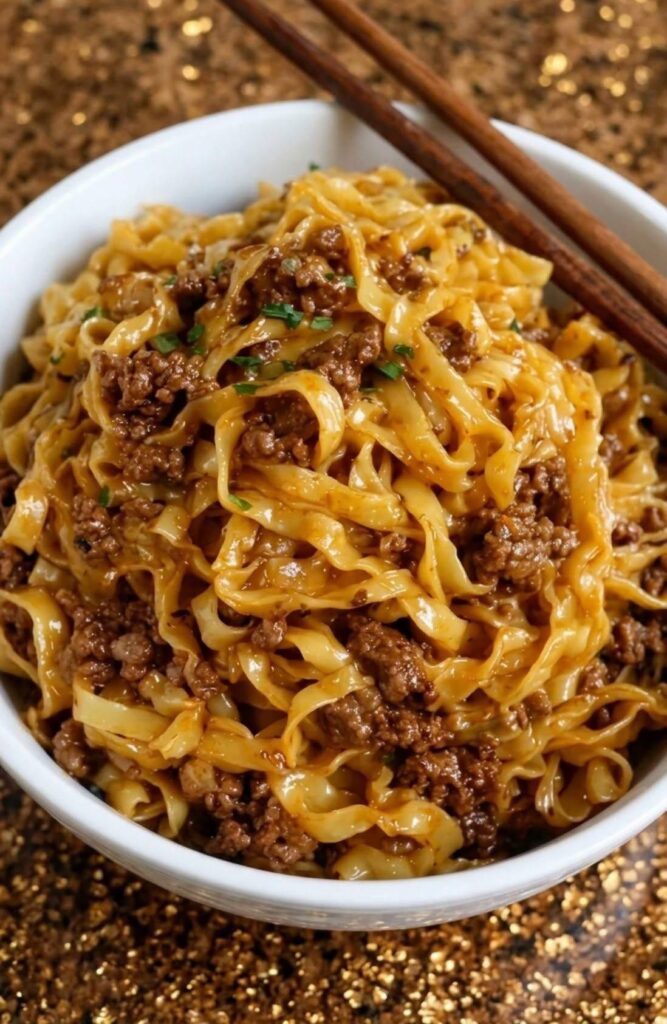

Mongolian Ground Beef Noodles
Prep time: 10 minutes
Cook time: 20 minutes
Total time: About 30 minutes
Servings: 4–6
These Mongolian Ground Beef Noodles are a quick, comforting dinner with savory ground beef, tender noodles, garlic, ginger, and a glossy sweet-and-salty sauce. It’s an easy skillet meal that’s packed with flavor and comes together in about 30 minutes.
Ingredients
Beef & Noodles
- 1 lb (450 g) lean ground beef
- 8 oz (225 g) spaghetti, linguine, or rice noodles
- 1 tbsp neutral oil
- 4 cloves garlic, minced
- 1 tbsp fresh ginger, finely grated
- ½ small yellow onion, thinly sliced
- ½ cup sliced green onions
- 1 cup shredded carrots, optional
- ½ cup sliced bell pepper, optional
Mongolian Sauce
- ½ cup (120 ml) low-sodium soy sauce
- ¼ cup (60 ml) water
- ¼ cup (50 g) packed brown sugar
- 1 tbsp hoisin sauce
- 1 tbsp rice vinegar
- 1 tsp toasted sesame oil
- ½ tsp red pepper flakes, optional
- ¼ tsp black pepper
- 1 tsp cornstarch
- 1 tbsp cold water
For serving
- Sesame seeds
- Sliced green onions
- Fresh cilantro, optional
- Red pepper flakes
- Lime wedges, optional
Instructions
1. Cook the noodles
Bring a large pot of salted water to a boil.
Cook the noodles according to the package directions until just tender.
Before draining, reserve approximately ½ cup of the pasta water.
Drain the noodles and set them aside.
If using wheat pasta, don’t rinse it.
2. Mix the sauce
In a bowl, whisk together the soy sauce, water, brown sugar, hoisin sauce, rice vinegar, sesame oil, red pepper flakes, and black pepper.
In a separate small bowl, mix the cornstarch with 1 tablespoon cold water until smooth.
Set both aside.
Cook the Beef
3. Brown the ground beef
Heat a large skillet or wok over medium-high heat.
Add the oil and ground beef.
Cook for 5–7 minutes, breaking it apart with a wooden spoon until browned and cooked through.
Drain excess grease if necessary.
4. Add the aromatics
Add the sliced onion and cook for 2–3 minutes until slightly softened.
Add the garlic and ginger.
Cook for another 30–60 seconds, stirring constantly.
Be careful not to burn the garlic.
5. Add vegetables
If using carrots and bell peppers, add them now.
Stir-fry for approximately 2–3 minutes.
Keep them slightly crisp for texture.
Make the Mongolian Sauce
6. Add the sauce
Pour the prepared Mongolian sauce into the skillet with the beef.
Stir thoroughly.
Bring it to a gentle simmer.
7. Thicken
Give the cornstarch mixture another quick stir and pour it into the skillet.
Cook for 1–2 minutes, stirring constantly.
The sauce will become glossy and slightly thick.
Add the Noodles
8. Toss everything together
Add the cooked noodles to the skillet.
Use tongs to toss the noodles through the beef and sauce.
If the sauce is too thick, add reserved pasta water 1–2 tablespoons at a time until it reaches your preferred consistency.
Continue tossing for another 1–2 minutes so the noodles absorb the sauce.
9. Finish
Stir in half of the sliced green onions.
Taste and adjust the seasoning.
If you want more heat, add additional red pepper flakes.
Serve
10. Garnish
Divide the noodles among bowls.
Top with:
- Sliced green onions
- Sesame seeds
- Fresh cilantro
- Red pepper flakes
A squeeze of lime adds a fresh contrast to the sweet-savory sauce.
Serve immediately.
Spicy Mongolian Beef Noodles
For a spicy version, add:
- 1 tbsp chili garlic sauce
- ½–1 tsp crushed red pepper
- 1 sliced fresh chili
You can also drizzle a little chili oil over each serving.
Vegetable-Loaded Version
Add any combination of:
- Broccoli
- Shredded cabbage
- Snow peas
- Mushrooms
- Bell peppers
- Carrots
- Baby spinach
For broccoli, steam or stir-fry it separately first so it becomes tender before adding it to the noodles.
High-Protein Version
To increase the protein:
- Use extra-lean ground beef.
- Increase the beef to 1¼–1½ lbs.
- Use high-protein noodles.
- Add shelled edamame.
- Add an egg to the skillet and scramble it before mixing in the noodles.
Lower-Carb Version
Replace the noodles with:
- Shirataki noodles
- Zucchini noodles
- Spaghetti squash
- Cabbage noodles
Reduce the brown sugar or replace it with a low-carb sweetener if desired.
For shirataki noodles, rinse and dry them thoroughly before stir-frying.
Tips for the Best Mongolian Noodles
Brown the beef well
Allowing the beef to develop some browned edges gives the dish a much deeper flavor.
Don’t overcook the vegetables
A little crunch provides a nice contrast to the soft noodles.
Adjust the sauce
Soy sauce varies in saltiness, so taste before adding extra salt.
Use fresh ginger
Fresh grated ginger provides a much brighter flavor than dried ginger.
Add noodles at the end
This prevents them from becoming overly soft while the beef and sauce cook.
Make-Ahead & Storage
Store leftovers in an airtight container in the refrigerator for up to 4 days.
When reheating, add a splash of water or broth and warm gently in a skillet or microwave.
The noodles absorb sauce as they sit, so a little extra liquid helps restore their texture.
Serving Idea
Serve these noodles hot with sesame seeds, plenty of green onions, fresh cilantro, and a little chili crisp or red pepper flakes. The combination of chewy noodles, savory beef, aromatic ginger and garlic, and the glossy sweet-salty Mongolian sauce makes this an especially satisfying weeknight meal.