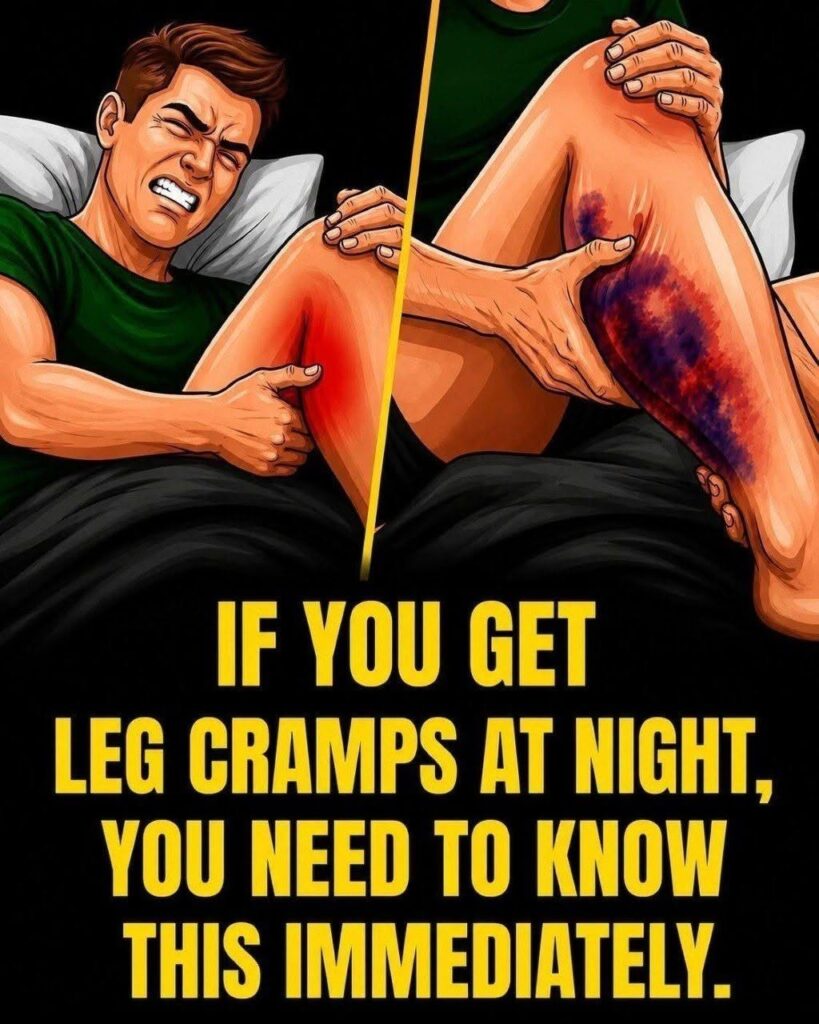

Nighttime leg cramps are sudden, involuntary muscle contractions that commonly affect the calf, foot, or thigh while you’re resting or asleep. They can be extremely uncomfortable and may leave the affected muscle feeling sore afterward.
Occasional cramps are common and are often harmless, but frequent, severe, or unusual cramps deserve attention because they can sometimes be related to medications, circulation problems, nerve issues, or other health conditions.
Common Reasons Leg Cramps Happen at Night
1. Muscle fatigue or overuse
Standing for long periods, walking more than usual, exercising, or putting extra strain on the legs during the day can contribute to nighttime cramps.
2. Dehydration
Not drinking enough fluids can contribute to muscle cramping, particularly when combined with sweating, heat, or physical activity. Staying adequately hydrated throughout the day is generally more helpful than drinking a large amount immediately before bed.
3. Staying in one position
Long periods of sitting or standing can contribute to leg discomfort and may increase the likelihood of cramping in some people.
4. Certain medications
Some medications can be associated with muscle cramps. Examples include certain diuretics and some medicines used to manage cholesterol or blood pressure. Don’t stop a prescribed medicine on your own; discuss possible side effects with your healthcare professional.
5. Age-related changes
Nighttime leg cramps become more common with age. Changes in muscles, nerves, activity levels, and circulation can all play a role.
6. Medical conditions
Frequent cramps can sometimes occur alongside conditions affecting nerves, muscles, circulation, the kidneys, thyroid, or metabolism. This doesn’t mean that cramps automatically indicate one of these problems, but persistent symptoms may warrant an evaluation.
What to Do When a Cramp Starts
When a cramp strikes, gently stretch the affected muscle.
For a calf cramp, straighten the leg and gently pull the toes toward you. You can also stand carefully and put some weight on the affected leg if it is safe to do so.
Gentle massage or applying warmth may also help the muscle relax.
Avoid aggressively forcing the muscle into a stretch, especially if doing so causes significant pain.
How to Reduce Nighttime Cramps
A few simple habits may help:
- Stay adequately hydrated during the day.
- Stretch the calf and thigh muscles gently before bed.
- Avoid suddenly increasing strenuous exercise.
- Take regular movement breaks if you sit for long periods.
- Wear comfortable, supportive footwear during the day.
- Review your medications with a healthcare professional if cramps began after starting a new medicine.
- Maintain a balanced diet rather than taking high-dose mineral supplements without medical advice.
Although potassium, magnesium, and other minerals are often promoted as a cure for leg cramps, supplements don’t help everyone and can be harmful in excessive amounts or with certain medical conditions or medications.
When Leg Cramps Should Be Checked
Make an appointment with a healthcare professional if cramps are frequent, severe, getting worse, disturbing your sleep regularly, or accompanied by persistent muscle weakness or numbness.
You should also seek medical advice if the cramps began after starting a new medication or occur along with other unexplained symptoms.
Get Urgent Medical Attention for Certain Leg Symptoms
A leg cramp by itself is usually not an emergency. However, seek urgent medical attention if one leg suddenly becomes swollen, red, warm, and painful, particularly if the symptoms are new or severe.
If leg symptoms are accompanied by chest pain, sudden difficulty breathing, fainting, or coughing up blood, seek emergency medical help immediately.
The Bottom Line
Most nighttime leg cramps are not a sign of a serious disease, but recurring cramps shouldn’t simply be ignored. Paying attention to hydration, stretching, activity levels, medications, and other symptoms can help identify possible triggers.
If cramps are persistent, unusually painful, or accompanied by swelling, weakness, numbness, or other concerning symptoms, a healthcare professional can help determine the underlying cause rather than relying on home remedies alone.