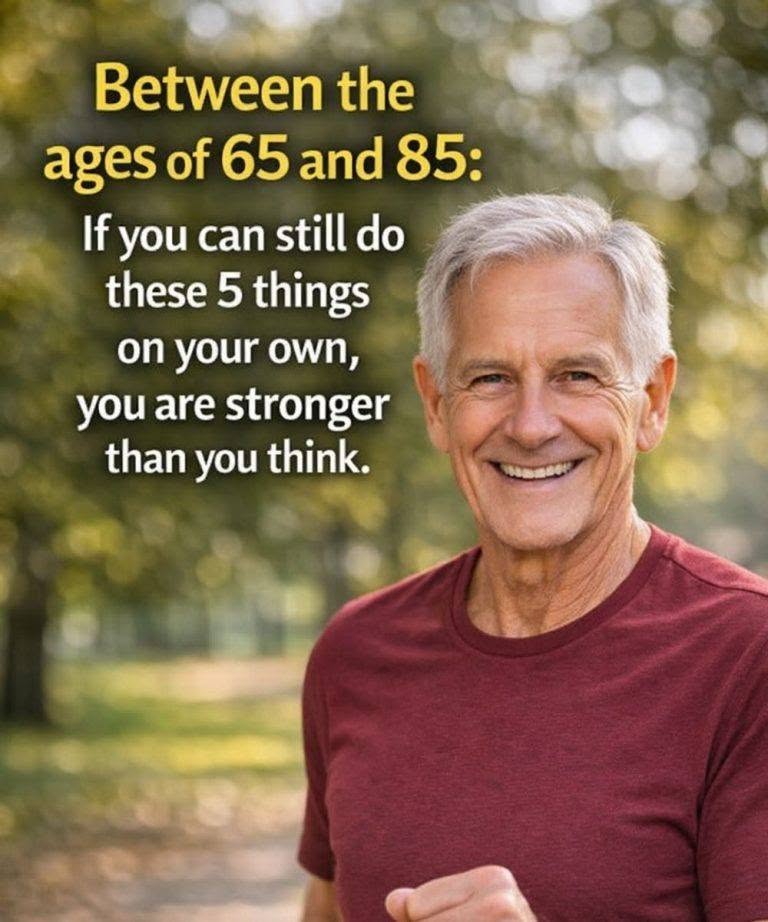

Between 65 and 85: If You Can Still Do These 5 Things on Your Own, You’re Stronger Than You Think
Getting older does not mean losing strength, independence, or the ability to take care of yourself. Physical abilities naturally change with age, but everyday tasks can provide useful clues about mobility, balance, coordination, and functional independence.
These five activities are not a test of whether someone is “strong enough.” People have different health conditions and abilities, and needing assistance with a task is not a personal failure.
1. Getting Up From a Chair Without Using Your Arms
Being able to stand from a sturdy chair using your legs can reflect lower-body strength and functional mobility.
Try this only with a stable chair and a safe environment. If you need to use your hands for support, that’s perfectly okay. Regular exercises such as supported sit-to-stands can help maintain leg strength when performed safely.
2. Walking Comfortably for Several Minutes
Being able to walk around the home, outside, or through a store without significant difficulty demonstrates useful everyday mobility.
Walking regularly can help maintain cardiovascular fitness, leg strength, balance, and independence. The appropriate amount varies considerably from person to person.
3. Climbing a Few Steps Safely
Managing stairs requires a combination of leg strength, balance, coordination, and confidence.
If stairs are difficult, using a handrail is not a sign of weakness. A handrail can make stair climbing considerably safer, particularly for older adults.
If someone suddenly develops difficulty walking or climbing stairs, especially along with weakness, numbness, dizziness, or chest symptoms, medical attention may be necessary.
4. Carrying and Putting Away Light Household Items
Everyday activities such as carrying groceries, putting dishes away, or lifting a light household object involve strength, balance, coordination, and grip.
The goal is not to lift heavy weights. Being able to manage ordinary household tasks safely is a more useful measure of everyday independence.
5. Getting Up and Moving Around Independently
Being able to get out of bed, walk to another room, use the bathroom, and move around the home safely is an important part of maintaining independence.
Good mobility also involves balance. Keeping walkways clear, using adequate lighting, wearing supportive footwear, and installing grab bars where appropriate can reduce fall risks.
Strength Is More Than Muscle
For adults between 65 and 85, physical independence depends on more than raw strength. Balance, flexibility, endurance, coordination, vision, confidence, and the ability to perform everyday activities all matter.
Someone may be excellent at one activity and need help with another. That does not mean they are unhealthy or weak.
How to Maintain Strength as You Age
Regular physical activity can help preserve strength and mobility. Depending on your abilities, useful activities may include walking, strength exercises, balance exercises, stretching, and everyday movement.
If you have a medical condition, significant pain, frequent falls, or concerns about your balance, talk with a healthcare professional before starting a new exercise routine.
The Bottom Line
Being able to perform everyday activities independently can be a positive sign of functional fitness, but there is no single list of tasks that determines how “strong” an older adult is.
The goal should be to maintain safe movement, independence, and quality of life while recognizing that everyone’s abilities are different.