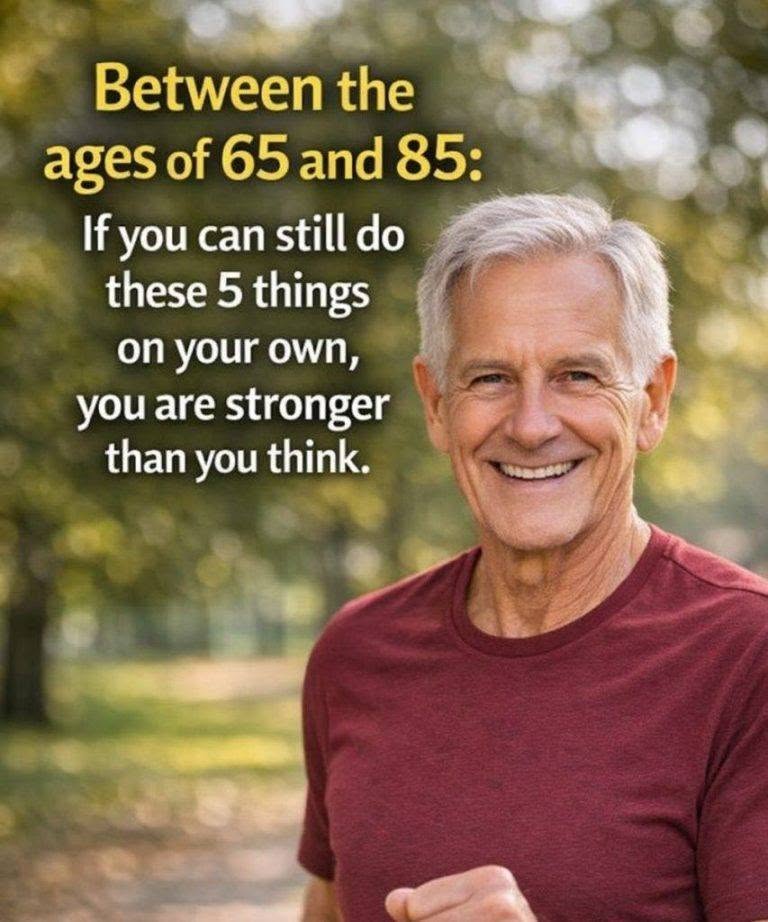

Between Ages 65 and 85: If You Can Still Do These 5 Things on Your Own, You’re Stronger Than You Think
Detail
Getting older doesn’t automatically mean becoming weak or dependent. The ability to manage everyday activities independently can be a useful indicator of mobility, strength, balance, coordination, and overall functional health.
1. Get Up From a Chair Without Using Your Hands
Being able to stand from a normal chair using your leg strength and balance is a useful functional skill.
Why it matters: It requires strength in the thighs, hips, and core.
Try: Sit in a sturdy chair and stand up slowly without pushing off with your hands. Don’t attempt this if you are at significant risk of falling.
2. Walk Comfortably and Safely
Being able to walk independently—whether around the house, outdoors, or to nearby places—requires coordination, leg strength, balance, and cardiovascular capacity.
Why it matters: Maintaining walking ability helps preserve independence in everyday life.
3. Climb a Few Stairs
Managing stairs safely requires leg strength, balance, and endurance.
Tip: Use a handrail, especially if you’re unsure of your balance. There’s no need to race or climb stairs without support just to test yourself.
4. Carry Everyday Items
Being able to safely carry groceries, a light bag, or household objects demonstrates useful grip and upper-body strength.
Important: The goal is safe everyday function, not lifting heavy weights.
5. Get Up From the Floor Safely
Being able to lower yourself to the floor and get back up can demonstrate a combination of leg strength, flexibility, coordination, and balance.
However, don’t deliberately test this alone if you have poor balance or a history of falls.
What These Abilities Really Tell You
These aren’t official tests of whether someone is “stronger than their age.” They are simply practical signs of functional independence. Someone who struggles with one of them isn’t necessarily unhealthy, either—arthritis, previous injuries, vision problems, medications, and many other factors can affect performance.
How to Stay Strong After 65
-
Do regular strength exercises appropriate for your abilities.
-
Walk or perform other aerobic activity regularly.
-
Include balance exercises.
-
Eat enough protein and maintain a nutritious diet.
-
Get adequate sleep.
-
Have persistent pain, repeated falls, or sudden weakness evaluated by a healthcare professional.
The goal isn’t to prove that you’re young—it is to preserve the strength, balance, and confidence that allow you to live independently.