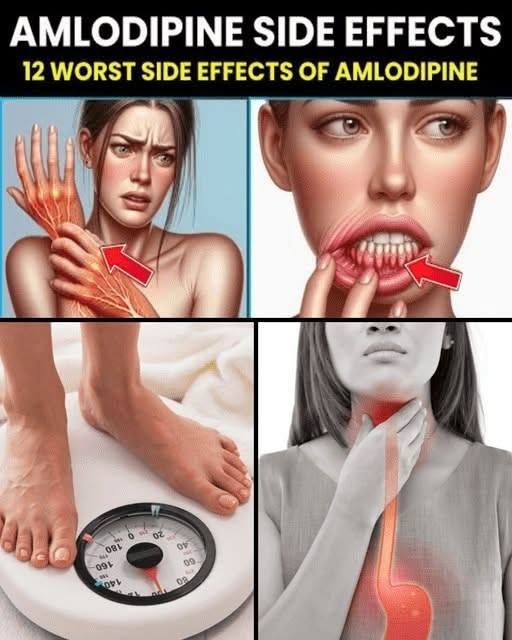

12 Side Effects of Amlodipine You Should Know About
Amlodipine is a commonly prescribed calcium-channel blocker used to treat high blood pressure and angina. Most people tolerate it well, and its benefits can be substantial. The phrase “worst side effects” can be misleading because many reactions are mild and temporary, while serious reactions are uncommon. nhs.uk+1
1. Swollen Ankles, Feet, or Legs
This is one of the most characteristic side effects. Swelling can become more noticeable after standing or toward the end of the day and can be more common at higher doses. nhs.uk+1
2. Dizziness
Amlodipine lowers blood pressure, so some people experience dizziness, particularly when beginning treatment or after a dose change.
3. Headaches
Headache is a commonly reported effect and often becomes less troublesome as the body adjusts.
4. Flushing
Some people develop temporary warmth or redness of the face, neck, or upper body.
5. Palpitations
You may notice your heartbeat more strongly or feel that it is beating faster. Persistent or troublesome palpitations should be discussed with your clinician. nhs.uk
6. Tiredness or Weakness
Fatigue or weakness can occur. However, these symptoms have many possible causes, so they shouldn’t automatically be attributed to amlodipine.
7. Nausea
Some people experience nausea or stomach discomfort while taking the medicine.
8. Abdominal Pain
Abdominal discomfort has been reported in clinical studies, although it isn’t among the most common effects. FDA Access Data
9. Constipation or Diarrhea
Changes in bowel habits can occur, including either constipation or diarrhea. nhs.uk
10. Sleepiness
Some people may feel unusually sleepy or drowsy. If you feel impaired, don’t drive or operate machinery.
11. Muscle Cramps or Muscle Aches
Muscle cramps and muscle pain have been reported, although they aren’t among the most common reactions. FDA Access Data
12. Gum Enlargement
Gingival hyperplasia—enlargement or overgrowth of gum tissue—is an uncommon reported reaction. Good oral hygiene and dental care are particularly important if this occurs. FDA Access Data
🚨 Rare Symptoms That Need Prompt Medical Attention
Seek urgent medical help for difficulty breathing, swelling of the lips/tongue/throat, or a severe allergic reaction. Rarely, amlodipine has also been associated with serious skin reactions and acute pancreatitis. nhs.uk
Sudden or severe chest pain also requires urgent evaluation rather than assuming it is simply dizziness, or another side effect is bothering you, your doctor or pharmacist can review your dose and other medicines and determine whether a medication side effect.
Should You Stop Amlodipine?
Don’t stop amlodipine on your own. Suddenly stopping treatment can allow blood pressure to rise again and may worsen angina in people who take it for that condition. If swelling, dizziness, or another side effect is bothering you, your doctor or pharmacist can review your dose and other medicines and determine whether a change is appropriate. nhs.uk
Important: If your ankles are swelling after starting amlodipine, don’t automatically assume you need a diuretic (“water pill”). Amlodipine-related edema has specific treatment approaches that your clinician can discuss. SPS – Specialist Pharmacy Service