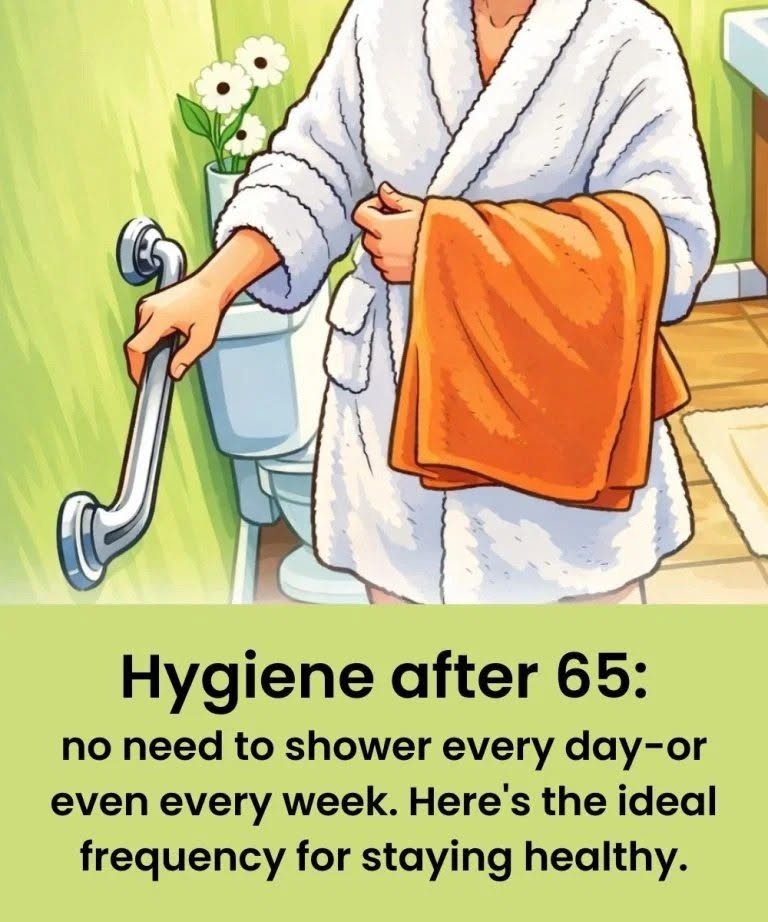

Why Daily skin produces less oil and may lose moisture more easily. Hot water and frequent washing can strip away protective oils, leaving skin itchy, tight, or Showers After 65 May Do More Harm Than Good
Daily showering isn’t automatically harmful after 65. However, older skin is often thinner, drier, and more sensitive, so frequent long, hot showers and harsh soaps can cause problems for some people.
1. 🧴 They Can Dry Out the Skin
As we age, the skin produces less oil and may lose moisture more easily. Hot water and frequent washing can strip away protective oils, leaving skin itchy, tight, or flaky.
Better approach: Use lukewarm water and a gentle, fragrance-free cleanser.
2. 🚿 Long, Hot Showers Can Increase Irritation
Very hot water can worsen dryness and itching. Keeping showers relatively short can help protect the skin barrier.
3. 🧼 You Don’t Need Aggressive Scrubbing
There’s usually no need to scrub every part of the body vigorously every day. Concentrate cleanser on areas that become sweaty or develop odor, such as the armpits, groin, and feet, and rinse the rest thoroughly.
4. 🧴 Moisturize After Showering
Apply a fragrance-free moisturizer while the skin is still slightly damp. This helps trap water and reduce dryness.
5. ⚠️ Bathroom Safety Becomes More Important
For older adults, the biggest danger associated with showering may not be the water itself but falls. Wet floors and difficulty getting in or out of a shower can increase the risk of injury.
Consider:
-
Non-slip flooring or mats
-
Grab bars installed properly
-
A shower chair if needed
-
Adequate lighting
-
A handheld showerhead
So, How Often Should Someone Over 65 Shower?
There’s no universal number. Someone who exercises, sweats heavily, lives in a hot climate, or has difficulty controlling body odor may need more frequent bathing. Someone with very dry or sensitive skin may benefit from less frequent full-body showers.
A practical goal is regular hygiene without unnecessarily drying or irritating the skin.
If persistent itching, rashes, unusual odor, or sores develop, don’t assume they’re simply part of aging—ask a healthcare professional or dermatologist for advice.