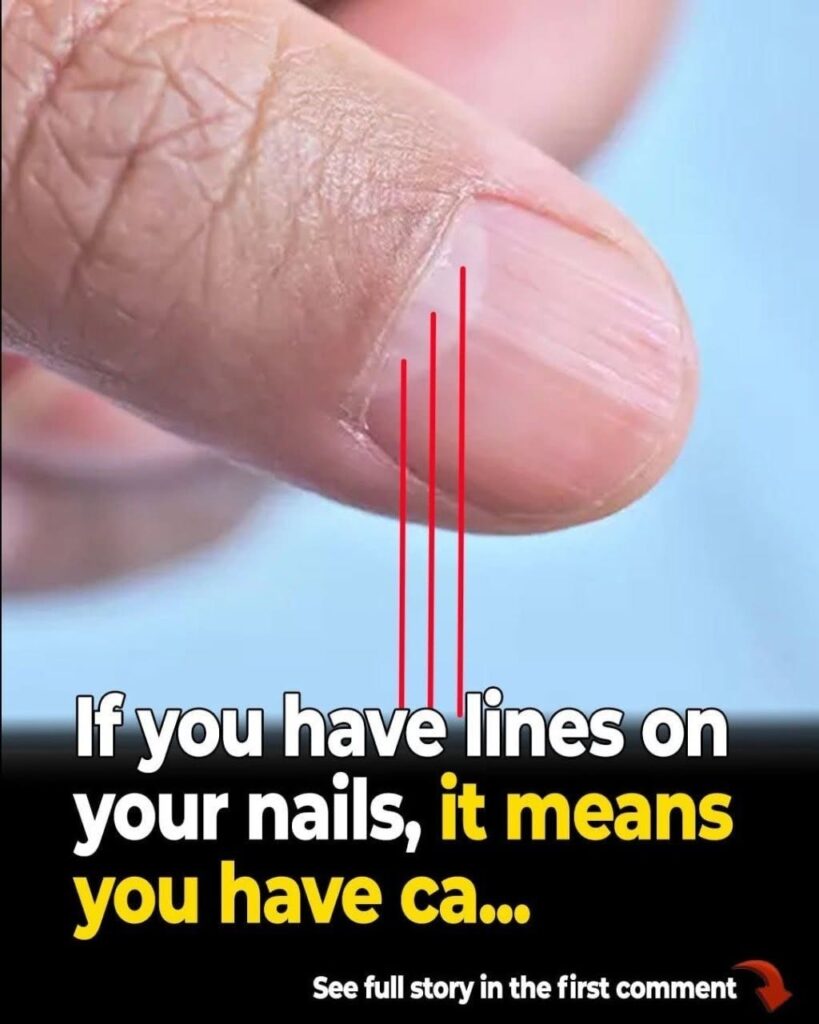

Doctor Uncovers a Fingernail Sign That May Reveal Something About Your Health
There is no fingernail feature that can reliably predict how long a person will live. Claims that a particular nail mark can tell you your life expectancy are misleading.
However, changes in the nails can sometimes provide clues about underlying health conditions.
Nail Changes Worth Paying Attention To
-
New dark streaks: A new or changing dark band in one nail can rarely be a sign of melanoma and should be assessed by a dermatologist.
-
Spoon-shaped nails: Nails that become unusually concave can be associated with iron-deficiency anemia, among other causes.
-
Brittle or splitting nails: These can result from repeated water/chemical exposure, aging, nutritional problems, or certain medical conditions.
-
Yellow or thickened nails: Fungal infection is one possibility, although other conditions can produce similar changes.
-
White or pale nails: These can have many causes, including injury, fungal disease, or certain systemic conditions.
-
“Clubbing”: Enlargement of the fingertips with a curved nail can sometimes be associated with lung, heart, gastrointestinal, or other diseases.
What About “Nail Lines” and Longevity?
Vertical ridges are common, particularly with aging, and aren’t a reliable measure of life expectancy. Similarly, small white spots usually reflect minor nail injury rather than a serious disease.
The appearance of your nails should therefore be considered one piece of information—not a crystal ball for predicting lifespan.
When to Have a Nail Change Checked
See a healthcare professional if you notice a new or rapidly changing dark streak, persistent unexplained nail discoloration, nail separation, significant thickening, clubbing, or changes affecting several nails without an obvious explanation.
Bottom line: Your nails can occasionally provide useful clues about health, but no nail sign can accurately predict your life expectancy.