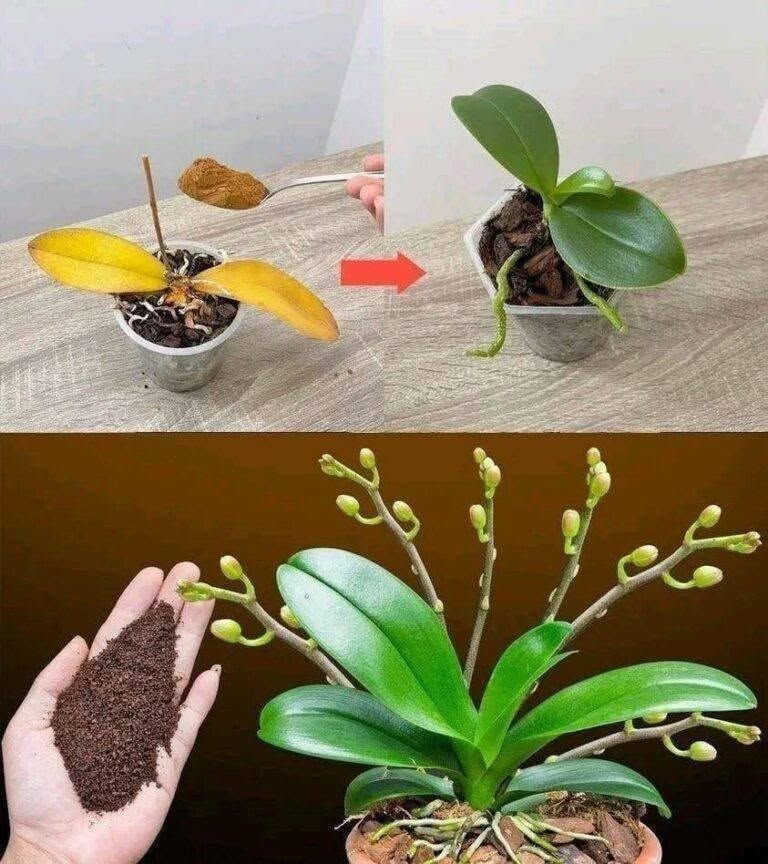

Just a teaspoon, suddenly the orchid miraculously blooms with lots of flowers
There is no single teaspoon of a household ingredient that can make an orchid “miraculously” produce lots of flowers overnight. However, a small, properly measured amount of an appropriate orchid fertilizer can support healthier growth and flowering when the plant’s basic needs are also being met.
What to Use
A balanced orchid fertilizer or a fertilizer formulated for orchids is a better choice than kitchen ingredients. Follow the product’s dilution instructions carefully because orchids are sensitive to excessive fertilizer.
How to Encourage More Flowers
Give the orchid bright, indirect light. Insufficient light is one of the most common reasons an otherwise healthy orchid produces leaves but does not flower.
Water only when the growing medium is beginning to dry, and make sure excess water can drain freely. Orchids generally do not like sitting in constantly wet conditions because their roots can become damaged.
Good air circulation, suitable temperatures, and a well-draining orchid potting mix also help maintain healthy roots and leaves.
A Simple Fertilizing Routine
During active growth, use a properly diluted orchid fertilizer according to its label rather than adding a concentrated “teaspoon” directly to the pot. Fertilizing too heavily can damage the roots and may do more harm than good.
Once the plant is healthy and receiving adequate light, consistent care can encourage it to produce a new flower spike. Flowering is a natural process, so results will not necessarily appear immediately.
Remember
Healthy orchids do not need miracle mixtures. Correct light, careful watering, good drainage, appropriate temperatures, and properly diluted fertilizer are much more reliable ways to encourage flowering. Avoid adding baking soda, vinegar, sugar, or other strong household mixtures to the pot unless they are specifically recommended for orchids, as they can disturb the growing medium or damage the roots.