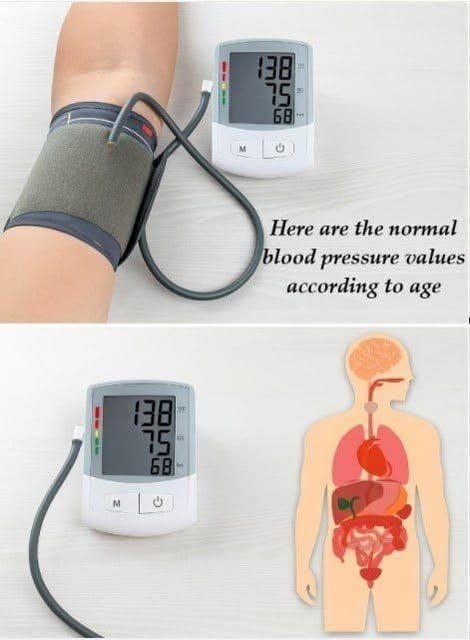

What Is the Normal Blood Pressure for Each Age?
Blood pressure does not have one separate “normal” number for every age. For adults, healthy blood-pressure targets are generally based more on overall health and cardiovascular risk than simply age.
Blood pressure is written as systolic/diastolic (for example, 120/80 mmHg).
Adults
A commonly used classification for adults is:
| Blood pressure | Systolic | Diastolic |
|---|---|---|
| Normal | Less than 120 | and less than 80 |
| Elevated | 120–129 | and less than 80 |
| High — Stage 1 | 130–139 | or 80–89 |
| High — Stage 2 | 140 or higher | or 90 or higher |
| Severely high | Higher than 180 | and/or higher than 120 |
A single high reading does not necessarily mean you have hypertension. Blood pressure can temporarily rise because of stress, exercise, caffeine, pain, or illness. Repeated measurements on different occasions provide a much better picture.
What about older adults?
It is a common misconception that blood pressure is supposed to become very high simply because someone is older.
For example, a reading of 150/90 mmHg isn’t automatically “normal for a 70-year-old.” Older adults can have hypertension just like younger adults, although doctors may individualize treatment targets depending on overall health, frailty, other medical conditions, and medications.
Children and teenagers
Children are different. Their normal blood pressure depends on age, sex, and height, so adult numbers shouldn’t simply be applied to a young child.
For children, a pediatrician uses age- and size-specific reference tables to determine whether a measurement is abnormal.
When is blood pressure an emergency?
If your blood pressure is 180/120 mmHg or higher, sit quietly and repeat the measurement after several minutes.
If it remains that high and you have symptoms such as chest pain, shortness of breath, weakness/numbness, difficulty speaking, severe headache, confusion, or vision changes, seek emergency medical care immediately.
If it remains ≥180/120 without those symptoms, contact a healthcare professional promptly for advice.
The key takeaway
For most adults, below 120/80 mmHg is considered normal, rather than having a different “normal” number for each decade of life. What matters is your repeated readings and your individual health circumstances.