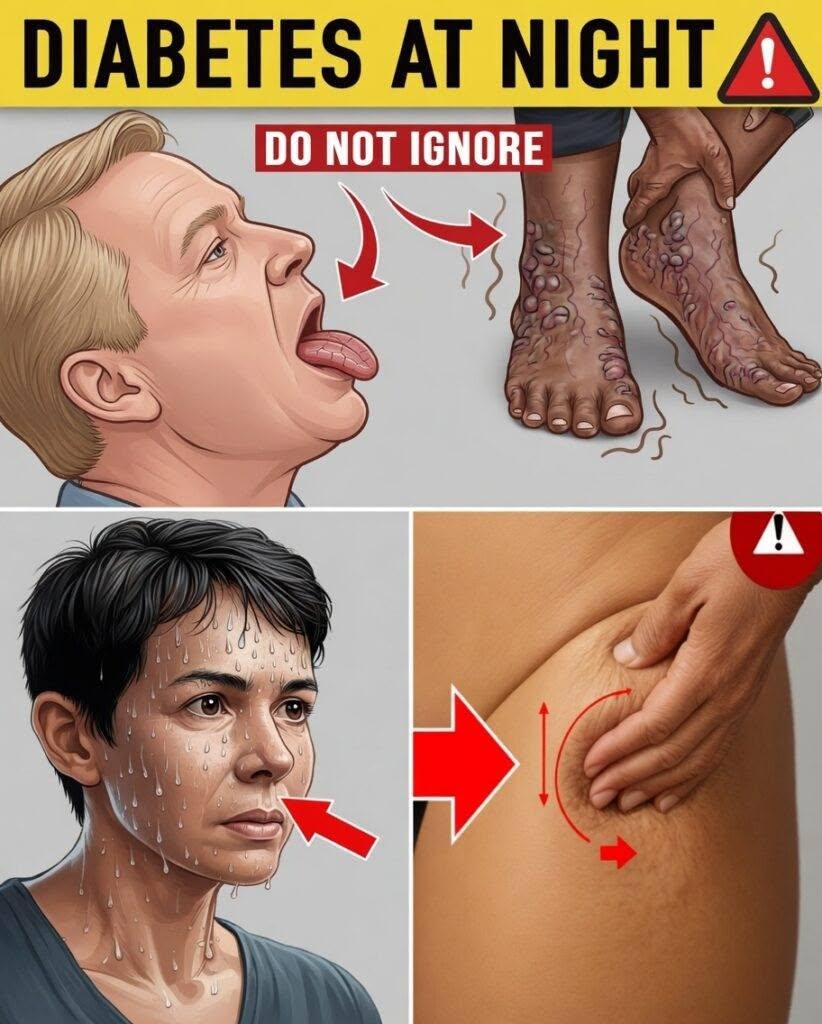

7 Common Nighttime Symptoms That May Be Associated With Diabetes
Some diabetes-related symptoms can become particularly noticeable at night. However, none of these symptoms by itself means you have diabetes. Many have other possible causes, so persistent symptoms should be evaluated rather than self-diagnosed.
1. Frequent Nighttime Urination
High blood glucose can cause the kidneys to excrete more glucose and water, leading to increased urination.
If you’re regularly waking several times a night to urinate, especially if this is a new change, it’s worth discussing with a healthcare professional.
2. Excessive Thirst
Frequent urination can contribute to fluid loss, which may cause increased thirst.
Persistent thirst combined with frequent urination can be a reason to have your blood glucose checked.
3. Night Sweats
Night sweats aren’t a specific sign of diabetes. However, low blood sugar (hypoglycemia) can cause sweating, shaking, a rapid heartbeat, hunger, or confusion—particularly in people taking insulin or certain diabetes medications.
Repeated nighttime episodes should be discussed with the prescribing clinician.
4. Tingling or Burning Feet
Diabetes can damage peripheral nerves over time, causing burning, tingling, numbness, or pain in the feet and legs.
Symptoms may be more noticeable when you’re resting at night.
5. Leg Cramps or Restlessness
People with diabetes can experience muscle cramps or other leg symptoms, but these aren’t specific to diabetes. Dehydration, medications, circulation problems, nerve conditions, and other factors can also cause them.
6. Itching or Dry Skin
Persistently high blood glucose can contribute to dry skin and may increase susceptibility to certain skin infections, potentially causing itching.
However, itching has many other possible causes.
7. Poor Sleep or Unexplained Fatigue
Frequent urination, thirst, nerve discomfort, or episodes of low blood sugar can interrupt sleep.
If you’re consistently waking tired despite getting enough time in bed, consider discussing the problem with a healthcare professional.
When Should You Get Checked?
Consider medical evaluation if you have several of these symptoms, particularly frequent urination, excessive thirst, unexplained weight loss, persistent fatigue, or recurrent infections.
A blood test such as an A1C or fasting blood glucose can help determine whether diabetes or prediabetes is present.
Seek Urgent Help For
Severe thirst and frequent urination accompanied by vomiting, abdominal pain, deep or rapid breathing, severe weakness, confusion, or unusual drowsiness can indicate dangerously high blood glucose and require urgent medical attention.
Bottom Line
Nighttime thirst, frequent urination, sweating from low blood sugar, and burning or tingling feet can occur in people with diabetes—but nighttime symptoms alone cannot diagnose it.
If these symptoms are persistent or new, getting your blood glucose checked is much more reliable than relying on symptoms alone.