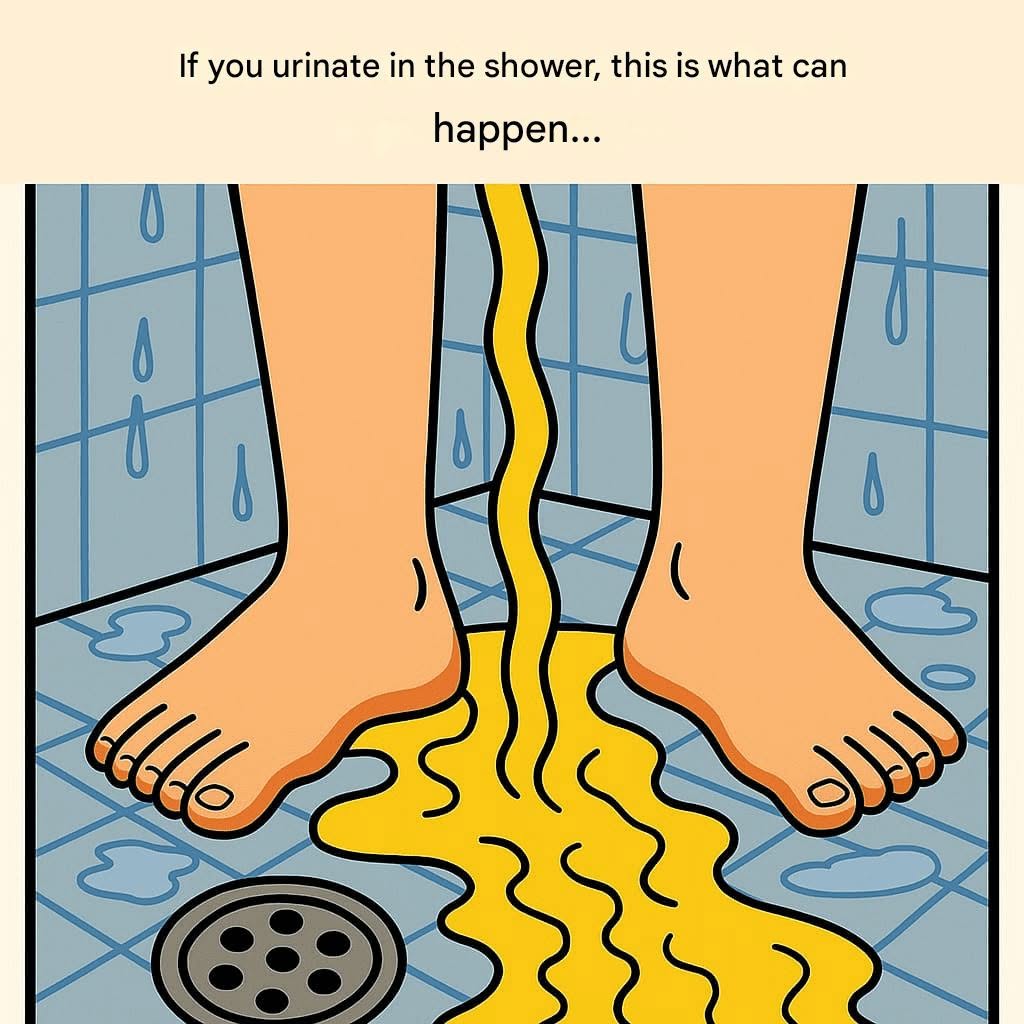

You’ll Be Surprised What Happens If You Pee in the Shower
Peeing in the shower is one of those everyday habits that gets surrounded by surprising health claims. The reality is much simpler: for most healthy people, occasionally urinating in the shower is not dangerous, but there are a few things worth knowing.
1. The Urine Is Quickly Washed Away
When you urinate while the shower is running, the water immediately dilutes the urine and carries it toward the drain. Urine from a healthy person is generally made mostly of water, along with substances the body is eliminating.
This doesn’t make the shower completely sterile, however. The shower floor and drain can still collect bacteria, soap residue, and other microorganisms, so regular cleaning remains important.
2. It May Save a Small Amount of Water
If you would otherwise use the toilet and flush afterward, urinating in the shower can eliminate that particular flush. However, the amount of water saved is relatively small, so it shouldn’t be considered a major water-saving strategy.
3. Running Water Can Trigger the Urge to Urinate
There is an interesting connection between running water and the urge to urinate. For some people, hearing or feeling running water can make them suddenly feel that they need to go.
This isn’t necessarily a problem. However, people who already experience urinary urgency or leakage may notice the effect more strongly.
4. It Doesn’t “Detox” Your Body
Some online posts claim that peeing in the shower removes toxins or provides special health benefits. There is no good evidence that urinating in the shower detoxifies the body or provides a special medical advantage.
Your kidneys already perform the body’s normal waste-filtering function.
5. It Doesn’t Normally Cause Foot Infections
Urine itself isn’t considered a typical cause of athlete’s foot. Athlete’s foot is caused by fungi, and infections are encouraged by warm, damp environments.
Keeping the shower floor clean and allowing it to dry between uses is more important for preventing common shower-related foot problems.
6. Good Hygiene Still Matters
If you choose to urinate in the shower, basic hygiene is important. Rinse the area thoroughly and clean the shower regularly, particularly if several people use the same bathroom.
If you have a urinary infection or another condition that changes your urine, extra attention to bathroom hygiene is sensible.
When Urination Changes Should Be Checked
The habit itself usually isn’t the important issue. A sudden or persistent change in urination can be.
Talk with a healthcare professional if you experience persistent burning, blood in the urine, difficulty urinating, significant changes in frequency, unusual leakage, fever, or pain in the lower abdomen or back.
The Bottom Line
Peeing in the shower isn’t a secret health trick, but it isn’t automatically harmful either. For most healthy people, the urine is simply diluted and washed down the drain. The more important habits are maintaining good bathroom hygiene and paying attention to unusual changes in your urinary health.