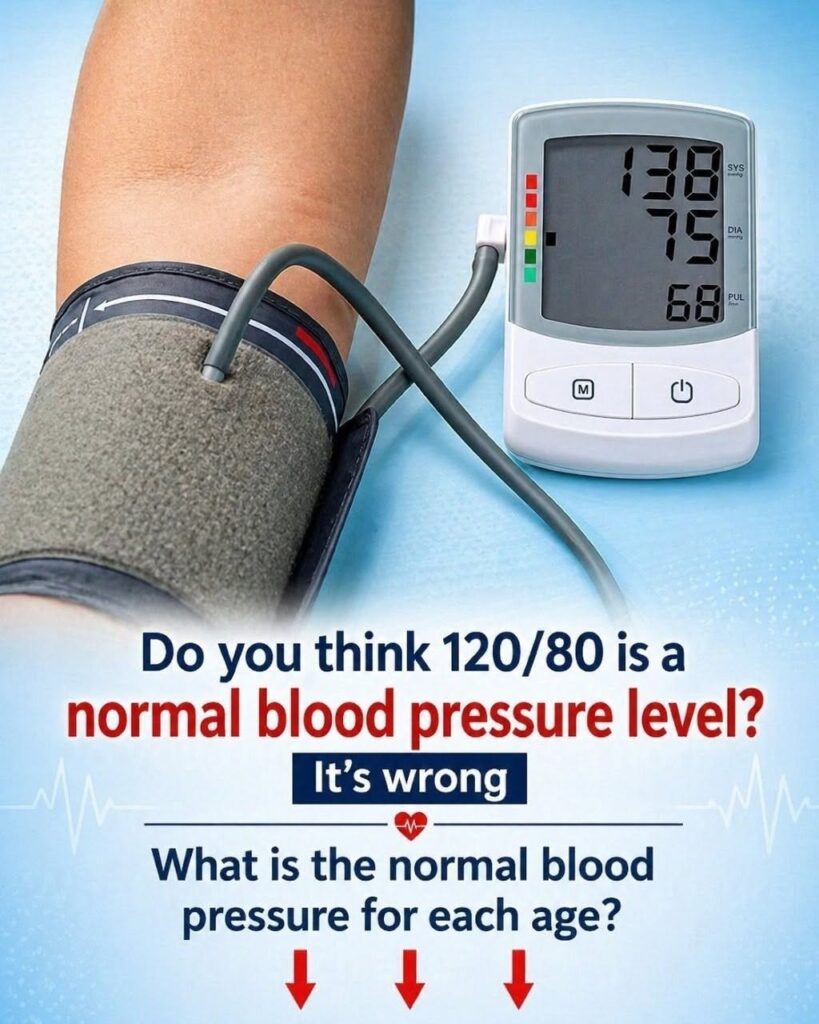

What Is Normal Blood Pressure for Each Age?
Blood pressure naturally changes throughout life, but there is not a separate “normal” blood-pressure number for every individual age. For most adults, healthy blood pressure is generally below 120/80 mmHg, while consistently higher readings may indicate elevated blood pressure or hypertension.
Children and Teenagers
Blood pressure in children and teenagers varies according to age, height, and sex, so doctors do not use one universal number for everyone. A pediatrician compares the reading with age- and growth-specific reference ranges.
A reading that seems low or high compared with an adult standard is not necessarily abnormal in a child. Repeated measurements are more useful than a single reading.
Ages 18–39
For healthy adults, a blood pressure around 90/60 to below 120/80 mmHg can commonly fall within a healthy range, depending on the person.
The American adult categories are generally:
- Normal: less than 120/80
- Elevated: 120–129 systolic and less than 80 diastolic
- High blood pressure, stage 1: 130–139 or 80–89
- High blood pressure, stage 2: 140 or higher or 90 or higher
A diagnosis should not usually be based on one isolated reading.
Ages 40–59
The same adult blood-pressure categories generally apply. Getting older does not mean that a blood pressure of 150/90 automatically becomes “normal.”
For many adults in this age group, a reading below 120/80 is considered normal, although an individual’s appropriate target can depend on their health, medications, and medical history.
Ages 60 and Older
Older adults can also have healthy blood pressure below 120/80, but treatment targets may be individualized.
Some older people experience orthostatic hypotension, where blood pressure drops after standing up. This can cause dizziness, weakness, or fainting and deserves medical attention, particularly if it happens repeatedly.
What Do the Two Numbers Mean?
Systolic pressure is the top number. It represents the pressure in the arteries when the heart contracts.
Diastolic pressure is the bottom number. It represents the pressure when the heart relaxes between beats.
For example, in 118/76 mmHg, 118 is the systolic pressure and 76 is the diastolic pressure.
When Should You Pay Attention?
A single unusual reading does not necessarily mean something is wrong. Blood pressure can temporarily change because of stress, exercise, caffeine, illness, pain, or even talking during the measurement.
For a more reliable reading, sit quietly for several minutes, keep your feet supported, rest your arm at heart level, and avoid talking while the measurement is being taken.
If readings repeatedly reach 130/80 or higher, discuss them with a healthcare professional. If blood pressure is 180/120 or higher, repeat the measurement after a short period of rest. If it remains that high, especially with symptoms such as chest pain, severe shortness of breath, weakness, confusion, or vision changes, seek urgent medical care.
The Bottom Line
There is no single blood-pressure number that becomes “normal” simply because someone reaches a particular age. For most adults, less than 120/80 mmHg is considered normal, while consistently elevated readings should be evaluated rather than dismissed as a normal part of aging.