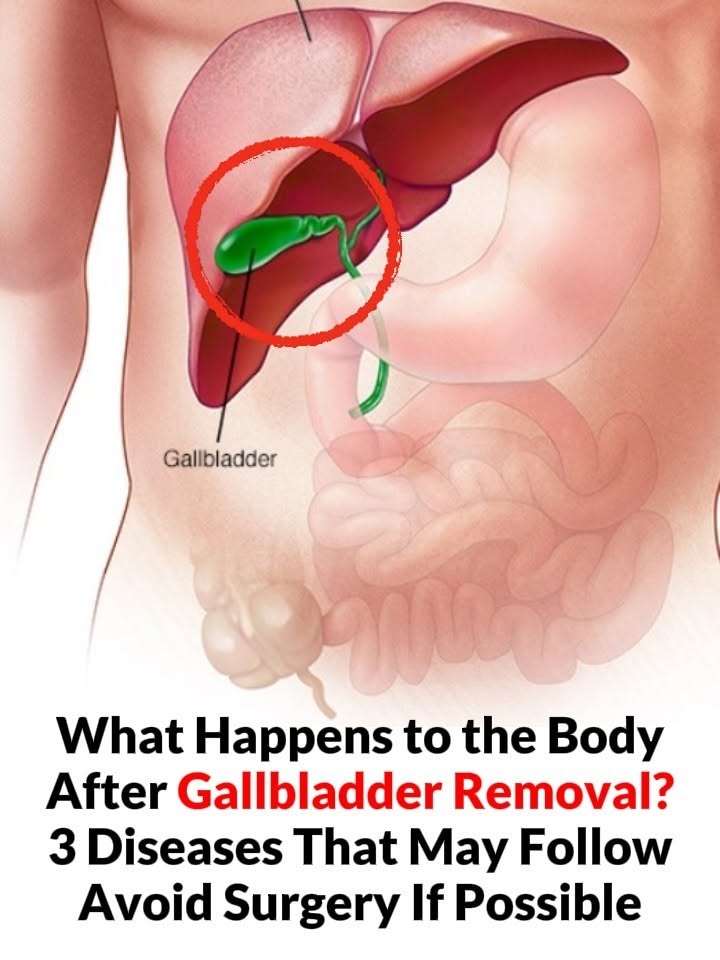

What Happens to the Body After Gallbladder Removal?
Gallbladder removal, called a cholecystectomy, is a common operation. The gallbladder stores bile made by the liver; after removal, bile flows directly from the liver into the small intestine.
The claim that you should “avoid surgery if possible” isn’t appropriate for everyone. When gallbladder removal is medically indicated—for example, because of recurrent symptomatic gallstones or certain complications—surgery can prevent serious problems.
3 Problems That Can Occur After Gallbladder Removal
1. Diarrhea or Frequent Bowel Movements
Some people develop looser or more frequent stools after surgery because bile continuously enters the intestine rather than being stored and released by the gallbladder.
This is often temporary and can improve with time. Persistent symptoms can sometimes be treated with dietary changes or medications.
2. Bile Reflux
A small number of people can experience bile reflux, in which bile flows backward into the stomach and sometimes the esophagus. It can cause upper-abdominal discomfort, nausea, or a bitter taste.
However, this isn’t inevitable after gallbladder removal.
3. Post-Cholecystectomy Symptoms
Some people continue to experience abdominal pain, indigestion, bloating, nausea, or diarrhea after surgery. This is sometimes called post-cholecystectomy syndrome, but it isn’t one single disease.
Symptoms can have several causes, including retained bile-duct stones, reflux, functional digestive disorders, or another condition that was present before surgery.
Does Removing the Gallbladder Cause Other Diseases?
Usually, no. Most people can live normally without a gallbladder and don’t develop a new disease simply because it was removed.
On the other hand, leaving symptomatic gallstones untreated isn’t necessarily safer. Gallstones can cause recurrent attacks and complications such as gallbladder inflammation, bile-duct obstruction, or pancreatitis.
When Is Surgery Commonly Recommended?
The decision depends on the diagnosis and symptoms. Surgery may be recommended for conditions such as:
-
Recurrent symptomatic gallstones
-
Acute or chronic cholecystitis
-
Certain bile-duct problems
-
Gallstone-related pancreatitis
-
Some gallbladder polyps or other specific abnormalities
If you have gallstones but no symptoms, surgery isn’t automatically necessary in every case.
Bottom line
Gallbladder removal does not generally “damage” the body or cause three inevitable diseases. It is an established treatment that is appropriate for many people, while unnecessary surgery should also be avoided.
If you’re considering surgery, the safest approach is to discuss your ultrasound findings, symptoms, and diagnosis with a surgeon or gastroenterologist rather than avoiding the operation based on a general claim.