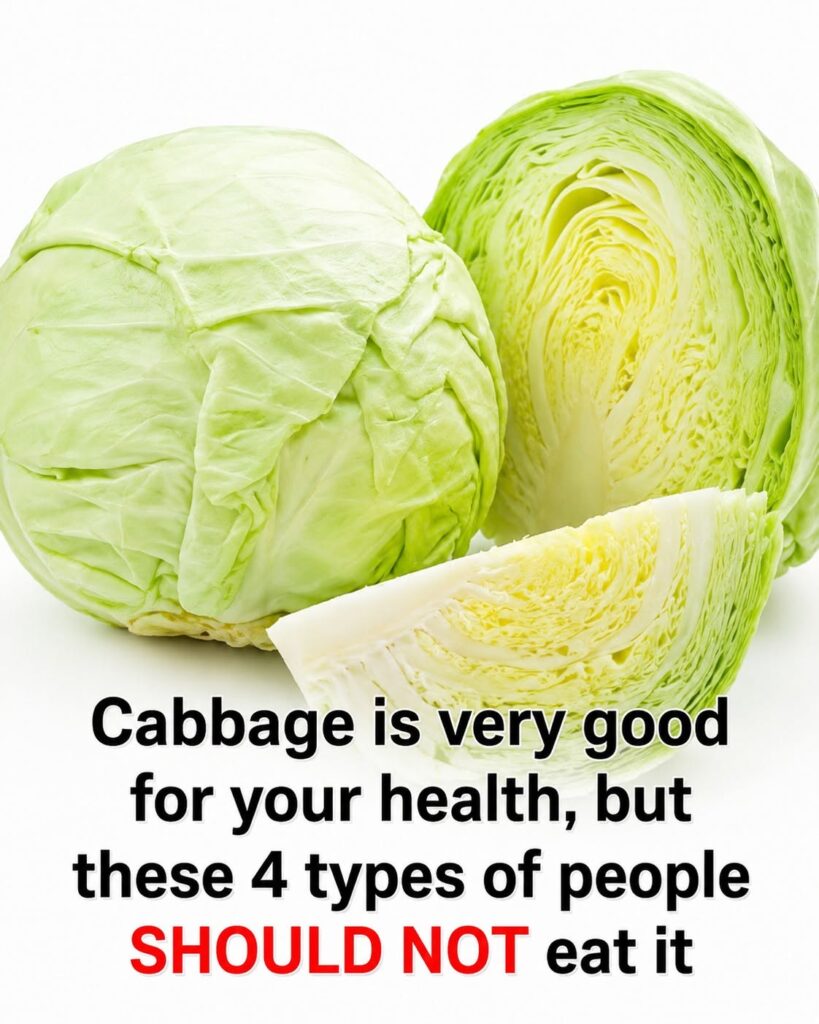

🥬 4 Types of People Who May Need to Limit or Avoid Cabbage
Cabbage is nutritious and generally safe for most people. It provides fiber, vitamin C, vitamin K, and other beneficial plant compounds. But certain people may need to limit it or prepare it differently.
1. People Taking Warfarin
Cabbage contains vitamin K, which can affect how warfarin works.
This doesn’t necessarily mean you must stop eating cabbage. The important thing is to keep your vitamin-K intake consistent rather than suddenly eating very large or very small amounts.
If you take warfarin, discuss major dietary changes with your healthcare professional.
2. People With IBS or a Sensitive Digestive System
Cabbage can cause gas, bloating, abdominal discomfort, or changes in bowel habits in some people.
If cabbage consistently triggers symptoms, try a smaller portion or cooked cabbage instead of raw cabbage.
3. People With Certain Thyroid Conditions
Cabbage and other cruciferous vegetables contain compounds called goitrogens. In very large amounts, particularly when iodine intake is inadequate, they can interfere with thyroid function.
For most people, normal portions of cooked cabbage are not a reason to avoid it. People with thyroid disease should follow their clinician’s dietary advice rather than eliminating cabbage automatically.
4. People Who Have Difficulty Digesting Large Amounts of Fiber
A sudden increase in cabbage or other high-fiber foods can cause bloating, gas, and discomfort.
Try instead: Introduce cabbage gradually, eat smaller portions, and drink adequate fluids.
🍽️ A Better Approach Than Completely Avoiding Cabbage
For most people, cabbage can be part of a healthy diet. If it causes digestive symptoms, cooking it thoroughly and reducing the portion size may make it easier to tolerate.
And if you’re taking warfarin, the goal generally isn’t to eliminate vitamin-K foods—it is to maintain a consistent intake and follow your anticoagulation team’s advice.
Bottom Line
Cabbage isn’t inherently dangerous for these groups. The need to limit it depends on your medication, medical condition, portion size, and individual tolerance.