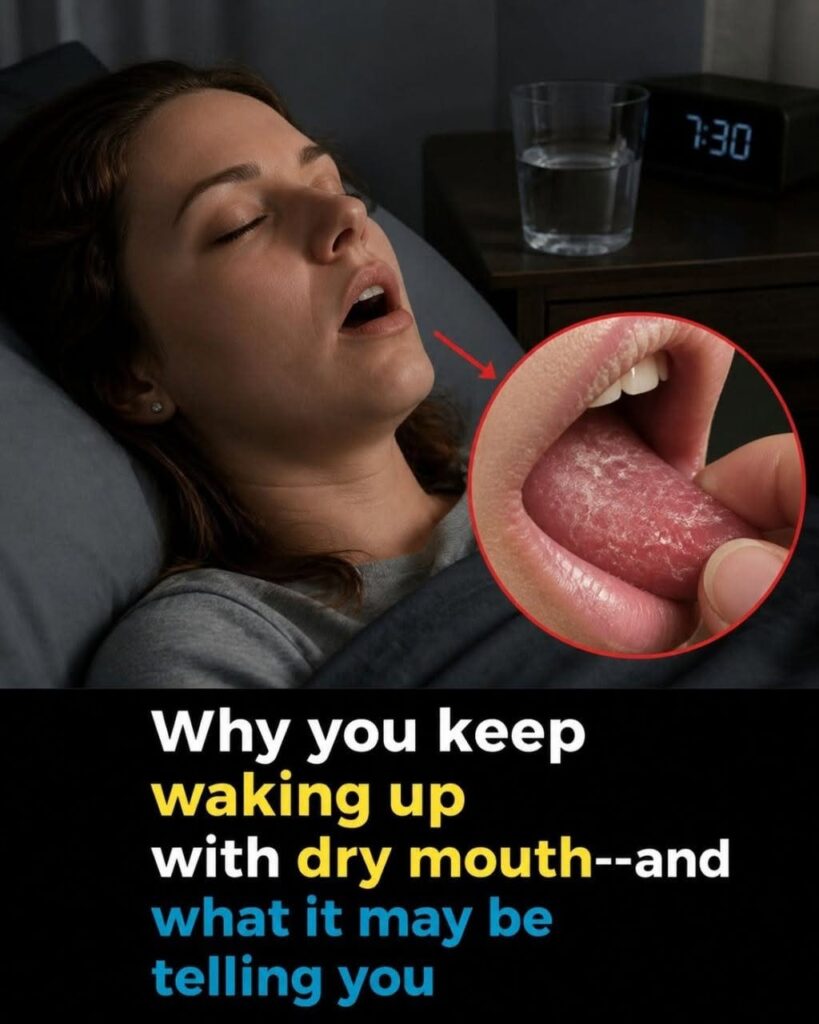

Waking Up With Dry Mouth? Here’s What Your Body Might Be Telling You
Waking up with a dry, sticky mouth is common and often has a simple explanation. However, persistent or severe dry mouth (xerostomia) can sometimes point to an underlying problem or a medication side effect.
1. You May Be Breathing Through Your Mouth
A blocked nose, allergies, a cold, or sleeping with your mouth open can dry the mouth overnight. Snoring can also be associated with mouth breathing.
2. You May Not Be Getting Enough Fluids
Mild dehydration can reduce saliva production and leave your mouth dry when you wake up. Drinking fluids regularly throughout the day is generally more helpful than drinking a large amount immediately before bed.
3. Your Bedroom May Be Too Dry
Dry indoor air, particularly when using air conditioning or heating, can contribute to dryness of the mouth and throat.
4. Your Medicines May Be Causing It
Dry mouth is a known side effect of many medications, including some antihistamines, antidepressants, decongestants, blood-pressure medicines, and other drugs.
Don’t stop a prescribed medicine on your own. If dry mouth began after starting or changing a medication, ask your doctor or pharmacist whether it could be contributing.
5. You Could Have Sleep Apnea
Frequent loud snoring, waking with a dry mouth, gasping or choking during sleep, morning headaches, and excessive daytime sleepiness can occur with obstructive sleep apnea. If these symptoms occur together, medical evaluation is worthwhile.
6. High Blood Sugar Can Cause Increased Thirst and Dryness
Diabetes can cause increased thirst and urination, which may contribute to dehydration and dry mouth. Persistent symptoms are worth discussing with a healthcare professional, especially if you have other risk factors for diabetes.
7. Smoking or Alcohol Can Make It Worse
Tobacco and alcohol can contribute to oral dryness. Reducing or avoiding them can benefit both saliva production and overall oral health.
8. Your Oral Health May Need Attention
Saliva protects the teeth and mouth. When there isn’t enough saliva, the risk of tooth decay, gum problems, mouth irritation, and bad breath can increase.
Good oral hygiene and regular dental care become particularly important when dry mouth is persistent.
What You Can Try
-
Drink water regularly throughout the day.
-
Treat nasal congestion if appropriate.
-
Consider a humidifier if your bedroom air is very dry.
-
Chew sugar-free gum to stimulate saliva.
-
Avoid excessive caffeine, alcohol, and tobacco.
-
Use alcohol-free mouthwash if you experience significant dryness.
-
Maintain regular brushing, flossing, and dental checkups.
When to Get Checked
See a healthcare professional or dentist if dry mouth persists for several weeks, is getting worse, causes difficulty swallowing or speaking, or is accompanied by significant thirst, frequent urination, mouth sores, or dental problems.
If you wake up with dry mouth plus loud snoring, gasping/choking during sleep, or substantial daytime sleepiness, ask a clinician about possible sleep apnea.
Bottom line: Occasional morning dryness is usually not a cause for alarm, but persistent dry mouth is worth investigating because medications, mouth breathing, dehydration, sleep disorders, diabetes, and oral-health problems can all contribute.