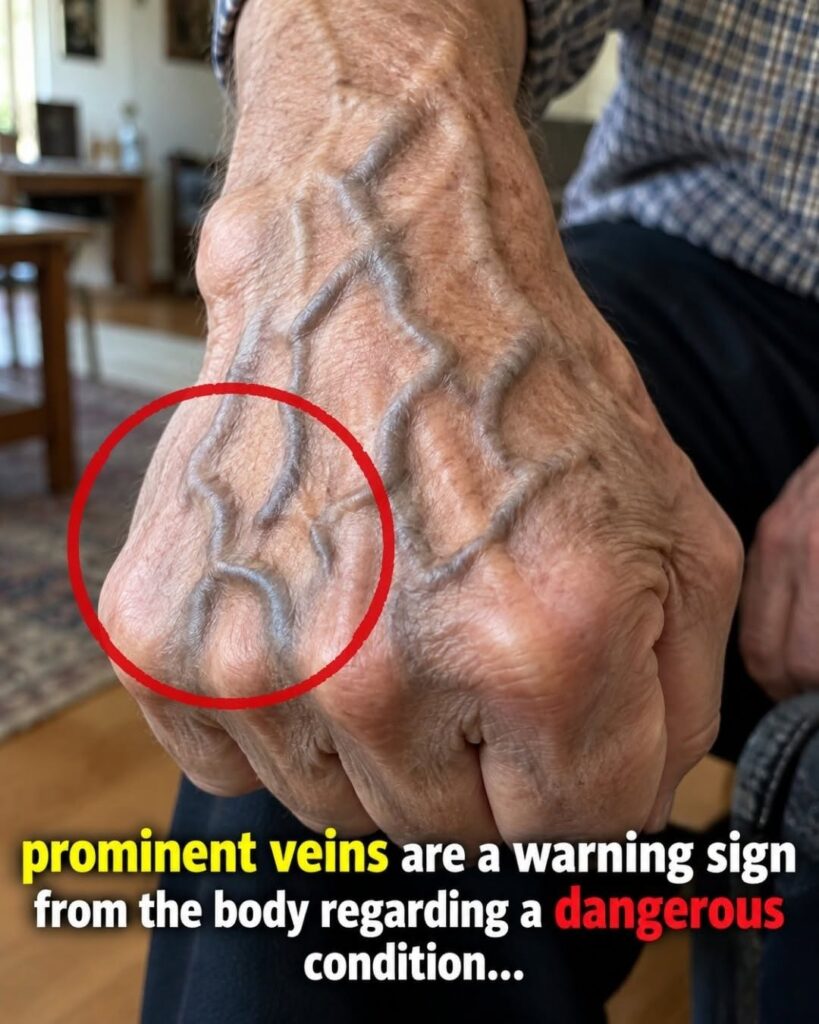

Visible Blue Veins After 60: What They May Mean
Seeing blue or purple veins become more noticeable after age 60 is often a normal effect of aging, not necessarily a sign that your blood flow is failing. Skin becomes thinner and loses some of its underlying fat, making superficial veins easier to see.
1. 🩵 More Visible Veins Can Be Normal
Veins in the hands, arms, legs, and feet can become increasingly prominent with age. Exercise, low body fat, genetics, heat, and prolonged standing can also make them more noticeable.
Visible veins alone don’t tell you whether your circulation is good or bad.
2. 🦵 Varicose Veins Are Different
Veins that become bulging, twisted, or rope-like, particularly in the legs, can be varicose veins. They occur when valves in the veins don’t work efficiently and blood pools in the legs.
Possible symptoms include:
-
Aching or heaviness in the legs
-
Swelling around the ankles
-
Itching
-
Leg discomfort that’s worse after standing
3. 🧍 Chronic Venous Insufficiency
If leg veins have difficulty returning blood toward the heart, you may develop persistent swelling, aching, skin changes, or varicose veins.
Elevating the legs, regular walking, and avoiding prolonged sitting or standing can sometimes help. Compression stockings can also be useful for some people, but they aren’t appropriate for everyone, particularly people with significant arterial circulation problems.
4. 🩸 Blue Veins Don’t Necessarily Mean “Poor Circulation”
A common misconception is that blue veins mean your blood isn’t receiving enough oxygen.
Veins look blue through the skin largely because of how light interacts with skin and the underlying blood vessels. The blood inside them isn’t actually blue.
🚨 When a Vein Change Needs Prompt Attention
Get medical attention if you develop sudden swelling, pain, warmth, or redness in one leg, particularly if it occurs unexpectedly.
Call emergency services if leg swelling or pain is accompanied by chest pain, sudden shortness of breath, fainting, or coughing blood.
Also seek prompt medical assessment for a foot or leg that suddenly becomes cold, pale/blue, severely painful, numb, or weak.
What You Can Do
For ordinary age-related prominent veins:
-
Walk regularly.
-
Avoid sitting or standing motionless for long periods.
-
Elevate your legs when resting if they become swollen.
-
Maintain a healthy weight.
-
Stay adequately hydrated.
-
Have persistent swelling or painful varicose veins evaluated.
Bottom Line
Visible blue veins after 60 are often simply more noticeable because of normal changes in the skin and tissues. They aren’t, by themselves, evidence that your circulation is “screaming” for help. What matters is whether they’re accompanied by swelling, pain, skin changes, numbness, or sudden symptoms.