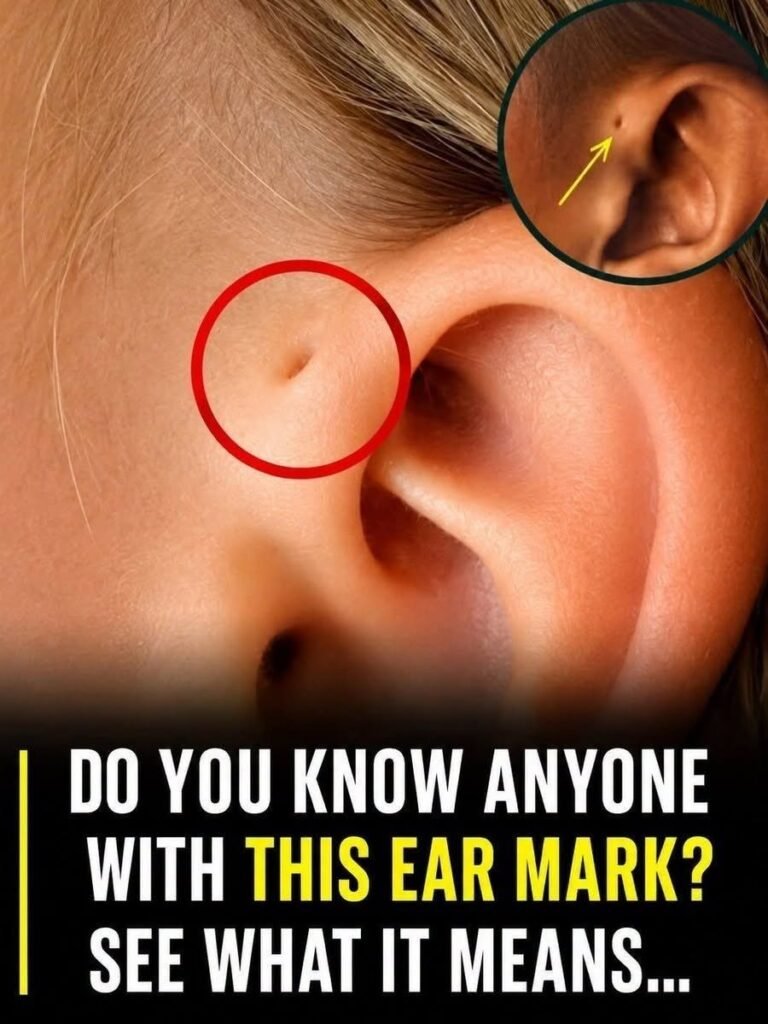

Tiny Hole Near Your Ear? What a Preauricular Pit Means
That tiny pinhole just in front of the upper outer ear—where the ear cartilage meets the side of the face—is a preauricular pit (also called a preauricular sinus or ear pit). It is a benign congenital birthmark present from birth that affects roughly 1% to 10% of people worldwide, and for the vast majority of individuals, it is completely harmless and requires no treatment.
1. Why Do Some People Have a Preauricular Pit?
A preauricular pit forms during early fetal development—specifically around the sixth week of pregnancy—when the outer ear is developing from six small tissue swellings called the hillocks of His.
-
Incomplete Fusion: When two of these tissue folds do not fuse together completely, they leave behind a tiny dimple or narrow tract lined with normal skin cells underneath the surface.
-
Genetic Inheritance: About half of all preauricular pits run in families through autosomal dominant inheritance. They occur most commonly on the right ear, though roughly 25% to 50% of people have them on both ears.
-
The Evolutionary Theory: Evolutionary biologist Neil Shubin famously proposed that preauricular pits may be an evolutionary remnant of fish gill arches (specifically the first pharyngeal arch), though modern embryology views them simply as a minor variation in outer ear closure.
2. Is a Preauricular Pit Dangerous?
In 90%+ of cases, a preauricular pit causes zero symptoms throughout a person’s entire life. It is not a pierced earring hole, a blocked pore, or a sign of poor hygiene—and you should never squeeze, poke, or try to “pop” it with tweezers or needles, as pushing skin bacteria deeper into the narrow tunnel is the main cause of infection.
Occasionally, the tiny tunnel beneath the skin sheds normal dead skin cells and sebum, producing a small amount of thick, white, cheesy discharge with a slight odor. Keeping the outer area clean with mild soap and water during normal washing is all that is needed.
3. When a Preauricular Pit Needs Medical Attention
Because the narrow tract beneath the skin can trap bacteria (most commonly Staphylococcus aureus), the pit can occasionally become infected or form a localized cyst. Seek prompt evaluation from a doctor or ENT specialist if you notice:
-
Redness, swelling, or warmth developing around the tiny hole
-
Throbbing pain or tenderness when touching the front of the ear
-
Pus or bloody drainage oozing from the opening
-
Fever or a noticeable lump/abscess forming beside the ear
How Infections Are Treated:
-
Acute Infection: Doctors typically prescribe oral antibiotics and, if a painful abscess has formed, perform a small sterile needle aspiration or drainage.
-
Recurrent Infections: If a pit becomes infected repeatedly, an ENT surgeon can perform a minor outpatient procedure (preauricular sinus excision) to remove the entire underlying tract permanently so it cannot fill with bacteria again.
4. Rare Syndromic Associations (Mostly Checked in Newborns)
While isolated preauricular pits are harmless cosmetic quirks, pediatricians check newborns who have a preauricular pit alongside other physical differences (such as neck cysts, hearing changes, or unusually shaped ears) to rule out rare genetic conditions like Branchio-Oto-Renal (BOR) syndrome, which affects ear and kidney development. If you have reached adulthood with an isolated ear pit and normal hearing, it is simply a harmless anatomical variation.


