
High-Protein Blender Oatmeal Cottage Cheese Pancakes
Prep time: 5 minutes
Cook time: 15 minutes
Total time: About 20 minutes
Servings: 2–3
Makes: 8–10 pancakes
These high-protein oatmeal cottage cheese pancakes are fluffy, tender, and easy to make entirely in a blender. Cottage cheese adds protein and moisture, while oats provide a hearty, satisfying base. There’s no need for flour, and the batter comes together in just a few minutes.
Ingredients
- 1 cup (90 g) rolled oats
- 1 cup (225 g) cottage cheese
- 2 large eggs
- 1 tsp vanilla extract
- 1 tsp baking powder
- ½ tsp ground cinnamon
- 1–2 tbsp honey or maple syrup, optional
- ¼ tsp salt
- 2–4 tbsp milk, as needed
- 1 tsp butter or oil, for cooking
Optional additions
- ½ tsp nutmeg
- ½ tsp almond extract
- ½ cup blueberries
- 1 small mashed banana
- 1 tbsp chia seeds
- 1 tbsp ground flaxseed
- 2 tbsp mini chocolate chips
Instructions
1. Add the ingredients to the blender
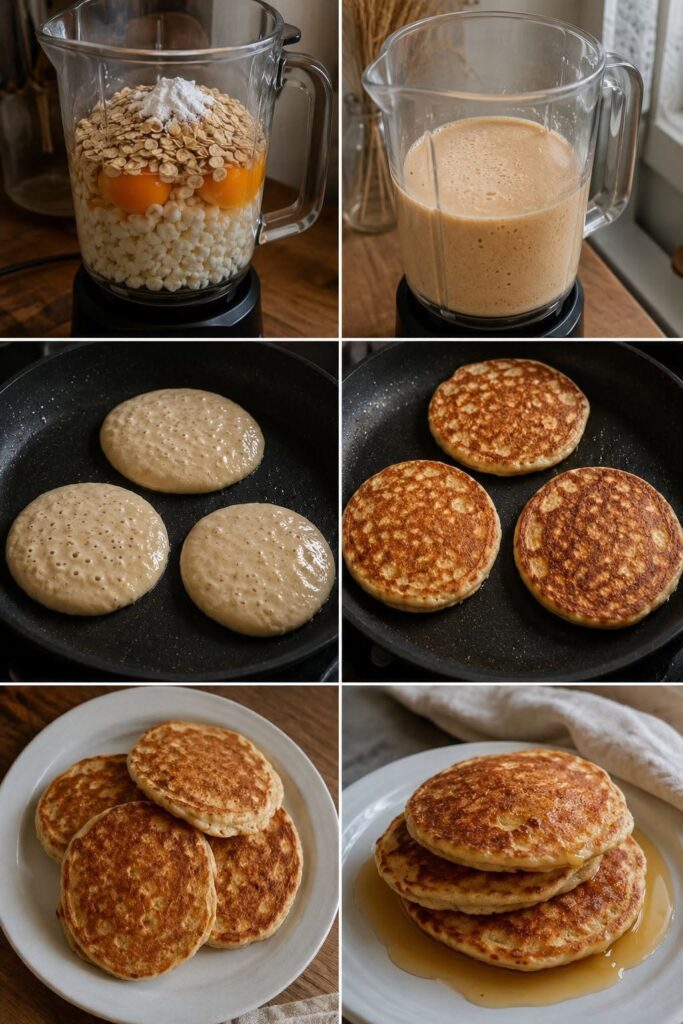
Place the rolled oats, cottage cheese, eggs, vanilla, baking powder, cinnamon, salt, and honey or maple syrup if using into a blender.
Start with 2 tablespoons of milk.
2. Blend
Blend on medium speed for approximately 30–45 seconds.
Stop and scrape down the sides if necessary.
Continue blending until you have a thick, mostly smooth batter.
A few tiny pieces of oats or cottage cheese are perfectly fine.
If the batter is extremely thick, add another tablespoon or two of milk.
Don’t add too much liquid—the batter should be thicker than traditional pancake batter.
3. Let the batter rest
Allow the batter to sit for approximately 3–5 minutes.
The oats will absorb some of the liquid, and the batter will thicken slightly.
If it becomes too thick after resting, stir in another tablespoon of milk.
Cook the Pancakes
4. Heat the skillet
Place a nonstick skillet or griddle over medium-low heat.
Lightly grease it with butter or oil.
Don’t use high heat.
Because these pancakes contain eggs and cottage cheese, they can brown quickly on the outside if the pan gets too hot.
5. Add the batter
Pour approximately ¼ cup of batter onto the skillet for each pancake.
Keep the pancakes relatively small—about 3–4 inches wide.
Small pancakes are easier to flip and cook more evenly.
If you’re adding blueberries or chocolate chips, sprinkle a few over the surface now.
6. Cook the first side
Cook for approximately 2–3 minutes.
Look for small bubbles forming on the surface and edges that appear set.
The underside should be golden brown.
7. Flip
Carefully slide a spatula underneath the pancake.
Flip gently.
Cook for another 1½–2 minutes, until golden brown and cooked through.
If the pancakes are browning too quickly, reduce the heat.
8. Repeat
Continue with the remaining batter.
Lightly grease the pan between batches if necessary.
Keep finished pancakes warm on a plate while you cook the rest.
High-Protein Topping Ideas
For an extra protein boost, serve the pancakes with:
- Greek yogurt
- Cottage cheese
- Peanut butter
- Almond butter
- Chopped nuts
- Chia seeds
- Pumpkin seeds
Fresh berries and a small drizzle of honey or maple syrup add sweetness without overwhelming the pancakes.
Blueberry Version
Add ½ cup fresh or frozen blueberries after blending.
Don’t blend them into the batter.
Instead, gently fold them in or sprinkle them onto each pancake after the batter hits the skillet.
This keeps the berries intact and prevents the batter from turning purple.
Banana Cinnamon Version
Add 1 small ripe banana to the blender.
Reduce or omit the honey or maple syrup.
Add an extra pinch of cinnamon and a little nutmeg.
The banana makes the pancakes naturally sweeter and extra moist.
Chocolate Chip Version
Add 2 tbsp mini dark chocolate chips to the batter after blending.
Cook the pancakes over slightly lower heat because the chocolate can scorch if the pan is too hot.
Serve with sliced strawberries and Greek yogurt.
Tips for Fluffy Pancakes
Don’t overblend
Blend just until the batter is smooth.
Overblending isn’t usually disastrous, but it can make the pancakes slightly heavier.
Let the batter rest
The oats need a few minutes to absorb the liquid.
This also gives the baking powder time to distribute evenly through the batter.
Use medium-low heat
This is especially important with cottage cheese pancakes.
A slower cook allows the center to set before the outside becomes too dark.
Don’t make them too large
Large pancakes are harder to flip and can remain wet in the center.
Three- to four-inch pancakes are ideal.
Cottage cheese texture
You can use full-fat, low-fat, or reduced-fat cottage cheese.
If you want an exceptionally smooth batter, blend it thoroughly.
If you prefer tiny creamy pockets throughout the pancakes, blend the batter slightly less.
Make-Ahead Batter
The batter can be prepared several hours ahead and refrigerated in a covered container.
Because the oats continue absorbing liquid, you may need to stir in 1–2 tablespoons of milk before cooking.
For the best texture, however, freshly blended batter is preferable.
Freezing
Allow cooked pancakes to cool completely.
Place parchment paper between them and transfer to a freezer-safe bag or container.
Freeze for up to 2–3 months.
Reheat in a toaster, toaster oven, microwave, or skillet.
For crisp edges, a toaster or skillet works best.
Simple Breakfast Plate
Stack 3–4 pancakes and top with Greek yogurt, fresh blueberries, a spoonful of peanut butter, and a light drizzle of maple syrup.
The result is a filling breakfast with oats for sustained energy, eggs and cottage cheese for protein, and fresh fruit for brightness—all from a simple blender batter.