
Gum Disease: 8 Home Measures That Can Help
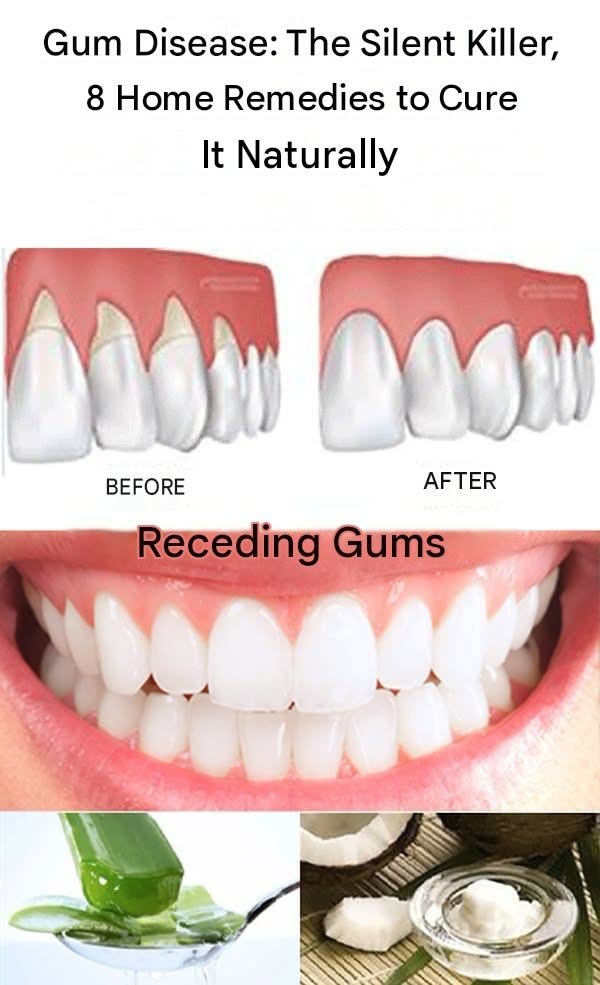
Gum disease (periodontal disease) is common and can progress without much pain, which is why it is sometimes called a “silent” disease. But calling it a “silent killer” is misleading: gum disease is not usually an immediate life-threatening illness, and home remedies cannot cure established periodontal disease.
Early gum inflammation (gingivitis) can often be improved with good oral hygiene. More advanced periodontitis requires professional dental treatment.
1. Brush Twice Daily
Use a soft-bristled toothbrush and fluoride toothpaste. Brush gently along the gumline for about two sized interdental brushes once a day. This removes plaque from areas a toothbrush minutes rather than scrubbing aggressively.
2. Clean Between Your Teeth
Floss or use appropriately sized interdental brushes once a day. This removes plaque from areas a toothbrush cannot reach.
3. Rinse With Salt Water
A warm salt-water rinse can temporarily soothe irritated gums.
Mix about ½ teaspoon of salt into a cup of warm water, rinse, and spit it out. It can reduce discomfort but doesn’t remove tartar or cure periodontitis.
4. Don’t Smoke
Smoking is a major risk factor for gum disease and can interfere with healing. Stopping smoking is one of the most useful things you can do for your gums.
5. Limit Sugary Foods and Drinks
Frequent sugar exposure encourages plaque bacteria and increases the risk of tooth decay. Choose water more often and keep sugary snacks and drinks to a minimum.
6. Maintain a Balanced Diet
A diet containing vegetables, fruits, whole grains, protein, and adequate nutrients supports general and oral health. No particular food, however, can dissolve established tartar.
7. Stay Hydrated
Water helps maintain saliva flow and can wash away food particles. If your mouth is frequently dry, discuss the cause with a healthcare professional or dentist.
8. Have Regular Dental Cleanings
This is the step home remedies cannot replace. Hardened plaque (tartar/calculus) generally needs professional removal, and periodontitis may require deep cleaning or other treatment.
🦷 See a Dentist If You Have:
-
Gums that bleed regularly when brushing
-
Persistent bad breath
-
Swollen, red, or tender gums
-
Gum recession
-
Loose or shifting teeth
-
Pus around the gums
-
Pain when chewing
Don’t put undiluted hydrogen peroxide, bleach, vinegar, or other harsh substances on your gums. They can damage oral tissues.
The good news is that gingivitis is often reversible with appropriate care, while periodontitis can usually be managed effectively when treated early.