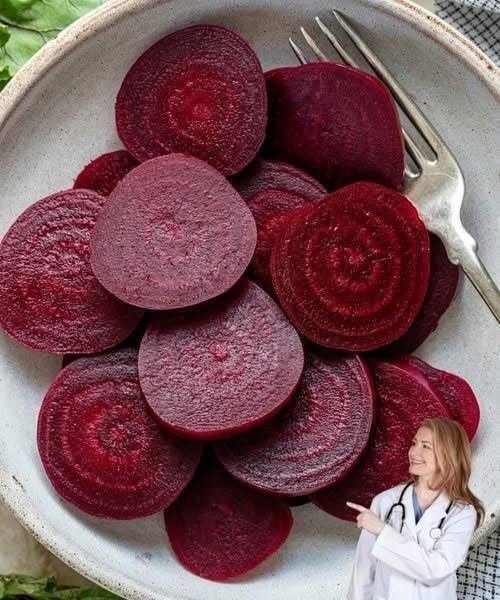

Doctors Reveal What Eating Beets May Cause
Beets are a nutritious vegetable containing fiber, folate, potassium, and naturally occurring nitrate compounds. Eating them does not automatically cause harm, but they can produce some noticeable effects in certain people.
1. Lower Blood Pressure
The nitrates in beets can be converted into nitric oxide, which helps blood vessels relax and widen. This may contribute to a modest reduction in blood pressure in some people.
2. Red or Pink Urine
Beets can temporarily turn urine pink or reddish. This is called beeturia and is generally harmless. However, persistent blood-colored urine that occurs without eating beets should be medically evaluated.
3. Changes in Stool Color
Beets can also make bowel movements appear reddish or darker than usual. This can be mistaken for blood, particularly after eating a large serving.
4. Improved Bowel Regularity
Because beets contain dietary fiber, they can support normal digestion and bowel regularity when included as part of a balanced diet.
5. Temporary Digestive Discomfort
Some people may experience gas, bloating, or stomach discomfort after eating beets, particularly if they suddenly increase their fiber intake.
6. Increased Nitrate Intake
Beets are naturally rich in nitrates. These compounds are generally considered beneficial in normal dietary amounts and may support blood-vessel function and exercise performance.
7. Possible Kidney-Stone Concern for Some People
Beets contain oxalates. People who have been advised to follow a low-oxalate diet because of certain types of kidney stones may need to limit their intake according to their healthcare professional’s advice.
Bottom Line
For most people, beets can be a healthy addition to the diet. Their strongest documented effects include providing nutrients, fiber, and dietary nitrates that may support cardiovascular health. They are not a cure for high blood pressure or other diseases, and individual dietary needs can vary.