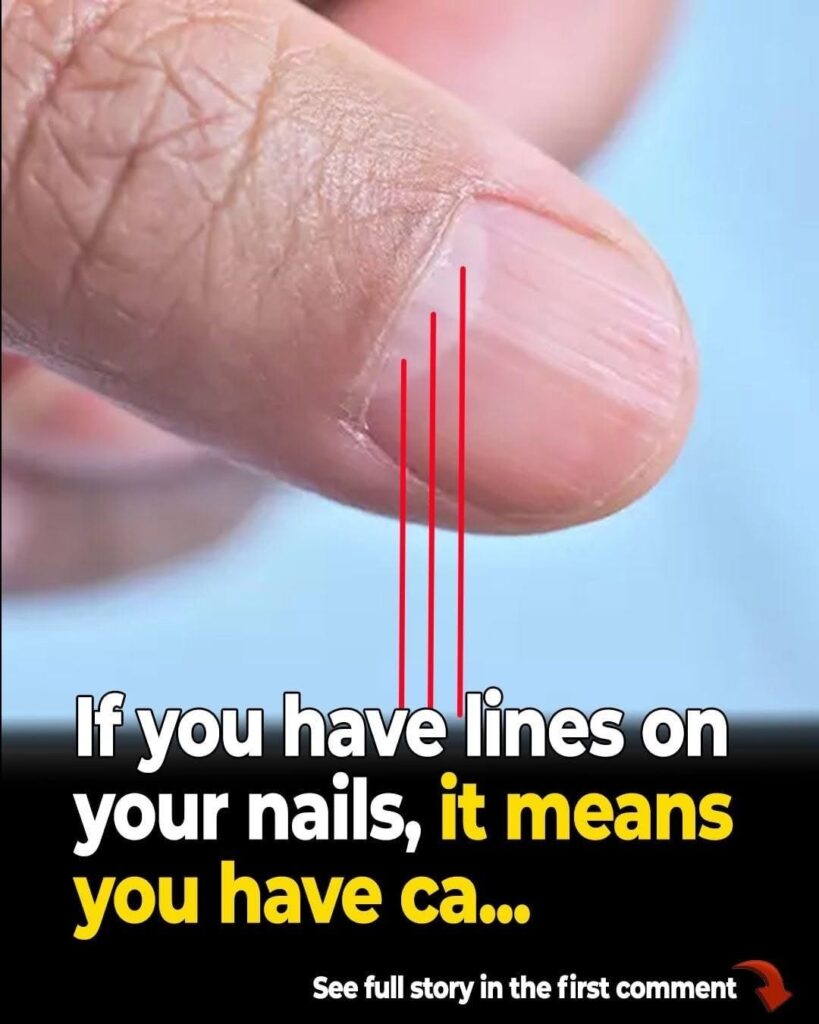

Can Your Fingernails Predict Life Expectancy? What Nail Changes May Really Mean
There is no single fingernail sign that can reliably predict how long someone will live. However, changes in the nails can sometimes provide clues about health conditions that deserve medical attention.
1. Very Slow-Growing or Brittle Nails
Nails naturally become thinner, drier, or more brittle with age. Significant changes can also be related to nutritional deficiencies, thyroid problems, or repeated exposure to water and chemicals.
2. Spoon-Shaped Nails
Nails that become unusually thin and curve upward at the edges are called koilonychia. Iron deficiency is one possible cause, although other conditions can also produce this appearance.
3. Clubbing
When the fingertips become enlarged and the nails curve more around the fingertips, this is known as clubbing. It can sometimes be associated with lung, heart, gastrointestinal, or other medical conditions and should be evaluated if it is new.
4. Pale or Whitish Nails
Nail color can change for many harmless reasons, but widespread paleness may sometimes be associated with anemia or other health problems. A nail appearance alone cannot establish a diagnosis.
5. A Dark Vertical Stripe
A new dark or brown-black streak under a nail should not automatically be dismissed as a harmless mark. In uncommon cases, it can be a sign of melanoma of the nail unit. A new, changing, widening, or irregular dark streak should be examined by a healthcare professional.
6. Changes in Nail Texture
Ridges, pits, splitting, or separation of the nail from the nail bed can occur with aging, injuries, skin conditions, infections, or systemic illnesses.
When Should You Get Your Nails Checked?
A persistent or unexplained nail change deserves attention, particularly when it affects only one nail, develops suddenly, continues to worsen, or occurs along with other symptoms.
Bottom line: Your fingernails cannot tell you your exact life expectancy. They can, however, occasionally provide clues that something in your health deserves investigation. A doctor should evaluate unusual or persistent nail changes rather than using them to predict longevity.