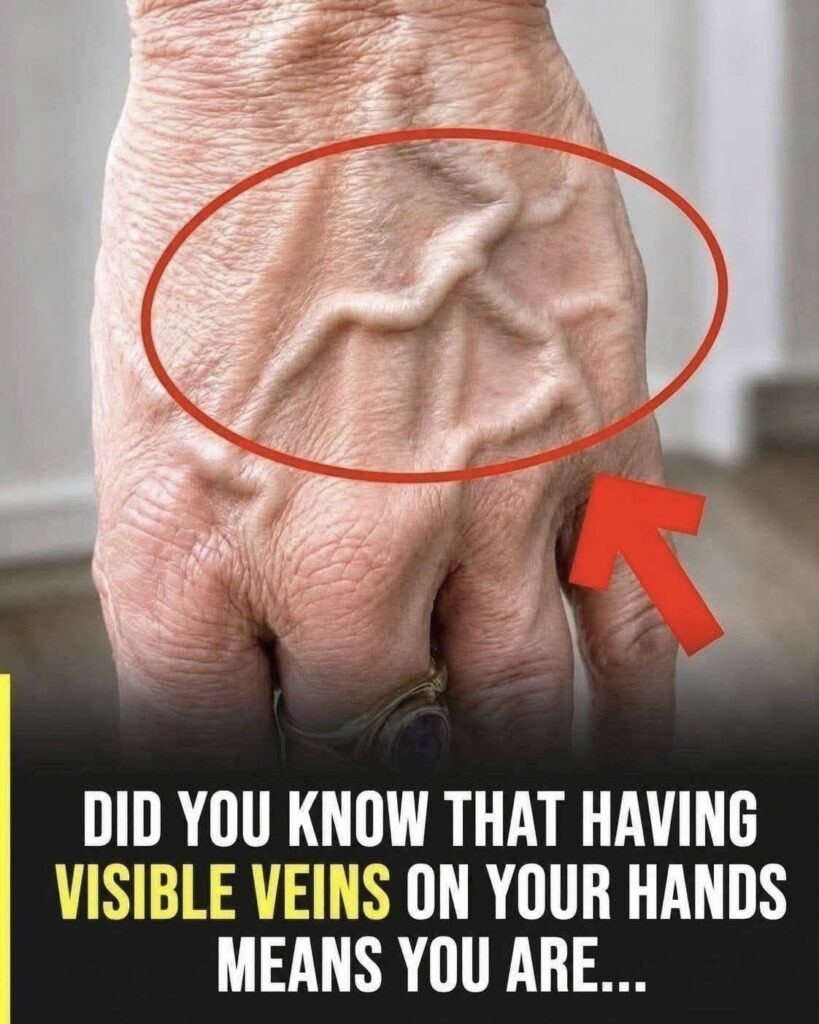

What Do Visible Veins Mean?
Visible veins, especially on the hands, arms, feet, or legs, are often completely normal. They can become more noticeable for several harmless reasons and do not automatically indicate a serious health problem.
1. Naturally Thin Skin
As people get older, the skin can become thinner and lose some of its underlying fat. This can make veins appear more prominent.
2. Heat
Warm temperatures can cause blood vessels near the surface of the skin to widen, making veins temporarily more visible.
3. Physical Activity
During exercise, increased blood flow can make veins stand out more prominently. They may become less noticeable again after resting.
4. Dehydration
When the body is dehydrated, veins may sometimes appear more prominent, although visible veins alone cannot reliably diagnose dehydration.
5. Genetics
Some people naturally have more visible superficial veins because of their skin characteristics, body composition, or genetics.
When Visible Veins May Need Attention
A newly prominent vein deserves medical attention if it is accompanied by pain, swelling, redness, warmth, tenderness, or a sudden change, particularly in one leg or arm. These symptoms can sometimes indicate a circulation problem that requires prompt evaluation.
Also seek medical advice for veins that become increasingly enlarged, twisted, painful, or associated with skin changes.
Bottom Line
Visible veins do not automatically mean you are unhealthy or have poor circulation. In many cases, they are simply a normal feature of the body, especially with aging, heat, activity, or naturally thin skin. What matters most is whether the veins are accompanied by new or concerning symptoms.