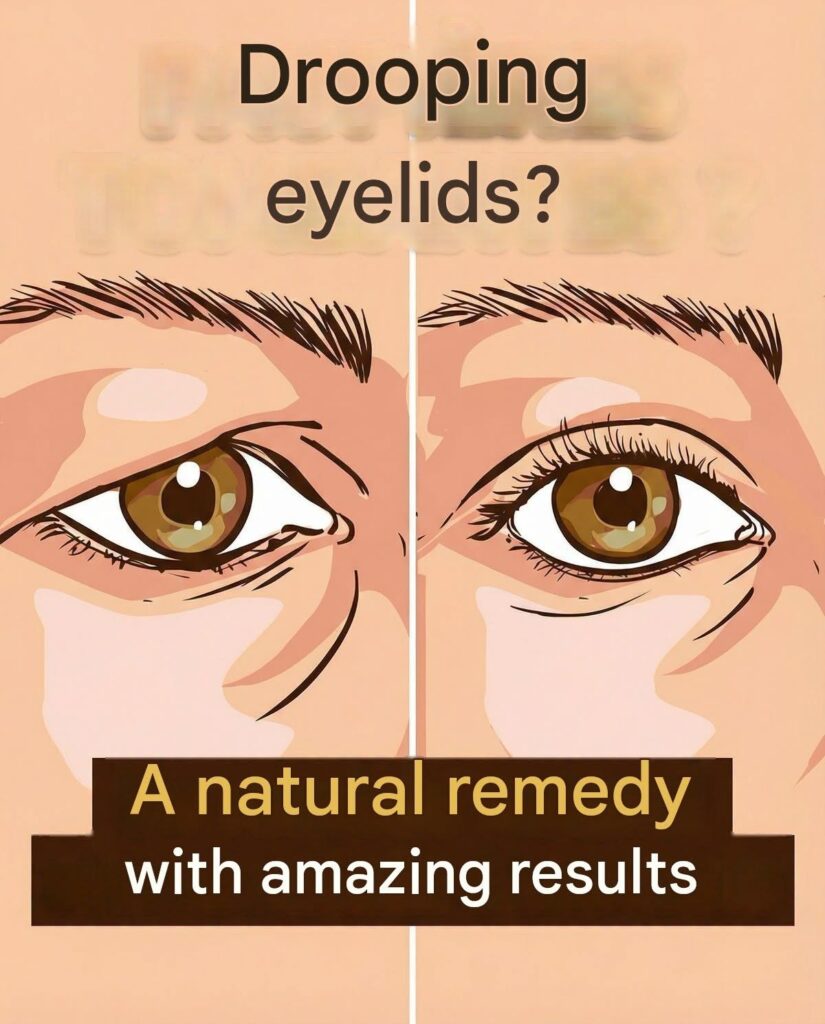

A Simple Kitchen Ingredient Could Transform Your Drooping Eyelids
Drooping or heavy-looking eyelids are common, particularly as people get older. The skin around the eyes is thin and delicate, and over time it can lose some of its elasticity. Changes in the muscles and connective tissues that support the eyelid can also cause the upper eyelid to sit lower than it once did. Some people naturally have hooded or slightly drooping eyelids because of genetics.
You may see claims that a simple kitchen ingredient can “lift” or “transform” drooping eyelids. However, it is important to separate a temporary cosmetic effect from an actual medical treatment. No kitchen ingredient has been scientifically proven to permanently lift a drooping eyelid.
Chilled Cucumber for a Temporary Refreshed Appearance
Cucumber is one of the most commonly used household remedies for the eye area. Because cucumbers contain a great deal of water, chilled slices can provide a cooling sensation and may temporarily reduce the appearance of puffiness.
To try this as a simple cosmetic routine, wash a fresh cucumber thoroughly and cut two thin slices. Refrigerate them until they are comfortably cool, rather than extremely cold. With your eyes closed, place the slices gently over the eyelids for around 5–10 minutes. Remove them if the skin becomes uncomfortable or irritated.
The cooling effect may temporarily make puffy eyelids look less swollen, which can make the eyes appear slightly more open or refreshed. This is different from actually lifting a drooping eyelid.
Why Eyelids Become Droopy
There are several possible causes of eyelid drooping. With normal aging, the skin can become looser and the structures that support the eyelid can change. The condition may also be influenced by genetics.
Sometimes what looks like a drooping eyelid is actually excess upper-eyelid skin, known as dermatochalasis. In other cases, the eyelid itself sits lower because of weakness or stretching involving the muscles or tissues that raise the eyelid. This is called ptosis.
These conditions cannot be reversed simply by applying cucumber, honey, egg white, baking soda, or another household ingredient.
Be Careful With DIY Eye Remedies
The skin around the eyes is particularly sensitive. Ingredients that are harmless when eaten can cause irritation when placed around the eyes.
Avoid putting substances such as lemon juice, vinegar, baking soda, essential oils, or undiluted household products near the eyes. They can cause irritation and, if they enter the eye, potentially cause significant discomfort or injury.
Even natural ingredients can cause an allergic reaction. If anything applied around the eyes causes burning, redness, swelling, itching, or blurred vision, remove it and rinse the area with clean water.
When Drooping Eyelids Should Be Checked
A gradually changing eyelid appearance is often related to aging or genetics, but persistent drooping can sometimes interfere with vision. An eye-care professional can determine whether the problem involves excess skin, the eyelid-lifting muscle, or another underlying cause.
Sudden eyelid drooping is different. If one eyelid suddenly begins to droop, particularly if it occurs with double vision, severe headache, unequal pupils, facial weakness, difficulty speaking, or weakness elsewhere in the body, seek urgent medical attention.
What Can Actually Help?
For mild puffiness rather than true eyelid drooping, adequate sleep, managing allergies, avoiding rubbing the eyes, and using a cool compress may improve the appearance temporarily.
If significant excess skin or true ptosis is affecting vision or causing substantial functional problems, medical treatments are available depending on the underlying cause. An eye specialist can explain the appropriate options after examining the eyelids and surrounding structures.
The Bottom Line
A chilled cucumber slice may help temporarily reduce puffiness and make the eye area look fresher, but it cannot permanently lift or tighten a drooping eyelid. Be cautious of claims that a single kitchen ingredient can reverse aging-related eyelid changes. For persistent, worsening, or sudden drooping, identifying the underlying cause is much more important than relying on a home remedy.