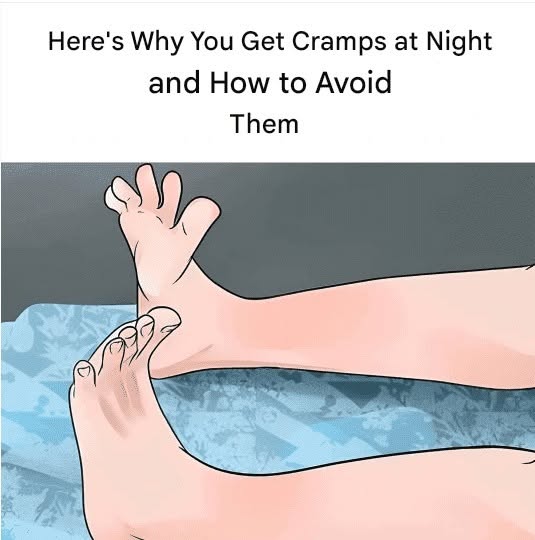

This Is Why We Get Cramps at Night
Nighttime leg cramps are sudden, involuntary muscle contractions that can make the calf or foot become painfully tight. They are common, especially with increasing age, and although they can be uncomfortable, they are usually not dangerous.
1. Muscles Become More Easily Irritated at Night
During sleep, your legs remain in one position for a long time. Certain sleeping positions can keep the calf or foot muscles shortened, which may contribute to cramping in some people.
2. Muscle Fatigue During the Day
Standing, walking, exercising, or doing more physical activity than usual can leave muscles fatigued. The effects may become noticeable later when you’re resting or sleeping.
3. Dehydration Can Contribute
Not drinking enough fluids can contribute to muscle cramping, particularly after sweating heavily or during hot weather. Staying adequately hydrated throughout the day may help reduce cramps for some people.
4. Certain Medications Can Play a Role
Some medicines can increase the likelihood of cramps in certain people. Diuretics, for example, can alter fluid and electrolyte balance. Some cholesterol-lowering medicines have also been associated with muscle symptoms.
If cramps began after starting or changing a medication, speak with a healthcare professional rather than stopping the medicine yourself.
5. Electrolyte Problems Are Sometimes Involved
Magnesium, potassium, calcium, and other electrolytes are important for normal muscle and nerve function. However, not every nighttime cramp is caused by a magnesium deficiency.
Taking supplements without knowing whether you need them isn’t necessarily helpful and can sometimes cause problems, particularly for people with kidney disease or those taking certain medications.
What Can Help When a Cramp Happens?
When a cramp starts, gently stretch the affected muscle. For a calf cramp, straightening the leg and gently pulling the toes toward you can help relax the muscle. Standing carefully and putting some weight on the affected leg may also help.
A warm shower or heating pad can provide additional comfort afterward.
When Should You Get Medical Advice?
Talk with a healthcare professional if cramps are frequent, severe, getting worse, disturbing your sleep regularly, or accompanied by swelling, weakness, numbness, or persistent pain.
A sudden painful, swollen, warm, or discolored leg is different from an ordinary nighttime cramp and should be medically evaluated promptly.
The Bottom Line
Nighttime cramps can have several contributing factors, including muscle fatigue, prolonged positioning, dehydration, medications, and certain medical conditions. There isn’t one universal cause—and simply taking magnesium isn’t the answer for everyone. A consistent routine of adequate hydration, gentle stretching, and appropriate physical activity may help reduce recurring cramps.