
If You Have These Lines on Your Nails After 40, It Is a Clear Sign That…
What Vertical Ridges, Horizontal Grooves, and Dark Streaks on Nails Reveal After Age 40
Fingernails and toenails grow slowly from the nail matrix beneath the cuticle, recording subtle shifts in cell turnover, hydration, nutrient absorption, circulation, and systemic health. After age 40, noticing lines on the nails is very common—and the exact direction, depth, and color of those lines point to very different underlying causes.
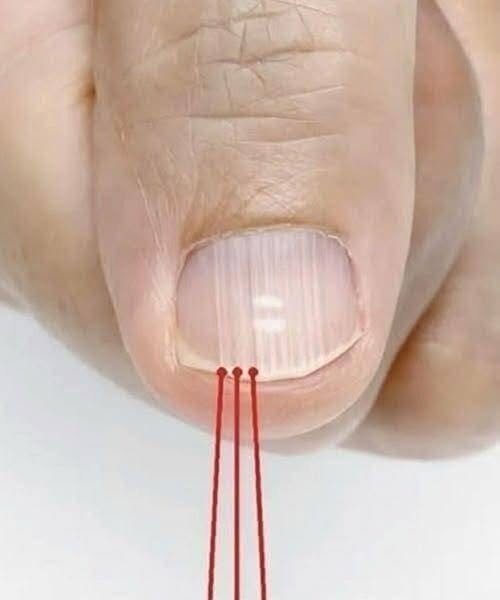
1. Fine Vertical Ridges (Onychorrhexis) — Natural Nail Matrix Aging & Moisture Loss
-
What They Look Like: Faint, raised lengthwise lines running from the cuticle straight up to the tip of the nail, often affecting several fingernails at once.
-
What They Signal After 40: Much like fine lines on skin, vertical ridges are most commonly a normal sign of gradual slowing in cell turnover and reduced natural oil and moisture retention in the nail plate as the nail matrix ages.
-
Contributing Factors: Frequent handwashing, dish detergents, acetone nail polish removers, dry indoor air, and low daily hydration can make vertical ridges deeper and more brittle.
2. Deep Horizontal Grooves (Beau’s Lines) — Temporary Pause in Nail Growth
-
What They Look Like: Indented horizontal troughs running side-to-side across the width of one or more nails, moving slowly toward the tip as the nail grows out.
-
What They Signal After 40: A deep horizontal groove marks a period weeks or months earlier when the body temporarily slowed or paused nail-plate production to redirect energy toward a physical stressor—such as a high fever, severe infection, surgery, major emotional stress, crash dieting, or uncontrolled blood sugar.
-
Timing Clue: Because fingernails grow roughly 3 millimeters per month, a groove halfway up the nail typically reflects a stressor that occurred about 2 to 3 months earlier.
3. White Horizontal Bands (Mees’ or Muehrcke’s Lines) — Protein, Zinc, or Metabolic Shifts
-
What They Look Like: Smooth, flat white horizontal lines or paired white bands across the nail bed that do not indent the nail surface.
-
What They Signal After 40:
-
Paired White Bands (Muehrcke’s Lines): Often reflect low serum albumin (blood protein levels), liver or kidney protein loss, or significant nutritional depletion.
-
Single White Transverse Bands (Mees’ Lines): Can follow acute systemic illness, heavy metabolic stress, or certain medications.
-
Scattered Small White Dots (Leukonychia): Usually caused by minor everyday bumps or micro-trauma to the nail base rather than calcium deficiency.
-
4. Vertical Ridges Paired with Splitting, Brittle, or Spoon-Shaped Nails — Iron, B12, or Thyroid Imbalance
-
What They Look Like: Prominent vertical ridges accompanied by nails that peel in layers, crack easily, feel unusually thin, or flatten/curve slightly upward at the edges (koilonychia).
-
What They Signal After 40:
-
Iron Deficiency or Low Ferritin: Reduces oxygen delivery to the rapidly dividing cells of the nail matrix, leading to thin, ridged, brittle, or spoon-shaped nails.
-
Vitamin B12, Folate, or Zinc Gaps: Stomach acid naturally declines slightly after 40, which can reduce absorption of vitamin B12, iron, and zinc needed for dense keratin protein synthesis.
-
Thyroid Underactivity (Hypothyroidism): Slows peripheral circulation and keratin production, resulting in dry, ridged, slow-growing, and easily split nails.
-
5. Dark Brown or Black Vertical Streaks (Longitudinal Melanonychia) — Pigment Deposit or Subungual Check
-
What They Look Like: A distinct vertical tan, brown, or black stripe running from the cuticle to the free edge of a single nail.
-
What They Signal After 40:
-
Benign Pigment Activation: Common in darker skin tones as harmless melanocyte pigment bands across multiple nails.
-
Single-Nail Dark Band (Hutchinson’s Sign Check): A new, widening, uneven dark brown or black streak on one single nail after age 40—especially if pigment spreads onto the surrounding cuticle skin—requires prompt dermatological evaluation to rule out subungual melanoma or a nail-matrix mole.
-
6. Tiny Red or Brown Vertical “Splinter” Lines — Micro-Capillary Trauma
-
What They Look Like: Thin, dark red or reddish-brown vertical lines under the nail plate that look like tiny wooden splinters.
-
What They Signal After 40: Most often caused by minor everyday trauma (tight shoes on toenails, gardening, heavy lifting, or manicures) that breaks tiny capillaries beneath the nail bed. When appearing spontaneously across multiple nails without injury, they warrant a routine check of heart valve and vascular health.
Daily Nail-Strengthening & Nutrient-Support Routine After 40
-
Hydrate the Nail Matrix and Cuticles Twice Daily:
-
Massage 1 drop of jojoba oil, sweet almond oil, or pure vitamin E oil into the base of each nail and cuticle morning and night. Jojoba oil closely mimics natural skin lipids and penetrates keratin layers to soften vertical ridges.
-
-
Protect Hands from Water and Harsh Chemicals:
-
Wear cotton-lined rubber gloves when washing dishes or using household cleaners, and switch from acetone removers to gentle, acetone-free formulas.
-
-
Buff Gently—Never Over-Thin:
-
Use a fine 4-way foam buffer very lightly once every 3 to 4 weeks to smooth raised ridge tops, stopping immediately while the nail remains thick and strong.
-
-
Eat Key Keratin-Building Nutrients Daily:
-
Complete Protein (Keratin Base): Eggs, fish, poultry, Greek yogurt, lentils, and cottage cheese.
-
Iron + Vitamin C Pairing: Lentils, spinach, pumpkin seeds, or lean meats paired with bell peppers, citrus, or lemon juice to boost iron absorption.
-
Biotin, Zinc & Vitamin B12: Egg yolks, almonds, walnuts, pumpkin seeds, oats, sardines, and fortified foods.
-
-
Trim and File in One Direction:
-
Trim nails straight across after a warm shower when they are slightly softer, and file edges in one smooth direction rather than sawing back and forth to prevent micro-splits.
-