
If You Hear Ringing in Your Ear, This Is a Sign That You Will Suffer From…
What Ringing in the Ears (Tinnitus) Actually Signals About Hearing, Nerves, Blood Flow, and Stress
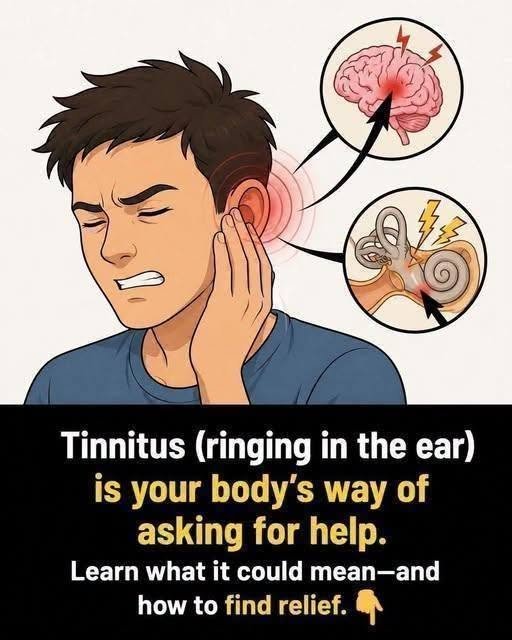
Hearing a persistent or recurring ringing, buzzing, humming, hissing, or whistling sound when no external sound is present is known medically as tinnitus. Rather than being a single disease on its own, tinnitus is a signal from the auditory system—indicating that the delicate sensory hair cells in the inner ear, the auditory nerve pathways, surrounding blood vessels, or nearby jaw and neck structures are experiencing strain, irritation, or changes in blood flow.
1. Inner-Ear Hair Cell Strain & Early Noise-Induced Hearing Changes
The most common cause of ringing in the ears is irritation or fatigue of the microscopic sensory hair cells inside the cochlea (inner ear):
-
Acoustic Overexposure: Loud music, power tools, traffic, fireworks, or prolonged headphone use at high volume can bend or stress these fragile hair cells. When they misfire, the auditory brain interprets the missing or abnormal electrical signals as a phantom ringing or high-pitched tone.
-
Age-Related Hearing Shifts (Presbycusis): As high-frequency hearing naturally softens over time, the brain turns up its internal “volume” (central auditory gain) to compensate, which often produces a steady background hiss or ringing.
2. Ear Canal Blockage or Middle-Ear Fluid Pressure
Sometimes the inner ear is completely healthy, and the ringing simply comes from sound waves being trapped or muffled before reaching the eardrum:
-
Impacted Earwax (Cerumen): A buildup of hardened earwax pressing against the eardrum alters pressure and blocks outside ambient noise, making internal blood-flow and nerve sounds noticeably louder.
-
Eustachian Tube Congestion & Sinus Pressure: Colds, allergies, sinus inflammation, or altitude shifts can prevent the Eustachian tube from equalizing air pressure behind the eardrum, triggering temporary ringing, popping, or a “underwater” fullness.
3. Blood Pressure Fluctuations & Vascular Pulsatile Changes
When ringing sounds rhythmic—like a heartbeat, whooshing, or thumping in sync with your pulse (pulsatile tinnitus)—it points directly to blood flow near the ear:
-
Elevated Blood Pressure or Vessel Turbulence: High blood pressure, narrowed blood vessels near the temporal bone, or increased blood flow velocity makes blood movement audible to the adjacent inner ear.
-
Anemia or Thyroid Overactivity: Conditions that cause the heart to pump faster or harder can make normal circulation near the ear canal easier to hear, especially in a quiet bedroom at night.
4. Jaw Joint (TMJ) Tension & Neck Muscle Strain
The nerves and ligaments of the jaw and upper cervical spine sit right beside the middle and inner ear:
-
Temporomandibular Joint (TMJ) Dysfunction: Teeth grinding (bruxism), jaw clenching during sleep, or misaligned bite mechanics irritate shared trigeminal nerve pathways, frequently causing ringing, ear fullness, or jaw clicking without actual ear damage.
-
Upper Neck & Suboccipital Stiffness: Tightness at the base of the skull from prolonged screen posture can influence auditory nerve signaling and trigger unilateral (one-sided) ear ringing.
5. Stress, Sleep Deprivation & Nervous System Hyperarousal
The auditory cortex is closely wired to the body’s fight-or-flight stress response:
-
Cortisol and Adrenaline Spikes: Chronic emotional stress, anxiety, or poor sleep heightens nervous system sensitivity, making mild background neural noise suddenly prominent and intrusive.
-
The Stress-Ringing Loop: Noticing the ringing triggers frustration or worry, which releases more stress hormones and temporarily amplifies how loud the sound feels.
6. Medication Sensitivity (Ototoxic Side Effects) & Nutrient Gaps
-
Certain Medications: High doses of aspirin or NSAIDs, certain antibiotics, loop diuretics, and specific blood pressure or antidepressant medications can temporarily irritate inner-ear hair cells or auditory nerves.
-
Key Nutritional Links: Low levels of vitamin B12 (essential for nerve myelin protection), magnesium (which helps shield inner-ear hair cells from noise-induced oxidative stress), and zinc are frequently associated with heightened auditory nerve sensitivity.
Practical Daily Routine to Calm Ear Ringing & Protect Hearing
-
Follow the 60/60 Headphone Rule: Keep headphone or earbud volume at no more than 60% of maximum for no longer than 60 minutes at a time, using over-ear noise-isolating headphones instead of turning volume up to drown out background noise.
-
Use Gentle Background Sound at Night: Total silence makes internal ear ringing stand out sharply. Running a quiet fan, soft rain track, or low-volume white/pink noise machine gives the auditory brain neutral external sound to focus on while falling asleep.
-
Release Jaw and Neck Tension Daily:
-
Keep teeth slightly apart during the day with the tongue resting gently against the roof of the mouth.
-
Massage the masseter muscles along the cheeks and temples with warm fingertips for 2 minutes before bed, and perform slow chin tucks and gentle neck stretches.
-
-
Clear Sinus and Eustachian Pressure Safely: Use a warm saline nasal rinse or steam inhalation during allergy or congestion flare-ups, and never insert cotton swabs, hairpins, or sharp objects into the ear canal (which pushes wax deeper against the eardrum).
-
Support Inner-Ear Circulation & Nerve Health Through Diet:
-
Emphasize magnesium-rich foods (pumpkin seeds, spinach, almonds, black beans, avocados), vitamin B12 sources (eggs, fish, dairy, fortified foods), and potassium-rich produce while moderating excessive sodium, caffeine, and alcohol—all of which can temporarily spike inner-ear fluid pressure or nerve excitability.
-
-
Know Key Warning Signs for Prompt Evaluation: Seek a hearing and medical check if ringing appears suddenly in only one ear, pulses rhythmically with your heartbeat, comes with sudden hearing loss, dizziness/vertigo, or ear pain/drainage.