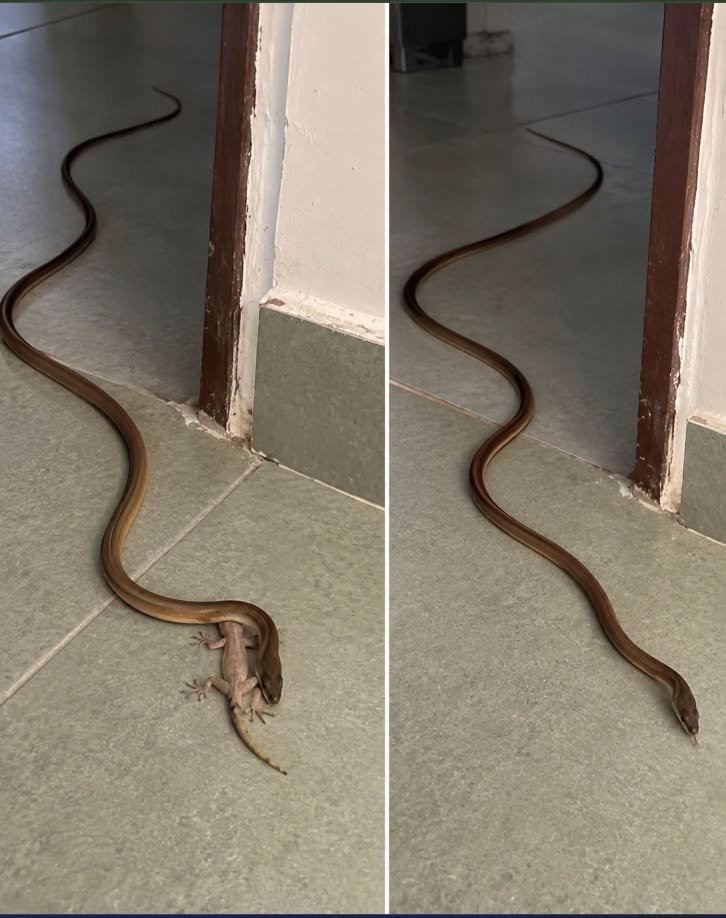

When This Snake Enters Your House, It Means You Have
When a snake unexpectedly slips inside a home, it is rarely random—and it is almost never an act of aggression. Wildlife biologists, pest control specialists, and herpetologists agree that snakes enter residential spaces strictly in response to specific environmental conditions. If a snake finds its way into your house, it almost always indicates one or more underlying issues inside or directly around your property: an active rodent or pest infestation, excess moisture, unsealed structural gaps, or accessible indoor shelter.
1. An Active Rodent or Insect Infestation (A Ready Food Source)
The single most common reason a snake enters a home is that it is following a scent trail to an established food supply. Snakes are opportunistic predators with a highly developed sense of smell (using their Jacobson’s organ to detect chemical trails in the air), and they will readily enter buildings if prey is present inside.
-
Mice and Rats: Non-venomous constrictors—such as rat snakes, corn snakes, king snakes, and gopher snakes—regularly track mice and rats straight into basements, garages, attics, and crawl spaces. Even if you have not yet seen droppings or heard scratching inside your walls, a snake’s presence is a strong early warning sign of a hidden rodent problem.
-
Insects, Frogs, and Lizards: Smaller snake species—such as garter snakes, brown snakes (DeKay’s snakes), ring-necked snakes, and rough earth snakes—feed primarily on slugs, earthworms, crickets, cockroaches, frogs, and small lizards. Damp basements or utility rooms that attract insects and amphibians inevitably attract the snakes that eat them.
2. Unsealed Entry Points and Structural Gaps
Snakes do not chew, dig, or claw their way through solid walls; they simply exploit existing openings that have gone unnoticed. A snake inside your home means your exterior barrier has vulnerabilities that allow wildlife to pass freely.
-
Foundation and Siding Cracks: Gaps as small as a quarter-inch (roughly the width of a pencil) around mortar joints, utility pipes, HVAC lines, and electrical conduits provide easy access for slender snakes.
-
Worn Weatherstripping and Door Sweeps: Damaged rubber seals beneath garage doors, basement walkouts, and exterior side doors are the most frequent entry points at ground level.
-
Unscreened Vents and Crawl Spaces: Torn mesh over foundation vents, dryer exhausts, or attic louvers gives snakes direct entry into wall cavities and subfloors.
3. Excess Moisture, Leaks, or High Humidity
Like all reptiles, snakes depend on external environmental conditions to regulate their body temperature and hydration. During hot, dry spells—or conversely, during heavy rainstorms that flood underground burrows—snakes actively seek out cool, damp indoor microclimates.
-
Plumbing Leaks and Condensation: Dripping pipes under kitchen or bathroom sinks, sweating water heaters, and damp laundry rooms create humid pockets that draw snakes seeking water and relief from outdoor heat.
-
Poor Yard Drainage: Standing water, clogged gutters, and overly watered flower beds right against the foundation attract both amphibians and snakes directly up to the exterior walls of your house.
4. Clutter and Undisturbed Hiding Spots
Snakes are secretive animals that feel vulnerable in open spaces. Once inside, they gravitate toward areas that mimic the tight, dark crevices of rocks, logs, and burrows.
-
Interior Clutter: Stacked cardboard boxes in garages, piles of laundry in basements, dense storage closets, and gaps behind refrigerators or washing machines offer warmth, darkness, and security.
-
Exterior Landscaping Bridges: Overgrown shrubs, ivy climbing up walls, thick mulch beds, woodpiles stacked against siding, and leaf debris act as protective cover that lets snakes approach your doors and windows undetected.
5. Seasonal Temperature Shifts
A snake indoors often points to sudden outdoor weather changes rather than a permanent indoor nest:
-
Extreme Heat: In midsummer, cool concrete basement floors and air-conditioned crawl spaces offer a thermal refuge from blistering outdoor temperatures.
-
Approaching Cold Weather: In late autumn, snakes search for frost-free hibernation sites (hibernacula). Warm foundations, sunlit brick walls, and heated garages attract snakes looking for a safe place to overwinter.
Immediate Steps If You Find a Snake Inside
-
Keep Your Distance and Observe Safely: Do not attempt to pick up, corner, or kill the snake—most snakebites occur when people try to handle or strike the animal. Keep children and pets in another room.
-
Contain the Area: If the snake is in a room with an exterior door, prop the door open and gently guide it out from a safe distance using a long-handled broom, or close the interior door and place a rolled towel along the bottom gap until a local wildlife removal specialist arrives.
-
Eliminate the Root Cause: Once the snake is safely outside, inspect your home for mice or insects, repair torn door sweeps and foundation gaps, fix leaking pipes, and clear woodpiles or dense brush away from your exterior walls so another snake does not follow the same path inside.