
New Methods May Make Colon Cancer Screening Less Invasive
Colonoscopy is still an important medical examination, but researchers and healthcare systems are developing less-invasive ways to screen the colon and detect possible colorectal cancer or precancerous changes.
1. Stool-Based Screening Tests
Some screening tests look for blood or abnormal DNA in a stool sample. They don’t require a camera to be inserted into the colon and can be performed at home for eligible people. If the result is abnormal, a colonoscopy may still be needed to investigate further.
2. CT Colonography
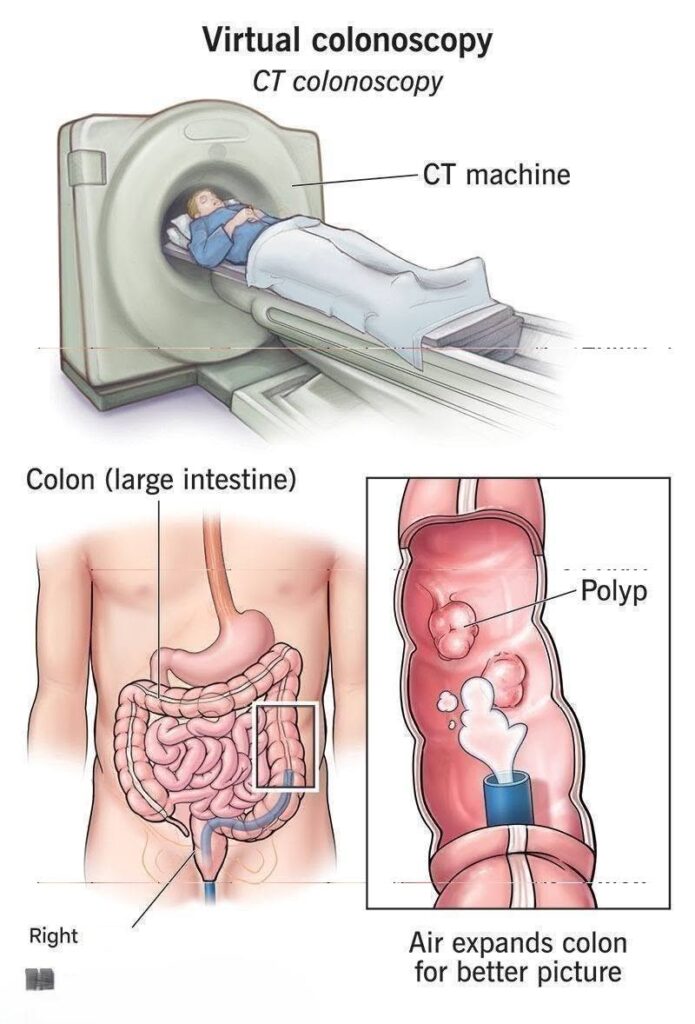
Also called a virtual colonoscopy, this uses CT imaging to create pictures of the colon without inserting a traditional colonoscope throughout the large intestine. It is less invasive than conventional colonoscopy, although bowel preparation is generally still required.
3. Capsule-Based Technology
Researchers have also investigated swallowable capsules containing cameras that travel through the digestive tract and capture images. This technology can provide visual information without a conventional colonoscope, but it does not completely replace colonoscopy in every situation.
Important Difference
These newer approaches do not mean colonoscopy has become obsolete. Colonoscopy has an important advantage: when doctors find a suspicious polyp, they can often remove it during the same procedure and send it for laboratory examination.
The appropriate screening method depends on factors such as age, personal and family history, previous test results, and symptoms. A new screening technology should not be interpreted as a reason to postpone recommended colorectal-cancer screening.