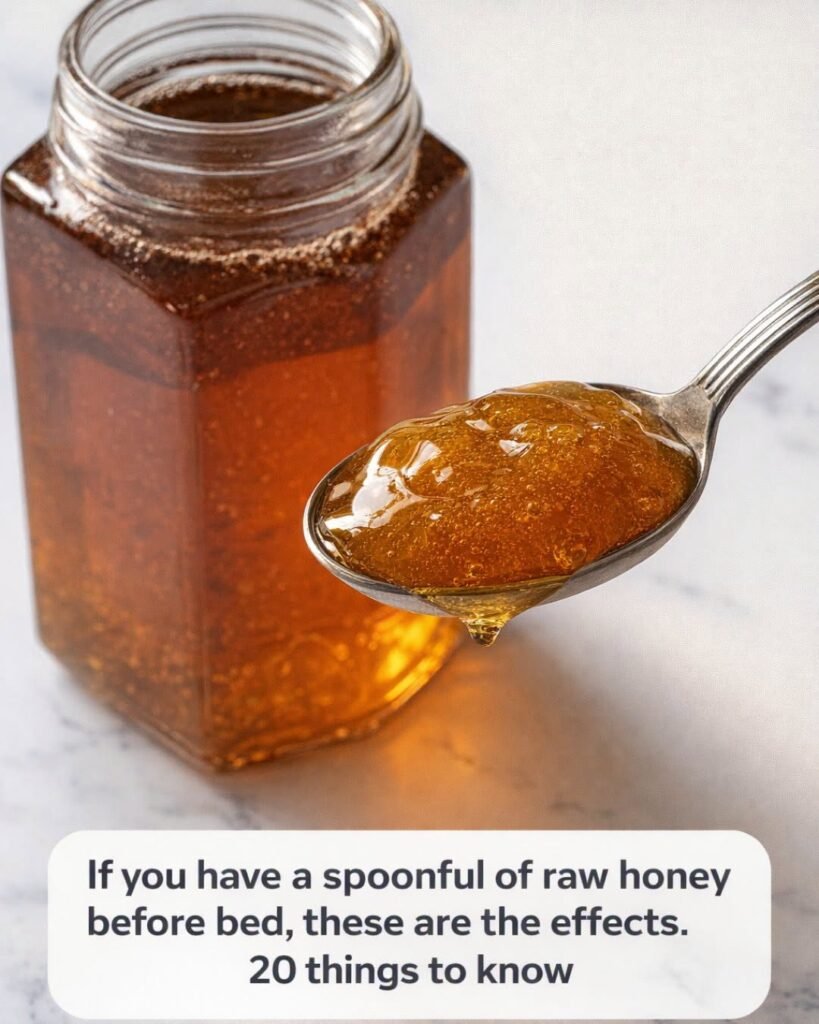

If You Have a Spoonful of Raw Honey Before Bed: 20 Things to Know
Nighttime Throat & Respiratory Effects
-
Coats and Soothes Throat Irritation: Raw honey’s thick viscosity forms a temporary protective barrier over inflamed pharyngeal tissue, calming dry, scratchy throat sensations.
-
Reduces Nighttime Cough Frequency: Clinical studies show a small spoonful of honey before bed helps quiet cough frequency and severity in adults and children over 1 year old.
-
Stimulates Saliva Production: Its natural sweetness triggers salivary glands, lubricating dry airways during overnight mouth breathing.
-
Delivers Natural Antimicrobial Compounds: Raw honey retains trace hydrogen-peroxide-producing enzymes (glucose oxidase), low moisture, and acidic pH that discourage local microbial growth in the throat.
Blood Sugar, Metabolism & Sleep Physiology
-
Replenishes Liver Glycogen Overnight: Composed roughly of 40% fructose and 30% glucose, raw honey supplies readily usable fuel so the liver can maintain steady blood glucose during an 8-hour overnight fast.
-
Blunts Overnight Cortisol and Adrenaline Surges: When liver glycogen stays topped up, the body is less likely to trigger stress-hormone spikes to release emergency glucose in the early morning hours.
-
Supports Tryptophan Transport: A mild insulin response from honey’s natural sugars helps clear competing amino acids from the bloodstream, making it slightly easier for tryptophan to reach the brain for serotonin and melatonin synthesis.
-
Not a Direct Sedative or Sleeping Pill: Honey does not act like melatonin or prescription sleep aids; its sleep benefits are indirect through throat comfort and steady overnight fuel.
-
Still Raises Blood Glucose: Despite a slightly lower glycemic index than refined white sugar, raw honey is concentrated free sugar (~17 g carbohydrates and ~64 calories per tablespoon) and will elevate blood sugar—especially in people with diabetes or insulin resistance.
Digestive & Microbiome Effects
-
Provides Prebiotic Oligosaccharides: Raw honey contains small amounts of non-digestible oligosaccharides that feed beneficial gut bacteria such as Bifidobacteria and Lactobacilli.
-
Retains Active Trace Enzymes: Unlike heavily heat-pasteurized honey, unheated raw honey preserves natural enzymes like diastase, invertase, and catalase.
-
Supplies Plant Polyphenols and Antioxidants: Dark, unfiltered raw honeys (such as buckwheat or wildflower) contain flavonoids and phenolic acids that help counter oxidative stress.
-
May Trigger Reflux or Bloating in Sensitive Individuals: Eating dense fructose close to lying flat can cause gas in people with fructose malabsorption or worsen nighttime acid reflux in some individuals.
Practical Dosage, Safety & Buying Rules
-
Keep the Portion Small: Stick to 1 teaspoon to 1 tablespoon (5–15 ml) about 20–30 minutes before lying down; larger amounts add unnecessary sugar and calories.
-
Never Give to Infants Under 12 Months: Raw and pasteurized honey can carry Clostridium botulinum spores, which cause life-threatening infant botulism in babies under 1 year old.
-
Protect Tooth Enamel Before Sleeping: Saliva flow drops during sleep, leaving sugars sitting on teeth; brush your teeth—or rinse thoroughly with plain water—after taking honey at night.
-
Avoid Boiling Water if Stirring Into Tea: Adding raw honey to scalding water destroys heat-sensitive enzymes and delicate aroma compounds; let warm water or herbal tea cool below ~40°C (104°F) first.
-
Natural Crystallization Is Normal: Real raw honey naturally turns cloudy or thickens into fine crystals over time; gentle warming in a bath of warm water restores fluidity without ruining nutrients.
-
Watch for Pollen or Bee-Product Allergies: Because raw honey is unfiltered, it contains trace pollen and propolis particles that can trigger reactions in people with severe pollen or bee allergies.
-
Works Best Alongside Basic Sleep Hygiene: A spoonful of raw honey complements—but cannot replace—consistent sleep times, a cool dark bedroom, and avoiding late caffeine or heavy meals.